

Choosing the right grade of Coconut Oil for African markets is not just about price - it is about understanding application, climate, regulations and consumer behavior across 20 diverse countries. From food processors in Nigeria to cosmetic manufacturers in Morocco and biodiesel producers in Kenya, each market segment demands a different specification.
African importers must decide between RBD Coconut Oil and Crude Coconut Oil based on end-use industries, refining capabilities and distribution strategies. A Singapore-based exporter supplying Africa must also consider freight routes, packaging formats and documentation compliance to remain competitive.
This guide breaks down grade selection, country-level demand patterns, quality benchmarks and how importers can build a profitable coconut oil portfolio across North, West, East, Central and Southern Africa.

RBD Coconut Oil vs Crude Coconut Oil: Which One Should African Importers Stock?
When African importers evaluate options, the first decision is simple but crucial: stock RBD Coconut Oil or Crude Coconut Oil?
RBD stands for Refined, Bleached and Deodorized. This grade is processed to remove impurities, free fatty acids, odor and color. The result is a neutral-tasting oil suitable for food manufacturing, cosmetics, pharmaceuticals and personal care.
Crude Coconut Oil, on the other hand, is unrefined and contains higher free fatty acid (FFA) content. It is typically used for further refining or industrial applications such as oleochemicals and biodiesel.
Here’s how importers should think about it:
- Food manufacturers prefer Coconut RBD oil due to stability and neutral flavor.
- Soap and detergent producers evaluate both grades depending on processing setup.
- Refiners in Africa often import crude grades to refine locally and capture margins.
- Cosmetics companies demand consistent odor and color, favoring refined grades.
Countries like South Africa, Morocco, Tunisia and Kenya have stronger food and cosmetic manufacturing sectors, making refined grades more popular. Meanwhile, industrial-focused markets like Nigeria, Ghana and Tanzania may import both grades.
The smartest approach? Diversify inventory based on industry clusters within each country.
Read Our Article
Role of Distilled Coconut Fatty Acid in Biodiesel ProductionRBD Coconut Oil Top Use-Cases in Africa: Food, Hair, Skin and Pharma
Across Africa, RBD Coconut Oil is widely used in multiple consumer and industrial sectors.
Food Processing
Used in frying, confectionery and bakery fats, it offers high oxidative stability and long shelf life. In countries like Algeria, Egypt, Morocco and South Africa, bakery chains and snack manufacturers depend on stable frying oils.
Hair & Skin Care
Coconut fatty acids derived from refined oil are essential ingredients in shampoos, creams and conditioners. Ghana, Nigeria, Kenya and South Africa have growing beauty industries.
Pharmaceutical Applications
Capsule manufacturing and medicinal creams require highly refined oil with strict quality compliance. North African markets such as Tunisia and Libya demand consistent import documentation.
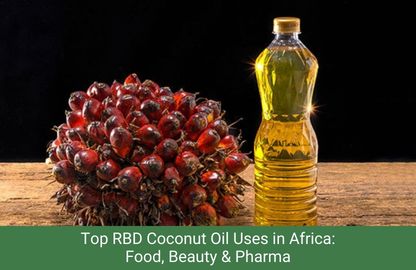
Its versatility makes it a reliable product for distributors building a multi-industry supply chain.
RBD Coconut Oil for Soap Manufacturers in Africa: Lather, Hardness and Yield
Soap manufacturers across Nigeria, Ghana, Zambia, Zimbabwe and Angola value refined coconut oil for one reason - performance.
RBD Coconut Oil provides:
- Excellent lathering properties
- High cleansing ability
- Improved bar hardness
- Better yield consistency
Soap makers rely on Coconut fatty acid profiles rich in lauric acid to create high-foaming products. Compared to palm-based inputs, coconut derivatives increase foaming and cleansing performance.
Countries like Tanzania, Mozambique and Burkina Faso have expanding local soap production sectors. For these markets, consistency in FFA levels and moisture content is more important than just pricing.
Working with a reliable RBD Coconut Oil Exporter ensures uniformity batch after batch, which directly impacts production efficiency.
Our Other Products
Speciality FatsCrude Coconut Oil for Biodiesel & Oleochemicals: Where It Fits in Africa
Industrial demand is rising across East and West Africa. Crude Coconut Oil plays a major role in oleochemical processing and biodiesel blending.
Kenya, Tanzania and Uganda are emerging hubs for biodiesel initiatives. Crude grades are preferred because:
- They allow local refining control
- They are cost-effective compared to refined grades
- They can be processed into coconut fatty acids and derivatives
Similarly, Nigeria and Ghana have strong detergent and chemical industries requiring feedstock for fatty acid distillation.
For industrial buyers, a Crude Coconut Oil Supplier must provide clarity on FFA percentage, peroxide value and moisture limits.
RBD Coconut Oil for Bakery & Food Processing: Frying Performance and Stability
Food-grade refined oil must perform under high heat without rapid oxidation.
In Morocco, Algeria, Tunisia and South Africa, food processors evaluate:
- Smoke point
- Shelf life
- Color consistency
- Neutral taste
Coconut RBD oil performs well in frying snacks and producing non-dairy creamers. Its saturated fat profile gives better thermal stability compared to many vegetable oils.
In Nigeria and Ghana, imported refined oil supports confectionery production, especially in urban markets like Lagos and Accra.
Food processors prefer working with established RBD Coconut Oil Exporters who provide full documentation, including Certificate of Analysis and food safety certifications.
Crude Coconut Oil for African Refiners: Key Quality Parameters That Matter
Refiners in countries like Kenya, Nigeria, South Africa and Egypt focus heavily on raw quality metrics.
Important parameters include:
- Free Fatty Acid (FFA) percentage
- Moisture and impurity levels
- Color (Lovibond scale)
- Peroxide value
Higher FFA increases refining cost. Therefore, importers must negotiate clear contracts with a dependable Crude Coconut Oil Exporter.
Processing stability is crucial. If moisture exceeds acceptable limits, refining losses increase. This is why quality inspection before shipment is essential.
RBD Coconut Oil Specifications for Africa: FFA, Moisture, Color, Odor, Shelf Life
For refined oil shipments into Africa, buyers commonly request:
- FFA below 0.1%
- Moisture below 0.1%
- Clear, water-white color
- Neutral odor
- Shelf life of 18–24 months
South Africa and Morocco apply stricter quality checks compared to smaller markets like Liberia or Niger.
Read Our Article
Role of Distilled Coconut Fatty Acid in Biodiesel ProductionCrude Coconut Oil Quality Benchmarks: FFA Limits and Processing Stability
For crude grades entering Angola, Mozambique, Gabon or Tanzania, FFA typically ranges between 3%–5%, depending on agreement.
However, refiners may request lower levels to reduce neutralization losses. Processing stability is influenced by:
- Proper storage conditions
- Tanker cleanliness
- Controlled loading temperatures
Reliable Crude Coconut Oil Exporters maintain strict shipping protocols to avoid contamination during transit from Southeast Asia to African ports.
RBD Coconut Oil Price Drivers for Africa: Raw Material, Freight and Refining Costs
Importers often ask - why does pricing fluctuate?
Three major drivers affect landed cost:
- Copra availability and harvest season
- Refining and processing expenses
- Freight rates from Asia to African ports
West Africa (Nigeria, Ghana, Côte d’Ivoire) typically faces higher freight compared to North Africa due to routing differences.
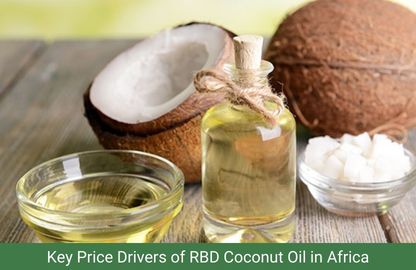
Bulk tanker shipments reduce per-ton cost, while flexibags or drums suit smaller markets like Botswana, Namibia and Zimbabwe.
Working with established Coconut Oil Exporters helps importers manage seasonal price swings.
RBD Coconut Oil Demand in West Africa: Nigeria, Ghana, Côte d’Ivoire Market Outlook
West Africa represents one of the strongest demand clusters.
Nigeria leads in:
- Soap manufacturing
- Food processing
- Personal care products
Ghana follows with a growing cosmetics and haircare sector. Liberia and Burkina Faso import smaller volumes but show steady growth.
Urban hubs like Lagos and Accra are key distribution centers. Importers here often maintain mixed inventories - refined for consumer industries and crude for industrial buyers.
Our Other Products
GlycerineCrude Coconut Oil for East Africa: Kenya, Tanzania, Uganda - Industrial Opportunities
East Africa shows increasing industrial demand.
Kenya and Tanzania support:
- Oleochemical plants
- Biodiesel projects
- Soap factories
Madagascar, though smaller, imports for food and cosmetic uses. Nairobi serves as a major trade hub for regional redistribution.
Importers prefer direct sourcing from a reputable Crude Coconut Oil Supplier to ensure consistent refining input.
RBD Coconut Oil for North Africa: Egypt, Morocco, Tunisia - Food & Cosmetics Demand
North Africa focuses heavily on food and cosmetic industries.
Morocco and Tunisia have established beauty brands requiring consistent quality refined oil. Libya and Algeria import for food processing.
Due to strict food safety standards, buyers demand full traceability of Coconut Oil RBD. Documentation accuracy can determine repeat orders.

Coconut Oil Trade Opportunities in Southern Africa: South Africa, Zambia, Zimbabwe
South Africa is the largest market in Southern Africa.
It imports both grades for:
- Retail food brands
- Industrial soap plants
- Pharmaceutical manufacturing
Zambia, Zimbabwe, Botswana and Namibia rely on South Africa as a redistribution hub. Angola and Mozambique import for both food and industrial sectors. Johannesburg remains the key logistics gateway.
Top African Cities for Coconut Oil Distribution: Lagos, Accra, Nairobi, Johannesburg
Major trade cities include:
- Lagos (Nigeria)
- Accra (Ghana)
- Nairobi (Kenya)
- Johannesburg (South Africa)
- Casablanca (Morocco)
These cities act as regional consolidation points where distributors manage warehousing, packaging and re-export.
How African Distributors Can Build a Coconut Oil Product Line (RBD + Crude Mix)
Distributors should avoid relying on a single grade.
A balanced portfolio could include:
- Refined oil for food & cosmetics
- Crude grade for industrial refiners
- Coconut fatty acids for chemical buyers
This strategy spreads risk and maximizes customer coverage.
How Olivia Oleo Supports Coconut Oil Grades Across African Markets
We at Olivia Oleo deliver value with over three decades of management expertise in palm oil and related derivatives. As a Singapore-based exporter, the company supplies RBD Coconut Oil, Crude Coconut Oil, RBD Palm Olein, vegetable shortening and selected oleochemicals to global markets, including Africa. With strong market intelligence, seasonal insights and competitive freight arrangements, Olivia Oleo ensures timely shipments and consistent quality. The company also offers products such as refined glycerine, fatty acids and soap noodles to meet industrial demand. Streamlined supply chain management and responsive customer service make it a dependable partner for African importers seeking long-term supply reliability.
Conclusion
Selecting the right grade of coconut oil for Africa requires understanding application needs, quality standards, logistics and regional demand trends. Whether sourcing refined oil for food and cosmetics or crude grades for refining and industrial processing, aligning product specifications with market expectations is the foundation of profitable trade. With the right supplier partnership and diversified strategy, African importers can confidently serve growing industries across the continent.