

Introduction to Distilled Coconut Fatty Acid
Distilled coconut fatty acid, also known as refined coconut oil fatty acid or purified coconut fatty acid, is a key derivative of coconut oil widely used across personal care, home-care, and specialty chemical industries. Its high lauric acid content makes it ideal for surfactants, emulsifiers, and lubricants. With growing industrial applications, understanding the market dynamics of DCFA involves analyzing pricing trends, demand cycles, trade patterns, export hubs, and global supply chains. This versatile coconut oil fatty acid derivative continues to shape innovation in both consumer and industrial markets.

Distilled Coconut Fatty Acid Pricing Dynamics
Refined Coconut Oil Fatty Acid and Raw Material Sensitivity
The pricing of refined coconut oil fatty acid is closely linked to coconut oil markets. As a downstream product, costs fluctuate with harvest volumes, regional production cycles, and climatic conditions. Southeast Asia is the global hub for coconut oil production, with Indonesia, the Philippines, and India as major contributors. Seasonal harvest variations and crop yields create significant pricing volatility for purified coconut fatty acid.
- Price Comparison: DCFA commands a premium over palm and soybean fatty acids due to its higher lauric acid content. Southeast Asia prices average US $1,450–1,600 per ton, while palm fatty acid distillates trade at US $900–1,100 per ton, reflecting a 35–45% premium.
Coconut Fatty Acid Distillate Volatility Factors
Several factors drive fluctuations in coconut fatty acid distillate pricing. Climatic events such as tropical storms, droughts, and pest infestations can sharply reduce yields. Geographic concentration of production increases supply risk, while logistics and storage costs, especially in rural areas or congested ports, add additional financial pressure. Producers often combine spot purchases with forward contracts to stabilize costs, though inventory management and working capital remain critical.
Coconut Fatty Acid Demand Drivers and Cycles
Coconut Fatty Acid and Industry Demand
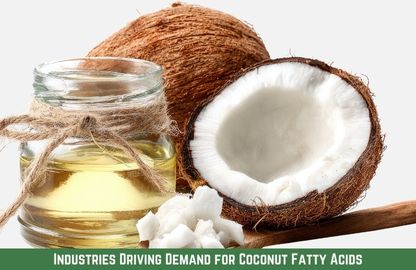
The demand for lauric-rich coconut fatty acid spans multiple industries. Personal care and cosmetic products consume over 50% of DCFA, utilizing it in surfactants for shampoos, soaps, and skincare formulations due to its foaming, emulsifying, and mild cleansing properties. Home-care products such as detergents and cleaning agents account for approximately 30% of demand, where medium-chain fatty acids from coconut oil enhance foam stability and cleaning efficiency. Industrial applications, including lubricants, specialty solvents, and chemical intermediates, increasingly rely on coconut oil fatty acid derivatives for high performance.
Refined Coconut Fatty Acid Demand Growth and Seasonal Cycles
The global coconut derivatives market is projected to grow at 9–10% CAGR, fueled by rising industrial and consumer demand for high-performance fatty acids. Seasonal harvest cycles affect supply and pricing: peak seasons increase availability and reduce costs, while off-seasons tighten supply. Manufacturers strategically combine spot purchases with forward contracts to maintain consistency and optimize procurement costs.
Purified Coconut Fatty Acid Regional Demand Patterns
The Asia-Pacific region shows high domestic consumption for personal care and detergent manufacturing. North America and Europe rely on imported distilled coconut fatty acid due to limited local production, especially for premium applications requiring high-lauric fractions. Emerging markets in Latin America and the Middle East are expanding industrial usage, including bio-based surfactants and lubricants, driving increased demand for high-purity coconut fatty acid.
Distilled Coconut Fatty Acid Trade Patterns and Export Hubs
Coconut Fatty Acid Distillate and Export Concentration
Global trade in coconut fatty acid distillate is dominated by Southeast Asia. Indonesia leads as the largest exporter, accounting for nearly 35% of global trade. The Philippines specializes in high-purity lauric fractions catering to cosmetics and personal care, while India supplies both edible and industrial-grade refined coconut oil fatty acid. Export hubs are strategically located near major ports such as Surabaya, Manila, and Cochin, serving North America, Europe, and East Asia.
Refined Coconut Fatty Acid Shipping Routes and Logistics
Major shipping routes for refined coconut fatty acid include Asia to Europe via the Suez Canal with lead times of 20–35 days, and Asia to North America through the Pacific to US West Coast ports. Emerging markets in Africa and the Middle East increasingly source distilled coconut oil fatty acid, which raises shipping costs and extends lead times.
Distilled Coconut Oil Fatty Acid Trade Drivers
Trade flows for distilled coconut oil fatty acid are influenced by price arbitrage, with lower-cost producers exporting to high-demand markets. Purity and quality requirements attract premium buyers, while regulatory standards such as REACH in Europe or FDA compliance in North America determine eligible exporters. Seasonal availability plays a role, with post-harvest periods seeing peak export volumes and off-season scarcity potentially driving higher prices.
Global Supply Chain Trends for Coconut Fatty Acid
Purified Coconut Fatty Acid Concentration and Vulnerability
The DCFA supply chain is heavily concentrated, making it sensitive to tropical weather events and infrastructure limitations. Heavy reliance on Southeast Asia exposes buyers in Europe and North America to logistical and geopolitical risks. Limited storage and transport facilities in producing regions further complicate supply chain management.
Distilled Coconut Oil Fatty Acid Capacity Expansion and Technology
To meet growing demand, producers are expanding fractionation and distillation capacities for lauric and myristic acids. Innovations in continuous distillation reduce energy consumption, increase yield, and support both industrial-scale production and premium cosmetic requirements. Such advancements ensure high-purity coconut fatty acid remains available for specialized applications.
Coconut Fatty Acid Strategic Supply Chain Responses
Companies mitigate risk through inventory management, building buffer stocks post-harvest, diversifying sourcing countries, and pursuing vertical integration with upstream plantations or processing facilities. These measures stabilize supply for high-demand applications and protect buyers from market volatility.
Refined Coconut Fatty Acid Competitive Alternatives
Palm fatty acids, palm kernel fatty acids, and soybean fatty acids are often used as substitutes. Price spikes in coconut fatty acid distillate may temporarily shift buyers toward these alternatives, influencing trade flows and pricing dynamics.
Distilled Coconut Fatty Acid Challenges and Risks
Major risks include climate-related disruptions in Indonesia, Philippines, and India, aging coconut plantations reducing yields, infrastructure bottlenecks affecting exports, competition from alternative fatty acids, and compliance with international purity standards, which increases production complexity and costs.

Strategic Implications for the Coconut Fatty Acid Market
Distilled Coconut Fatty Acid and Producers
Producers benefit from investing in fractionation and distillation technologies to improve margins. Forward contracts and strategic inventory management are crucial for navigating price volatility and seasonal supply swings.
Refined Coconut Fatty Acid and Downstream Buyers
Buyers must diversify sourcing and maintain flexible contracts to manage supply fluctuations. Premium applications require collaboration with suppliers to ensure consistent lauric-rich coconut fatty acid fractions.
Investors in Distilled Coconut Oil Fatty Acid Industry Analysts
The market outlook remains strong, driven by rising demand in personal care, home-care, and specialty chemicals. Managing climate sensitivity, concentrated supply, and long shipping lead times is critical for risk mitigation and profitability.
Distilled Coconut Fatty Acid Market Outlook Conclusion
Distilled coconut fatty acid continues to be a key ingredient in industrial and consumer applications due to its lauric acid content and versatile functionality. Market dynamics are shaped by pricing fluctuations, seasonal demand cycles, and concentrated trade flows. Southeast Asia dominates production and exports, while North America, Europe, and emerging regions drive premium demand. Understanding trade routes, export hubs, and industry demand drivers is essential for stakeholders to secure supply, navigate risks, and capitalize on growth opportunities. Companies investing in advanced processing, optimized supply chains, and strategic inventory planning are best positioned to thrive in this dynamic market.