

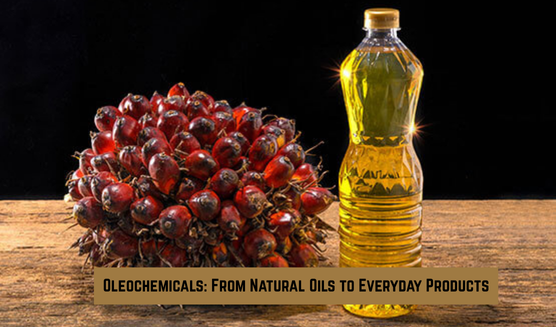
Exporting oleochemicals, which are derived from natural oils and fats, requires meticulous attention to documentation and compliance. This article answers key questions for oleochemical suppliers to help them comply with export regulations, minimize risks, and streamline the export process.

What are the mandatory export documents required for oleochemicals shipments?
The mandatory export documents for oleochemicals shipments typically include:
- Commercial Invoice – Details the sale transaction, including product description, quantity, price, and terms of sale.
- Packing List – A comprehensive list that specifies how the products are packed, including the number of boxes, weight, and type of packaging.
- Bill of Lading – A receipt for goods shipped, it serves as a contract between the exporter and carrier.
- Export Declaration – Official confirmation that the goods are being exported, often required by customs authorities.
- Certificate of Origin – A document that certifies the origin of the goods, often necessary for preferential tariff treatment.
- Material Safety Data Sheet (MSDS) – Provides information on the potential hazards of the product, handling, storage, and emergency measures.
Which HS Codes are typically used for different types of oleochemicals?
Harmonized System (HS) codes are crucial for categorizing oleochemicals for customs. Common HS codes for oleochemicals include:
- HS Code 1507 – For animal or vegetable oils and fats.
- HS Code 3402 – For surfactants and washing preparations, which include soap noodles made from oleochemicals.
- HS Code 3812 – For prepared rubber accelerators and other chemicals used in oleochemical production.
Different oleochemical products, such as fatty acids, glycerin, and surfactants, will have different HS codes depending on their chemical composition and intended use.
Do oleochemical exporters need an Import Export Code (IEC) or special licensing?
Yes, Import Export Code (IEC) is generally required for businesses in many countries, including India, to carry out international trade. This code must be obtained from the relevant government authority before exporting oleochemicals. Additionally, special licenses may be necessary for certain restricted products, including hazardous chemicals.
What is the role of Material Safety Data Sheet (MSDS) in oleochemicals export?
The Material Safety Data Sheet (MSDS) is essential when exporting oleochemicals, especially if the chemicals are hazardous. It provides critical safety information, including the chemical properties of the product, potential hazards, safe handling, storage guidelines, and emergency measures in case of accidents. Importing countries may require the MSDS as part of their customs clearance process.
Are Dangerous Goods Declarations required for any oleochemicals?
Yes, Dangerous Goods Declarations (DGD) are required if the oleochemicals being exported are classified as hazardous under international shipping regulations. For example, some fatty acids, alcohols, and surfactants may be categorized as dangerous goods due to their flammability or environmental risks. Exporters need to declare this status to the carrier and ensure that the products are labeled and packaged correctly.
What packaging and labeling regulations apply to oleochemicals exports?
Packaging and labeling regulations for oleochemicals depend on the destination country and whether the products are classified as hazardous. Common requirements include:
- Proper labeling of product contents, handling instructions, and safety warnings.
- Labeling in multiple languages may be required, particularly for markets like the EU and US.
- UN markings for hazardous materials, along with correct packaging for dangerous goods.
- Environmental regulations such as those concerning biodegradable materials, especially for surfactants.
How do exporters prepare a compliant commercial invoice and packing list for oleochemicals?
A compliant commercial invoice should include:
- Product description (including scientific names or chemical compositions).
- Quantity and unit of measure.
- Unit price and total value.
- Terms of sale (Incoterms like FOB, CIF).
- Buyer and seller details.
For the packing list, the document should detail:
- The exact contents of each package, including the number of packages.
- Type of packaging (barrels, drums, bags, etc.).
- Weight and volume of each package.
Both documents need to be accurate and match the contents of the shipment to avoid delays at customs.
When is a Certificate of Origin required, and how can suppliers obtain it?
A Certificate of Origin is required when the destination country offers preferential tariffs based on the origin of goods. This certificate verifies the country in which the oleochemicals were produced or manufactured. Exporters can typically obtain it from:
- The Chamber of Commerce.
- Accredited authorities or trade associations.
- Customs authorities.
Do exporters need REACH, GHS, or other international regulatory certifications?
Yes, REACH Registration, Evaluation, Authorisation, and Restriction of Chemicals) compliance is required for chemical products exported to the EU. GHS (Globally Harmonized System) labeling is essential for hazardous substances. Other certifications, such as ISO for quality, or specific regional certifications like FDA (for the US), may also be needed depending on the product and its destination.
What quality and safety certifications (ISO, Halal, Kosher, etc.) are preferred by global buyers?
Global buyers often require specific certifications to ensure the quality, safety, and ethical sourcing of oleochemicals. Common certifications include:
- ISO 9001 for quality management.
- Halal and Kosher certifications for products targeting specific religious markets.
- ISO 14001 for environmental management, particularly for eco-conscious buyers.
- FSSC 22000 for food safety management if the oleochemical is used in food products.
How do country-specific import regulations (e.g., EU, US, Middle East) impact oleochemicals documentation?
Each region has unique regulatory requirements for importing oleochemicals. For example:
- The EU has stringent REACH regulations that require detailed chemical testing and registration.
- The US enforces FDA regulations for products used in food or pharmaceuticals, requiring additional documentation.
- In the Middle East, halal certifications and specific product labeling may be mandatory.
Understanding these regulations is critical to ensure compliance and avoid customs delays or penalties.
Are there export controls or restrictions on specific oleochemicals in certain countries?
Yes, some countries may impose export controls or restrictions on specific oleochemicals, particularly those used in industries like pharmaceuticals or explosives. For instance, certain fatty acids or surfactants used in sensitive manufacturing processes may be subject to export licenses or bans, especially when their end-use is deemed a risk.
What are the typical customs clearance procedures for oleochemicals in major import markets?
In major markets, customs clearance procedures typically involve:
- Submission of required documents (commercial invoice, packing list, MSDS, etc.).
- Payment of customs duties and taxes.
- Inspection of the shipment, especially for hazardous materials.
- Verification of product compliance with local regulations.
The process may vary by country, but having complete and accurate documentation ensures faster clearance.
How can freight forwarders assist in ensuring documentation compliance for hazardous or regulated shipments?
Freight forwarders can help by:
- Ensuring that all necessary export documents are in order.
- Advising on hazardous material regulations and ensuring proper labeling and packaging.
- Managing logistics and coordinating with customs brokers for smooth clearance.
- Providing guidance on documentation requirements for specific destination countries.
What are common documentation mistakes that oleochemicals exporters should avoid?
Common mistakes include:
- Incorrect or missing HS codes leading to delays or fines.
- Failing to provide an accurate Material Safety Data Sheet (MSDS) for hazardous products.
- Errors in the Certificate of Origin, leading to tariff issues.
- Inadequate packaging and labeling for hazardous materials.
Avoiding these mistakes helps prevent delays, fines, and shipment rejection.
Is pre-shipment inspection (PSI) required by certain countries or buyers?
Some countries or buyers may require pre-shipment inspection (PSI) to verify the quality and quantity of oleochemicals before shipment. Countries like Nigeria, for example, often require PSI to verify compliance with local standards. Exporters should check the destination country’s regulations to ensure compliance.
What is the role of Safety and Technical Data Sheets (TDS) in international compliance?
Safety and Technical Data Sheets (TDS) provide essential product information, such as chemical composition, handling instructions, and performance characteristics. These documents are often required by buyers and regulatory authorities to ensure the safety and quality of the product, particularly in hazardous applications.

How do free trade agreements (FTAs) affect documentation and duties for oleochemicals?
Free Trade Agreements (FTAs) can provide reduced or zero-duty rates on exports between member countries. Exporters must ensure that they meet the criteria for preferential tariff treatment, such as proving the product’s origin through a Certificate of Origin. FTAs streamline documentation and reduce costs for exporters.
How can digital documentation streamline the oleochemicals export process?
Digital documentation can significantly improve efficiency by allowing for:
- Faster submission and approval of export documents.
- Streamlined communication between suppliers, customs authorities, and buyers.
- Easier tracking of shipments and real-time updates.
- Reduced risk of errors and lost documents.
In conclusion, compliance with export documentation and regulations is essential for oleochemical exporters to succeed in the global market. By understanding the necessary paperwork, adhering to safety standards, and working with experienced partners, suppliers can ensure smooth and compliant shipments across borders.