

Objective
The goal of this article is to provide an in-depth understanding of how glycerine 99.7% is produced from vegetable oils and animal fats, focusing on the chemical processes and industry practices used to achieve this highly refined form of glycerine. Additionally, we will explore its applications, primarily in food, cosmetics and other industries where its purity is essential.
Glycerine or glycerol, is a colorless, odorless and viscous liquid commonly derived from vegetable oils and animal fats. It has a wide range of uses across different industries, from food and pharmaceuticals to cosmetics and manufacturing. Glycerine 99.7%, a highly refined form of glycerine, is known for its purity and is a crucial ingredient in many products, including food-grade applications and personal care formulations.
This article will delve into how glycerine 99.7% is produced, focusing specifically on its extraction and refinement from vegetable oils and animal fats. We will explore the chemical processes involved; the role of glycerine manufacturers is so widely used in various applications.

Understanding Glycerine and Its Importance in Various Industries
Glycerine is a simple polyol compound, meaning it contains multiple hydroxyl groups, which contribute to its ability to attract and retain moisture. This property makes glycerine an ideal humectant, widely used in various formulations.
Glycerine plays a key role in the production of numerous products, from food items such as food grade glycerine to pharmaceutical drugs and cosmetics. It is often classified based on its purity level, with glycerine 99.7% being one of the highest grades available, typically used in industries where precise control over quality is necessary.
- Food Glycerine: As an ingredient in food products, glycerine is used for moisture retention, as a sweetener or to dissolve other ingredients.
- Cosmetic Glycerine: In cosmetics, glycerine acts as a moisturizer and a solvent.
- Pharmaceutical Glycerine: In pharmaceutical applications, it can be found in syrups, lotions and medicines, serving as a stabilizer and preservative.
The Source of Glycerine: Vegetable Oils and Animal Fats
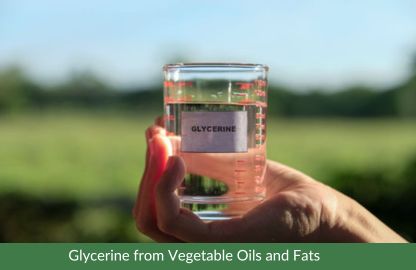
Glycerine E422 is primarily extracted from vegetable oils and animal fats through a process called saponification. These fats contain triglycerides - molecules made up of one glycerol molecule bound to three fatty acids. The production of glycerine involves breaking down these triglycerides into their components.
Vegetable Oils
- Common Oils Used: The most commonly used vegetable oils for glycerine production include palm oil, soybean oil and coconut oil. These oils are abundant, cost-effective and widely available in Southeast Asia and other tropical regions.
- Refining Process: The oils undergo hydrolysis, where they are treated with water or steam to break the triglycerides into glycerine and fatty acids. The resulting glycerine is then further refined to achieve higher purity, often reaching the glycerine 99.7% standard.
The Production Process of Glycerine 99.7%
Glycerine 99.7% is a highly purified form of glycerine that is obtained through a series of chemical and physical processes designed to remove impurities and ensure high quality.
Step 1: Hydrolysis or Saponification
The process starts with the hydrolysis or saponification of vegetable oils or animal fats. This is where triglycerides are broken down into glycerol (glycerine) and fatty acids. The process can vary slightly depending on whether vegetable oils or animal fats are used, but the end result is the same: a mixture of glycerine E422 and fatty acids.
Step 2: Purification
After the initial production, the crude glycerine contains various impurities such as free fatty acids, residual alkali and water. The purification process typically involves several steps:
- Neutralization: The free fatty acids are neutralized using a mild alkali, such as sodium carbonate or sodium hydroxide.
- Filtration: The solution is filtered to remove solid impurities like pigments, dirt and debris.
- Distillation: The purified glycerine is then distilled under vacuum to remove any remaining water and low molecular weight impurities. This is often the stage where the glycerine 99.7 purity is achieved.
Step 3: Refining and Concentration
After distillation, the glycerine is concentrated to ensure a purity level of 99.7%. This step removes traces of water, making it suitable for high-end applications such as food-grade glycerine or pharmaceutical products. Refining ensures that the final glycerine product meets strict regulatory standards for purity and safety.
Uses of Glycerine 99.7% in Various Industries
Once produced, glycerine 99.7% is used across several industries due to its purity and versatility. Some of the key glycerine uses include:
- Food and Beverages: In the food industry, food grade glycerine is used as a humectant to retain moisture in baked goods, confectionery and other food items.
- Pharmaceuticals: Glycerine 99.7% is commonly used in pharmaceutical syrups, liquid medicines and oral care products due to its non-toxic and safe nature.
- Cosmetics and Personal Care: Glycerine is a staple ingredient in skincare products, such as moisturizers, lotions and soaps, due to its hydrating properties.
- Industrial Applications: In addition to its uses in consumer products, glycerine is also used in the production of antifreeze, plasticizers and as a solvent in various industrial applications.
Glycerine Manufacturers and Suppliers
The global demand for glycerine has led to the rise of numerous glycerine manufacturers and suppliers. These manufacturers produce glycerine in bulk and supply it to a wide range of industries. The quality of glycerine produced is often determined by the raw materials used and the refinement processes employed.
- Refined Glycerine 99.7%: High-quality suppliers specialize in producing refined glycerine 99.7%, which meets the standards required for food, pharmaceutical and cosmetic applications.
- Sourcing: Countries in Southeast Asia, such as Indonesia, Malaysia and Thailand, play a significant role in the production of glycerine due to their access to abundant vegetable oils like palm oil and coconut oil.

Conclusion
The production of glycerine 99.7% from vegetable oils and animal fats is a multi-step process that involves hydrolysis, saponification, purification and distillation. This refined form of glycerine is essential for a wide array of industries, including food, pharmaceuticals and cosmetics, due to its high purity and versatile applications.
Glycerine manufacturers and suppliers continue to play a vital role in ensuring the consistent availability of glycerine 99.7% to meet the growing demands of the global market. Whether derived from food grade glycerine sources like palm oil or glycerol E422, this compound remains integral to the production of various consumer and industrial products.