

In today’s fast-paced food manufacturing landscape, functionality, cost-efficiency and global availability shape ingredient choices. Among the most widely used fats in processed foods, palm oil and its derivatives stand out for their unmatched versatility and stability. In the confectionery and ice cream sectors - where consistency, mouthfeel and melting behavior are critical - palm-based oils such as RBD Palm Oil play foundational roles.
From creamy fillings and crisp coatings to velvety ice creams and stable inclusions, palm oil derivatives support product performance in ways other fats may not match. This how-to guide explores the specific uses and functional benefits of palm oil fractions in the global confectionery and frozen dessert industries.
What Makes Palm Oil Suitable for Confectionery and Ice Cream Applications?
Palm oil’s widespread use in sweet and frozen products stems from its natural composition. It contains a balanced profile of saturated and unsaturated fatty acids, making it highly stable under various processing and storage conditions. Its derivatives offer different melting ranges, textures and functionalities - each tailored to a particular application.
RBD Palm Kernel Oil are popular in confectionery coatings due to their sharp melting points and crisp bite. Meanwhile, Palm Kernel Olein offer customized textures for creams, spreads and molded inclusions.
Additionally, palm oil is widely available and consistently refined to high-quality standards, making it a reliable fat base for multinational manufacturers producing across climates and continents.
How Is RBD Palm Oil Used in Sweet Applications?
RBD Palm Oil serves as a neutral base fat in a variety of sweet product formulations. Its semi-solid consistency at room temperature allows it to function well in:
- Bakery fillings
- Wafer cream layers
- Spreadable confectionery pastes
Its balanced fatty acid profile provides oxidative stability, ensuring products remain fresh longer without developing off-flavors. It may also be blended with harder fats or emulsifiers to fine-tune mouthfeel and structure, depending on the target application.

Where Does RBD Palm Kernel Oil Fit in Chocolate-Like Coatings?
In confectionery coatings, Palm Kernel Oil is prized for its snap, gloss and clean melt. Unlike cocoa butter, which requires tempering, this fat can solidify quickly and consistently without specialized processes.
Applications include:
- Compound chocolate coatings for bars
- Dipping sauces and shell toppings
- Center-filled confectionery pieces
RBD Palm Kernel Oil may be blended with Palm Kernel Stearin or hydrogenated fractions to improve firmness or control melting profiles, especially in warm climates where product stability is essential.
How Do Palm Oil Fractions Enhance Ice Cream Texture and Stability?
Palm oil derivatives are essential in ice cream fat systems due to their controlled melting points and solid fat content (SFC). Ice cream requires a fat that stabilizes air bubbles, forms a creamy matrix and resists ice crystal growth during storage.
Commonly used palm-based fats include:
- Crude Palm Kernel Oil (after further refining)
- Palm Kernel Fat
- Refined Hydrogenated Palm Kernel Oil
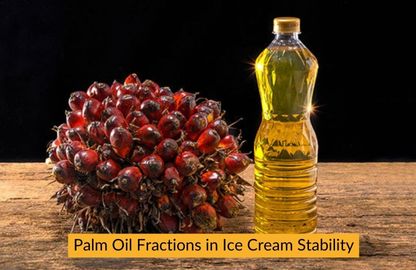
These fats help form a stable fat network that traps air and emulsifies water, resulting in a smooth and creamy texture. When used in coatings (like chocolate-dipped ice cream bars), these fats also provide rapid crystallization and crack-free finishes.
What Role Does Palm Kernel Olein Play in Fillings and Inclusions?
Palm Kernel Olein, the liquid portion separated from palm kernel oil during fractionation, offers fluidity and a clean flavor, making it ideal for:
- Creamy fillings in sandwich biscuits
- Nut butter spreads
- Chocolate chip inclusions in frozen desserts
Its low melting point ensures spreadability while contributing to a light, non-greasy mouthfeel. When combined with more solid fats, it helps fine-tune the plasticity and smoothness of fillings that must remain soft at low temperatures.
How Are Crude Palm Oil and Palm Oil Fatty Acids Used in Ingredient Formulations?
Crude Palm Oil is rarely used directly in food applications, but it serves as the starting material for refining into more specialized fats. Its value lies in its carotenoid and tocopherol content, which are often removed during deodorization.
On the other hand, Palm Fatty Acid Distillate (PFAD) are by-products of refining. These are more commonly utilized in non-food applications but can be involved in emulsifier production or minor functional ingredient development when refined further.
Why Is Stearin Palm Oil Important in Structured Fat Systems?
Palm Stearin, the harder fraction of palm oil, is rich in saturated fats like palmitic acid. It is useful when a firm, non-melting texture is desired.
Uses include:
- Fat bases for chocolate-type fillings
- Layered pastries requiring plasticity
- Structured shortenings in confectionery creams
When blended with liquid oils or softer fats, stearin controls firmness and stability, especially in products that must hold shape at ambient or slightly elevated temperatures.
What Functional Benefits Do Palm-Based Oils Offer for Global Manufacturing?
Palm oil derivatives provide practical benefits that are essential for producing confectionery and frozen goods at scale:
- Thermal Stability: High resistance to melting under warm conditions.
- Extended Shelf Life: Low oxidation rates compared to unsaturated fats.
- Processing Flexibility: Can be used in various manufacturing methods without specialized equipment.
- Consistent Supply: Readily available for high-volume production.
These qualities support product uniformity across regions - vital for global brands requiring identical performance and taste profiles in different markets.

How to Choose the Right Palm Oil Fraction for Each Application?
Selecting the appropriate palm-based fat depends on multiple technical considerations:
| Application | Recommended Palm Oil Derivative | Key Benefit |
|---|---|---|
| Chocolate coating (non-tempered) | RBD Palm Kernel Oil, Hydrogenated Palm Kernel Oil | Fast crystallization, crisp texture |
| Soft cream filling | Palm Kernel Olein + RBD Palm Oil blend | Smoothness, spreadability |
| Ice cream fat matrix | Palm Kernel Fat, Refined Palm Kernel Oil | Creamy mouthfeel, air stability |
| Pastry & laminated dough | Palm Stearin | Firmness, structure |
| Chocolate chip inclusions | Palm Kernel Oil + Palm Kernel Olein | Stability at freezing temperatures |
Formulators may also consider regional climate, product distribution range and desired texture when fine-tuning fat systems.
Conclusion
Palm oil and its derivatives are central to the formulation of modern confectionery and frozen desserts. Their unique balance of performance, cost-effectiveness and flexibility make them the preferred choice for creating stable, indulgent and scalable products.
From RBD Palm Oil in soft spreads to Palm Oil in chocolate coatings and in ice cream, these ingredients power innovation in food sectors where texture, taste and shelf-life matter most.
By selecting the right palm oil fraction based on product needs, manufacturers can maintain quality, reduce production complexity and meet market demands across the globe - all while ensuring functional consistency in every bite.