

Palm kernel oil extracted from the seed of the oil palm fruit remains one of the most important lauric fats used in global food and chemical manufacturing. Its rich concentration of medium-chain saturated fatty acids, primarily lauric and myristic acids, makes it naturally semi-solid, sharply melting, and highly functional. Yet, many industries rely not on the native oil but on its hydrogenated form. Hydrogenated palm kernel oil (HPKO) undergoes structural transformation, producing a fat with distinctly different melting behavior, oxidative resistance, and textural attributes.
For manufacturers choosing between hydrogenated and non-hydrogenated fats, the decision influences process compatibility, formulation stability, shelf life, and cost structure. This article presents a detailed comparison of HPKO and its non-hydrogenated equivalents, helping industrial users evaluate technical performance and practical trade-offs.

Hydrogenated palm kernel oil and non-hydrogenated PKO structural differences for industrial applications
Hydrogenated palm kernel oil differs significantly from native PKO due to the saturation of its remaining unsaturated fatty acids. Non-hydrogenated PKO contains a predominantly saturated profile already, with lauric and myristic acids forming the bulk. It melts between 24 °C and 30 °C depending on its refinement or fractionation grade.
Once hydrogenated, its structure becomes even more saturated, producing hydrogenated PKO, hardened palm kernel oil, or hydrogenated palm kernel fat depending on processing intensity. The hydrogenation process stabilizes double bonds and increases the slip melting point by a wide margin, turning the fluid–semi-solid PKO into a firm, high-melting fat with structural reliability in warm environments.
This shift alters the triacylglycerol configuration, resulting in new crystallization patterns and a higher solid fat content curve. These physical changes make hydrogenated PKO ideal for chocolatey coatings, shaped confectionery, textured shortenings, and cosmetic applications requiring a wax-like consistency.
Hydrogenated palm kernel oil vs non-hydrogenated PKO melting and crystallization behavior
Non-hydrogenated PKO is prized for its clear, sharp melt—an attribute derived from its lauric-rich identity. This behavior, however, limits its usefulness in regions with high ambient temperatures or processes requiring heat resistance.
Hydrogenated palm kernel oil, with a melting range climbing toward 37–45 °C depending on hydrogenation level, offers better thermal resilience. The fat remains firm during handling, contributes to structural rigidity in products, and resists premature melt.
Partially hydrogenated palm kernel oil and hydrogenated lauric fat used in certain formulations create intermediate melting profiles, making them suitable for applications where moderate firmness and smooth melt are desired.
Manufacturers working with fillings, molded fats, industrial shortenings, or cosmetics benefit from the more predictable crystallization polarity of HPKO. Its stable β’ crystal habit, reduced polymorphic transitions, and consistent solidification help minimize fat bloom, texture collapse, or product softening.
Hydrogenated palm kernel oil performance evaluation in food manufacturing
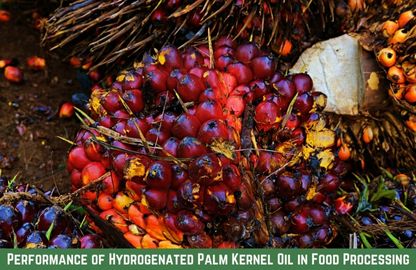
Hydrogenated palm kernel oil is widely valued in food production where firmness, resistance to heat, and reliable crystallization are essential.
In confectionery systems such as coatings, centers, and cocoa butter alternatives, hydrogenated PKO supports the snap, gloss, and melt behavior needed for consumer appeal. Processed palm kernel stearin and refined palm kernel fractions, when blended with HPKO, enable tailored melting curves required for premium coatings or fat-based fillings.
In bakery applications, the semi-solid structure of hydrogenated palm kernel fat enhances dough handling, improves aeration, and contributes to stable textures in pastries, biscuits, and shortenings. Its high-melting fat crystals help products retain shape during storage and transport.
By contrast, non-hydrogenated PKO remains valuable where softness, fluidity, or a lower melting threshold are beneficial, such as creamy fillings or light spreads. But in warmer climates or high-heat processes, its lower oxidative resilience and softer structure may require stabilizers, antioxidants, or alternative blends, making HPKO more predictable and less reactive for manufacturers who prioritise consistency.
Hardened palm kernel oil benefits for cosmetics and personal care formulations
Hardened palm kernel oil, another name used for fully hydrogenated PKO, plays a different role in personal care. Its wax-like consistency provides a desirable structure for balms, lipsticks, creams, and emollients requiring definite body and firmness.
The absence of unsaturated bonds reduces its vulnerability to oxidative changes, preventing odor development and discoloration during long-term storage. This stability allows cosmetic chemists to create robust formulations capable of withstanding transport, heat exposure, and prolonged shelf time.
Meanwhile, non-hydrogenated PKO or PKO olein delivers a lighter, more fluid feel beneficial for lotions, massage oils, or emulsions that require enhanced spreadability. These softer fractions, however, cannot replicate the structural strength offered by hydrogenated PKO in stick or balm products.
Hydrogenated lauric fat in specialty technical applications
In industrial settings, hydrogenated lauric fat derived from PKO plays an important role in engineered fats, technical greases, molded fat systems, and certain non-food uses such as surfactant intermediates. Its resistance to breakdown during repeated heating cycles ensures consistency in manufacturing environments where heat, shear, and storage variability are expected.
Fully hydrogenated grades also provide improved oxidative stability, reducing the risk of rancid notes or degradation in long-term applications such as soap bases, oleochemical derivatives, or specialty lubricants.
Hydrogenated palm kernel oil stability advantages in oxidative, thermal, and processing conditions
Hydrogenated palm kernel oil demonstrates exceptional oxidative stability because hydrogenation eliminates nearly all reactive unsaturation. This greatly slows peroxidation, preventing spoilage in food systems and degradation in chemical formulations. The stability benefits include lower reliance on antioxidants, fewer off-flavors in food applications, and cleaner product profiles in personal care.
Thermally, HPKO withstands wide fluctuations without major alterations in texture or functionality. Its steady behavior during heating, molding, cooling, and storage allows plants to run predictable processes without product softening, separation, or unexpected melting.
By comparison, non-hydrogenated PKO remains more sensitive to oxidation and shifts more dramatically under temperature changes. For many manufacturers, this sensitivity translates to more stringent storage conditions, shorter product life, or a need for stabilizing additives.
Hydrogenated palm kernel oil cost dynamics for manufacturers assessing economic feasibility
Hydrogenated palm kernel oil carries a higher processing cost due to hydrogen gas, catalysts, energy input, filtration, and subsequent purification. This additional processing creates a premium over non-hydrogenated PKO, which needs only extraction, refining, and sometimes fractionation.
Nonetheless, cost per unit is only one piece of the economic picture. HPKO’s superior stability can reduce waste, limit product rejection rates, decrease antioxidant requirements, and improve shelf life—offsetting some of the initial premium.
Supply availability also affects pricing. Hydrogenated PKO production depends on specialized hydrogenation plants, which may not be present in all producing regions. Non-hydrogenated PKO enjoys wider availability, but fluctuations in the supply of lauric oils and palm kernel outputs can influence both categories.
Manufacturers must compare not just raw cost but cost-in-use, particularly in products where firmness, consistency, and stability directly affect marketable value.
Processed palm kernel stearin and other non-hydrogenated alternatives for comparison
Non-hydrogenated alternatives include refined PKO, palm kernel stearin, palm kernel olein, and interesterified blends. Palm kernel stearin offers firmness without chemical modification, while its olein counterpart provides fluidity for emulsions or liquid formulations.
Interesterified fats, created by rearranging triglycerides, can mimic some hydrogenated fat properties without hydrogenation. These alternatives may reduce dependency on hydrogenation infrastructure but introduce their own processing costs and technical challenges.
Each alternative comes with functional strengths and limitations in spreadability, melt behavior, oxidative stability, and textural performance. Manufacturers evaluating alternatives must carefully test melting point, stability performance, and formulation compatibility.

Hydrogenated palm kernel oil considerations for strategic manufacturing decisions
Manufacturers deciding between hydrogenated palm kernel oil and non-hydrogenated alternatives must evaluate performance demands, supply chain risks, regulatory conditions, and economic constraints. Hydrogenated PKO is often ideal for structured fats, chocolates, molded confectionery, bar soaps, balms, and technical applications where firm, stable fats are essential.
Non-hydrogenated PKO, PKO stearin, olein fractions, or interesterified blends provide viable solutions in lighter, fluid, or low-melting formulations. The choice depends on application needs, product stability requirements, and whether thermal resistance or oxidative durability outweighs cost considerations.
Conclusion
Hydrogenated palm kernel oil and its non-hydrogenated counterparts each offer unique advantages for industrial users. Hydrogenated PKO provides enhanced structure, improved oxidative performance, predictable crystallization, and higher melting resistance—qualities essential in confectionery, personal care, and specialty technical formulations.
Non-hydrogenated PKO and its derivatives offer more fluid, lighter, and lower-cost options suitable for soft textures, creams, and formulations not requiring high thermal resistance.
For manufacturers, the decision ultimately rests on technical requirements, formulation goals, process behavior, and long-term cost efficiency. Evaluating both fat types through pilot testing and performance analysis ensures the chosen fat supports the final product’s texture, quality, and stability.