

Laundry Soap Noodles: The Bulk Raw Material Behind Affordable Fabric Washing Bars Across Africa, Asia, and the Middle East
Laundry Soap Noodles are the foundational raw material for one of the world's largest segments of consumer goods manufacturing: laundry bar soap. From the high-volume TFM 60 grades that power affordable fabric washing bars across Sub-Saharan Africa to the TFM 72 grades preferred by quality-conscious manufacturers in North Africa and the Middle East, Laundry Soap Noodles are a distinct and technically specific category of soap noodle with their own formulation logic, quality parameters, and market economics. Understanding how Laundry Soap Noodles differ from toilet soap noodles, how the TFM grade selection maps to different geographic markets and consumer price points, and what quality parameters to verify when placing a bulk order is essential knowledge for every soap manufacturer, importer, and commodity buyer operating in this category. This article provides the complete guide.

What Are Laundry Soap Noodles and What Distinguishes Them from Other Grades?
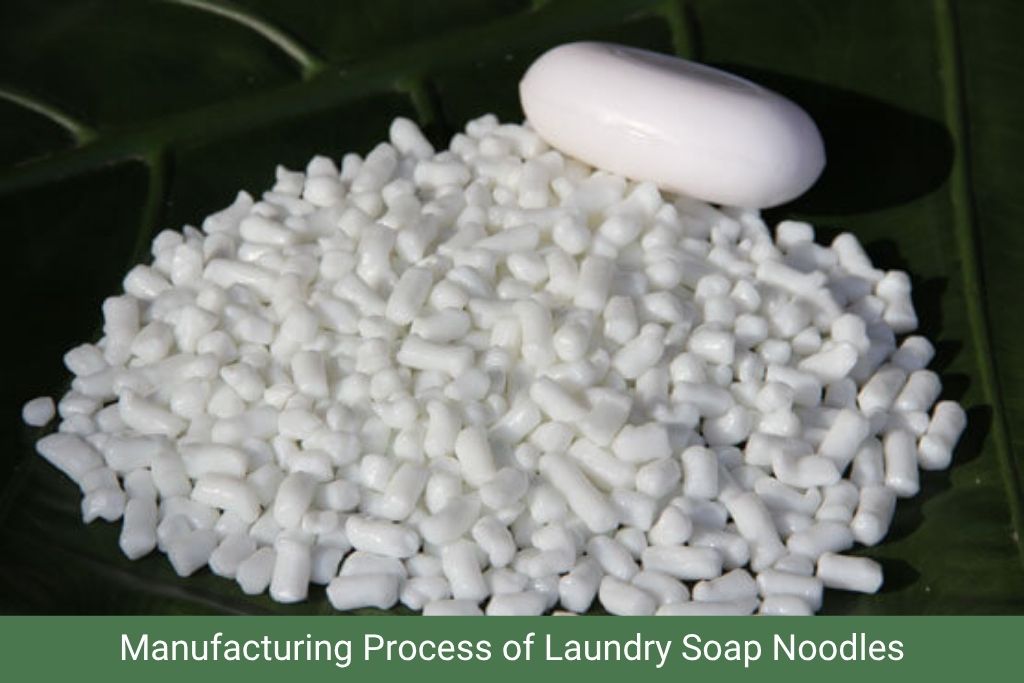
Laundry Soap Noodles are a category of soap noodle specifically formulated for the production of laundry bar soap used in fabric washing. The defining characteristic that separates Laundry Soap Noodles from toilet or bath soap grades is the Total Fatty Matter (TFM) percentage, which in laundry grades typically ranges from 60 to 72 percent rather than the 78 to 80 percent characteristic of toilet soap noodles. This lower TFM specification reflects the different performance requirements of laundry soap compared to skin-contact toilet soap: laundry soap prioritises cleaning power and fabric penetration in hard water conditions over the skin mildness and moisturising properties that consumer toilet soap must deliver. Laundry Soap Noodles are therefore formulated with a higher proportion of short-chain fatty acid sodium salts (from palm kernel oil) relative to their toilet soap counterparts, maximising detergency and foam generation in water, and with a lower overall fatty acid salt content that allows price-competitive production for markets where laundry soap is a high-volume, low-margin commodity product. Olivia Oleo exports Laundry Soap Noodles in bulk quantities to soap manufacturers across Africa, the Middle East, South Asia, and Southeast Asia.
Read Our Article
Soap Noodles Guide - White, Multipurpose, and Laundry Soap NoodlesWhat Is the Manufacturing Process for Laundry Soap Noodles?
The manufacturing process for Laundry Soap Noodles follows the same fundamental saponification chemistry as all soap noodle production, with specific process parameter adjustments to achieve the lower TFM grade. The primary feedstock blend for laundry soap noodles typically uses a higher proportion of RBD Palm Oil relative to RBD Palm Kernel Oil compared to toilet soap grades - often 80:20 or higher palm to palm kernel ratio - because a higher proportion of C16 palmitate from palm oil contributes to bar hardness and washing performance in hot water laundry conditions. In the soap noodle manufacturing process, the oil blend is saponified in a continuous saponification reactor with sodium hydroxide solution, and the resulting soap mass is washed with brine (salt water) to separate the soap phase from the glycerine and water phase. The washed soap crutcher mass is then dried in a vacuum spray drying tower to reduce moisture content, after which it is extruded through a perforated plate to produce the noodle-shaped pellets that give the product its name. For laundry grades, the drying conditions and final moisture target are adjusted to achieve the specification moisture content of 1.0 percent maximum.
Our Other Products
Surfactants - SLES, CAPB/Betaine, Fatty Alcohol Ethoxylates, CDEA, LABSAHow Do Laundry Soap Noodles Differ from Toilet Soap Noodles in Formulation and Performance?
| Parameter | Laundry Soap Noodles (TFM 60–72%) | Toilet Soap Noodles (TFM 78–80%) |
|---|---|---|
| TFM range | 60–72% | 78–80% |
| Primary application | Fabric washing, laundry bars | Bath and personal care bars |
| Skin contact intended | No | Yes |
| Palm to PKO ratio | 80:20 or higher palm | 80:20 to 90:10 palm to PKO |
| Free fatty acid (max) | 0.5% | 0.3% |
| Free caustic alkali (max) | 0.1% | 0.05% |
| Moisture (max) | 1.0% | 0.8% |
| Price positioning | Lower cost per tonne | Premium per tonne |
| Primary markets | Sub-Saharan Africa, South Asia | Middle East, Asia, Global |
Which TFM Grade of Laundry Soap Noodles Is Right for Which Market?
The appropriate laundry soap noodle TFM grade varies significantly by destination market, consumer preference, and price sensitivity. In Sub-Saharan Africa - the world's largest market for laundry bar soap by volume - TFM 60 and TFM 65 grades dominate because the price-per-bar is the primary consumer purchasing criterion and the water quality in many areas is hard enough that any soap grade delivers adequate cleaning performance. In North Africa (Egypt, Morocco, Algeria) and the Middle East, TFM 65 to 72 grades are preferred because consumers and institutional buyers in these markets expect somewhat higher-quality bars with better lather performance in moderately hard water. In South Asia (India, Pakistan, Bangladesh), Laundry Soap Noodles at TFM 60 to 65 are standard for the mass market, with some manufacturers upgrading to TFM 72 for branded products positioned slightly above the commodity segment. Soap manufacturers sourcing Laundry Soap Noodles Wholesale for re-export to multiple destination markets often request specification flexibility from their supplier to source a single TFM grade that meets the minimum requirements of all target markets, which Olivia Oleo can accommodate through its standard export grade offerings.

What Are the Key Quality Parameters That Laundry Soap Noodle Buyers Should Verify?
For buyers sourcing Laundry Soap Noodles from a Laundry Soap Noodles Supplier or Laundry Soap Noodles Exporter, the Certificate of Analysis for each production lot should be reviewed against the following critical parameters. TFM content should be declared and tested per ISO 685 or an equivalent recognised method. Free caustic alkali should be below 0.1 percent as NaOH - excess caustic causes skin irritation if the soap noodle is used in any personal care application and can accelerate rancidity. Free fatty acid content should be below 0.5 percent to ensure complete saponification and avoid the greasy feeling that excess FFA creates in the finished bar. Moisture content should be below 1.0 percent to ensure bar hardness and processability in the customer's plodder. Sodium chloride content should be declared and is typically 0.3 to 0.7 percent in commercially produced soap noodles from the brine-washing step. Colour and odour should be assessed on receipt: Laundry Soap Noodles should be white to pale cream in colour with a mild characteristic soap odour and no off-note suggesting rancidity or microbial activity.
How Are Laundry Soap Noodles Shipped and What Are the Import Requirements for Bulk Buyers?
Laundry Soap Noodles are shipped in 25-kilogram multi-wall paper bags with polyethylene inner moisture barriers, typically palletised on heat-treated wooden pallets at 1,000 to 1,200 kilograms per pallet. Full container loads (FCL) of 20-foot containers carry approximately 18 to 20 metric tonnes of bagged soap noodles. Buyers in Africa, the Middle East, and South Asia typically import on CIF (Cost, Insurance, Freight) terms with Olivia Oleo arranging the shipping, marine insurance, and export documentation including a Certificate of Origin, Certificate of Analysis, Health Certificate, Fumigation Certificate, and Halal Certificate from an internationally recognised certifying body. Import duties on soap noodles vary by destination country and HS code classification - soap noodles are classified under HS 3401.20 in most markets, though some countries apply different duty rates depending on the TFM grade or the saponification feedstock declared. Olivia Oleo's export team provides buyers with the full documentation set required for customs clearance in all principal import markets for Laundry Soap Noodles and can assist with letter of credit, documentary collection, and open account payment terms depending on the buyer relationship and order history.
Laundry Soap Noodles Procurement: TFM Grade Selection, Quality Verification, and Bulk Export from Singapore
Laundry Soap Noodles are a high-volume, price-sensitive commodity where TFM grade selection, quality consistency, and reliable export logistics determine the commercial success of every production run. Whether your target market is Sub-Saharan Africa demanding TFM 60 to 65 for value-segment laundry bars, North Africa and the Middle East requiring TFM 65 to 72 for better-performing fabric washing soap, or South Asia sourcing mid-grade noodles for branded laundry products, Olivia Oleo's bulk export operation covers the full Laundry Soap Noodles range. CIF supply terms, flexible payment structures, and specification consultation for multi-market sourcing are all available from our export team. Contact Olivia Oleo to begin the conversation about your laundry soap noodle supply requirement.