If you've been tracking lauric acid price trends over the past few years, one thing is clear — this market rarely stands still. From volatile coconut oil harvests to shifting global demand across pharmaceuticals, personal care, and food processing, the forces driving cost fluctuations in 2026 are more layered than ever. Whether you're looking to buy lauric acid bulk, evaluate a new lauric acid supplier, or simply understand where the market is heading, this deep-dive covers everything you need to know.

What Is Lauric Acid and Why Does It Matter?
Lauric acid is a medium-chain saturated fatty acid with the chemical formula C12H24O2, naturally occurring in highest concentration in coconut oil and palm kernel oil. It is also found in smaller quantities in human breast milk and certain dairy fats. As a lauric acid chemical, it belongs to the medium-chain fatty acid (MCFA) family and is widely regarded as one of the most functionally versatile fatty acids in industrial and consumer applications.
The reason pricing dynamics matter so much with this compound is simple: lauric acid uses span an extraordinary range of industries. From soap manufacturing and cosmetics to pharmaceuticals, food additives, and industrial lubricants, demand comes from multiple sectors simultaneously — meaning that a disruption in any one of them ripples outward through the entire supply chain and directly impacts what buyers pay.
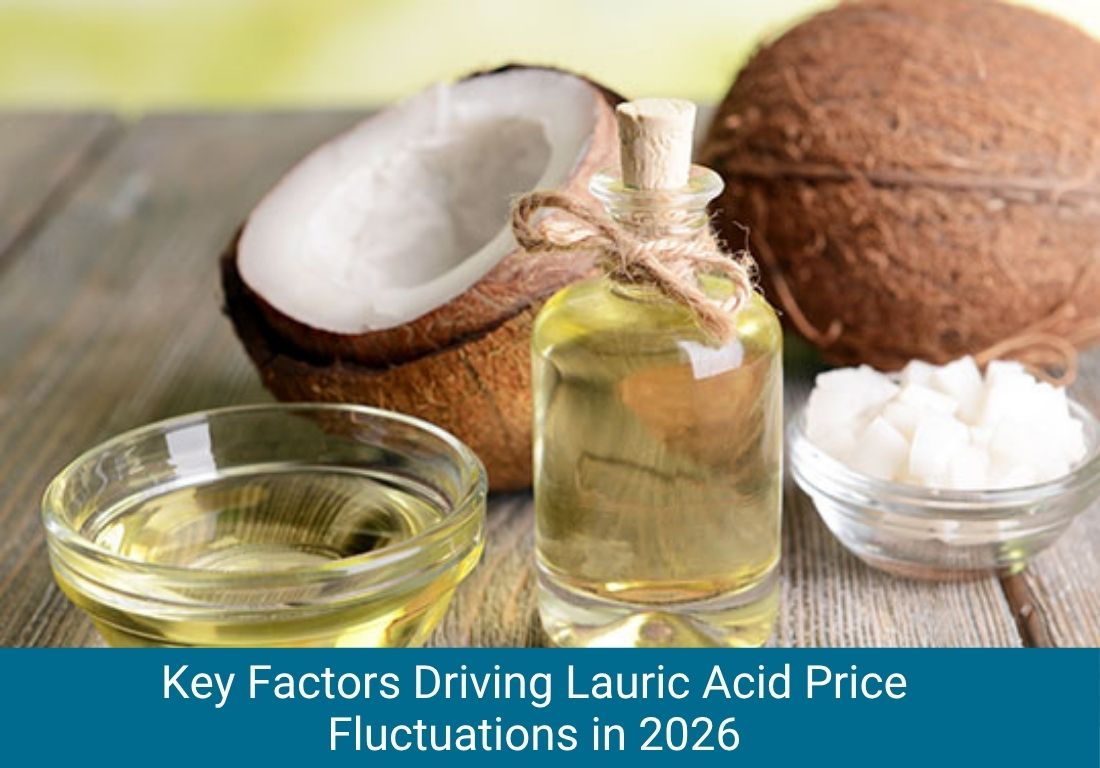
To understand lauric acid price movements, you must first understand its primary raw material: coconut oil. Lauric acid in coconut oil accounts for roughly 45–52% of its fatty acid composition, making coconut oil the dominant feedstock for commercial lauric acid extraction globally.
The vast majority of the world's coconut supply originates from just a handful of countries — the Philippines, Indonesia, India, and Sri Lanka. This geographic concentration creates a structural vulnerability in the supply chain. When any of these regions experience drought, typhoons, or poor harvesting seasons, global supply contracts sharply, pushing raw material costs upward and forcing lauric acid manufacturers to revise their pricing accordingly.
In 2026, the Philippines — historically the world's largest coconut oil exporter — has been navigating the aftereffects of irregular monsoon patterns linked to the El Niño cycle. Reduced copra yields have tightened supply at the extraction stage, contributing to upward price pressure on lauric acid derivatives across Southeast Asian and European markets alike.
Read Our Article
The Role of Lauric Acid in Soap Making: A Comprehensive GuideKey Factors Driving Lauric Acid Price Fluctuations in 2026
Coconut and Palm Kernel Oil Volatility
As discussed, raw material availability is the single biggest lever on pricing. Coconut oil and palm kernel oil prices are themselves influenced by weather, currency fluctuations in producing nations, and competing demand from the food and biofuel sectors. When edible oil markets tighten globally, the competition for coconut oil feedstock intensifies — squeezing margins for lauric acid suppliers and increasing costs for downstream buyers.
Energy Costs in Manufacturing
The fractionation and distillation processes used to isolate lauric acid from coconut or palm kernel oil are energy-intensive. In 2026, elevated energy costs across manufacturing hubs in Southeast Asia and Europe continue to add a layer of cost that lauric acid manufacturers cannot easily absorb. These costs are increasingly being passed through to buyers, particularly for smaller order volumes where economies of scale are limited.
Freight and Logistics
Global shipping rates have normalised somewhat from their pandemic-era peaks but remain structurally higher than pre-2020 benchmarks. For buyers seeking to buy lauric acid bulk from overseas lauric acid exporters, freight costs form a meaningful component of the landed price — and any disruption to major trade lanes (such as the Red Sea route adjustments seen in recent years) can introduce sudden cost spikes that affect the total procurement cost.
Demand Surge from Personal Care and Pharmaceuticals
Lauric acid benefits have been increasingly recognised in both the personal care and pharmaceutical industries, expanding the demand base significantly. In cosmetics, lauric acid is valued for its antimicrobial, emulsifying, and skin-conditioning properties. In pharmaceuticals, it is used in drug delivery systems and as an excipient. This expanding demand — particularly from personal care brands in Asia-Pacific and North America — competes with traditional industrial buyers for available supply, creating upward demand-side pressure on pricing.
Currency Exchange Rates
Since the majority of lauric acid production is concentrated in countries like the Philippines, Indonesia, and Malaysia, currency movements between the USD, Philippine Peso, Indonesian Rupiah, and Malaysian Ringgit directly affect export pricing. Depreciation of producing-country currencies can temporarily make exports cheaper for international buyers, while appreciation has the opposite effect. In 2026, currency volatility in Southeast Asia continues to introduce short-term fluctuations in lauric acid price quotations from lauric acid exporters.
Our Other Products
Speciality FatsLauric Acid Uses: Why Demand Keeps Growing
Understanding demand growth is as important as understanding supply constraints when analysing price dynamics. Lauric acid uses in 2026 span a wider range than ever before:
Personal Care & Cosmetics: Lauric acid is a foundational ingredient in soaps, shampoos, cleansers, and moisturisers. Its natural antimicrobial properties and excellent lathering characteristics make it irreplaceable in formulations for both mass-market and premium personal care products.
Pharmaceuticals: One of the most discussed lauric acid benefits in recent years is its antiviral and antimicrobial activity — properties that have accelerated its use in nutraceuticals, drug excipients, and topical antimicrobial formulations.
Food Industry: Lauric acid is used as a food preservative and flavouring agent, and its presence in coconut-derived ingredients continues to grow as consumer demand for natural food additives rises globally.
Industrial Applications: From metalworking lubricants to plasticisers and rubber chemicals, industrial lauric acid chemical applications represent a steady, volume-driven demand base that underpins baseline pricing even when consumer-facing sectors fluctuate.
Animal Feed: Supplementation with lauric acid in poultry and swine feed has grown substantially, driven by its role as a natural alternative to antibiotic growth promoters.
How to Navigate Pricing Volatility as a Buyer
For procurement managers and formulators looking to manage lauric acid price risk in 2026, several strategies are worth considering:
Lock in Forward Contracts: When prices are stable or trending downward, negotiating forward supply agreements with lauric acid suppliers can protect against sudden spikes driven by raw material or logistics disruptions.
Diversify Your Supplier Base: Relying on a single lauric acid supplier or geography creates concentration risk. Working with multiple lauric acid exporters across different producing regions — Philippines, Indonesia, and India — provides flexibility when one source faces disruption.
Buy in Bulk Strategically: For high-volume users, the decision to buy lauric acid bulk during periods of supply abundance or price dips can significantly reduce per-unit costs. However, this requires adequate storage capacity and careful inventory planning.
Evaluate Domestic vs. Import Options: Depending on your location, working with regional lauric acid manufacturers may offer freight cost savings and faster lead times that partially offset any price premium over imported product.
Monitor Raw Material Indices: Tracking coconut oil and palm kernel oil futures — particularly through the Philippine Coconut Authority data or ICCO reports — gives early signals of upcoming price movements in the lauric acid market before they are reflected in supplier quotations.
What to Look for in a Lauric Acid Supplier
With pricing dynamics this complex, supplier reliability matters as much as price. When evaluating a lauric acid supplier or comparing lauric acid manufacturers, key factors include:
- Purity certifications: Food-grade, pharmaceutical-grade, and industrial-grade lauric acid carry different purity specifications. Ensure your supplier can consistently deliver the grade your application requires.
- Batch consistency: For formulators in personal care and pharma, batch-to-batch consistency is non-negotiable. Request Certificate of Analysis (CoA) documentation as a standard practice.
- Logistics capability: The best lauric acid exporters maintain reliable cold-chain or moisture-controlled logistics to preserve product integrity during transit.
- Responsiveness and lead times: In a volatile market, a supplier who communicates proactively about availability and pricing changes is worth more than the lowest quoted price.
Outlook for Lauric Acid Pricing in 2026
The overall trajectory for lauric acid price in 2026 points to continued moderate volatility rather than dramatic spikes or declines. Supply-side pressures from coconut oil production constraints in the Philippines are likely to persist through mid-year, providing a floor under prices. On the demand side, growth from personal care, pharmaceuticals, and animal nutrition will keep absorption strong.
Buyers who approach procurement strategically — diversifying suppliers, monitoring raw material signals, and building strong relationships with trusted lauric acid manufacturers — will be best positioned to manage cost exposure effectively.
The long-term fundamentals for lauric acid remain strongly positive. Its broad range of natural lauric acid benefits, growing regulatory preference for bio-based ingredients, and irreplaceable role in both consumer and industrial formulations ensure that demand will continue to expand — making a thorough understanding of pricing dynamics not just useful, but essential for anyone active in this market.