

Objective:
This article aims to explore the transformative impact of nanotechnology on soap noodles, shedding light on how this innovation may shape the future of soap manufacturing. Targeted towards professionals in the soap manufacturing and chemical industries, including Soap Noodles Exporters, suppliers and formulators, the content highlights the potential for nanotechnology to improve soap performance, enhance production processes and deliver advanced product functionalities. Olivia Oleo explore into how nanotechnology can redefine soap noodles, such as toilet soap noodles, laundry soap noodles and multipurpose soap noodles, setting the stage for the next generation of soap products.

Introduction
Soap noodles have long been an essential component in the soap production process, serving as the foundation for various products, from toilet soap noodles to laundry soap noodles. With advancements in technology, the soap noodles industry is poised to experience a significant transformation. A key driver of this change is the integration of nanotechnology, which is already making waves in numerous industries, from medicine to electronics. But its impact on soap noodles could be far-reaching, driving innovation, enhancing product efficiency and offering new functionalities that were once considered impossible.
In this article, we explore the potential of nanotechnology in soap noodles, examining how this cutting-edge technology can revolutionize the soap production process and the types of products that can be created. From enhancing soap noodles' performance to enabling the development of formulations, nanotechnology is paving the way for a new era in soap innovation.
Understanding Soap Noodles: A Foundation for Innovation
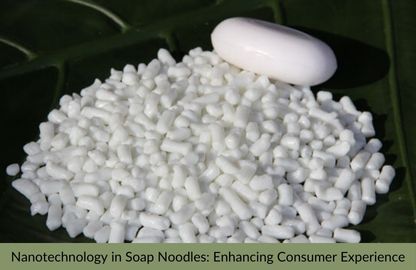
Soap noodles are produced by combining various ingredients, such as fatty acids, oils and alkalis, to create a soap base that can be further processed into a variety of products. These raw materials serve as the core element for toilet soap noodles, laundry soap noodles and multipurpose soap noodles, each formulated to meet the specific needs of consumers.
Typically, soap noodles are made using ingredients such as palm oil combined with sodium hydroxide to create a saponification process. The resulting soap base is then cut into small, granular forms that can be moulded into different products. Over time, these soap noodles have evolved, with manufacturers exploring new ingredients and formulations to meet consumer demand for high-performance products.
However, the advent of nanotechnology promises to take this evolution even further, enabling manufacturers to innovate in ways that were previously unimaginable.
The Role of Nanotechnology in Soap Noodles
Nanotechnology is the science and engineering of manipulating matter at the atomic and molecular levels, typically between 1 and 100 nanometers. The integration of nanotechnology in soap noodle production can profoundly alter both the composition of the soap base and the properties of the final product. Let’s explore the specific ways nanotechnology can shape the future of soap noodles.
Revolutionizing Soap Noodle Production Processes
One of the primary ways nanotechnology can impact soap noodles is by enhancing the production processes themselves. By manipulating the size and structure of molecules at the nanoscale, manufacturers may be able to create more homogeneous soap noodles with improved consistency. The process of incorporating nanoscale particles into soap noodles may also improve the way the ingredients bind together, reducing inconsistencies and ensuring that the final product is uniform.
Additionally, the incorporation of nanotechnology into the production of soap noodles may lead to more efficient manufacturing techniques. For instance, the reduced particle size enabled by nanotechnology could allow for better emulsification of ingredients, enabling faster and more effective saponification. This could lead to a reduction in processing time and energy consumption, contributing to a more streamlined and cost-effective production process.
Enhancing Functionalities with Nanoparticles
One of the most exciting possibilities that nanotechnology brings to soap noodles is the ability to incorporate functional nanoparticles that can enhance the properties of soap products. For example, active ingredients such as moisturizers, antioxidants or even fragrances can be embedded into nanoparticles, which are then integrated into the soap noodle structure.
By embedding these active ingredients in nanoparticles, manufacturers can increase the stability and effectiveness of the ingredients. The smaller size of nanoparticles enables better delivery of these ingredients to the skin during use, ensuring that they are more readily absorbed and providing enhanced benefits, such as improved hydration or skin protection.
For products like Snow White Soap Noodles, which are prized for their smooth texture and bright appearance, nanotechnology can enable more consistent coloration and a more refined surface texture, improving the overall sensory experience for the consumer. Moreover, the incorporation of functional nanoparticles in soap noodles could open doors to entirely new product lines, such as soaps that are tailored for specific skin concerns or offer additional skin benefits.
Advanced Soap Noodles for Specialized Markets
Nanotechnology has the potential to enable the development of highly specialized soap noodles that cater to niche markets. For example, laundry soap noodles could be enhanced with nanoparticles designed to improve cleaning performance. These nanoparticles can target dirt and stains at a molecular level, offering superior cleaning power even at lower temperatures or with reduced detergent quantities.
Additionally, the use of nanotechnology in multipurpose soap noodles may enable the creation of soap products that can effectively clean a wider range of surfaces, from fabrics to household items, while simultaneously offering skin care benefits. The adaptability of nanotechnology allows manufacturers to create soap noodles with tailored properties for specific functions, thus expanding the range of available products and meeting the diverse needs of consumers.
Improved Soap Noodles: A New Era of Consumer Experience
One of the fundamental benefits of nanotechnology in soap noodles is the potential to significantly enhance the consumer’s experience. From the moment a bar of soap is used, consumers expect it to perform well, feel pleasant on the skin and leave behind a satisfying fragrance. Nanotechnology can take this experience to the next level by improving not just the functional properties of the soap but also the sensory aspects of soap use.
For instance, the size and texture of soap noodles can be finely tuned through nanotechnology, resulting in soap that lathers more quickly and evenly. The enhanced emulsification enabled by nanoparticles can lead to a creamier lather that feels luxurious on the skin, which is particularly important for high-end toilet soap noodles.
In addition to texture and lather, nanotechnology can also play a role in fragrance delivery. Nano-encapsulated fragrance molecules can be incorporated into soap noodles, allowing for a controlled release of scent during use. This controlled release ensures that the fragrance lasts longer, providing a more lasting sensory experience for the user.
Nanotechnology: Driving Future Soap Noodle Innovation
The integration of nanotechnology into soap noodles is not just a passing trend, but rather a long-term evolution that may define the future of soap innovation. As the demand for personalized and high-performance products increases, manufacturers are likely to continue exploring the potential of nanotechnology to meet consumer expectations.
In the coming years, we can expect to see further refinement of nanotechnology techniques, as well as a broader range of products incorporating nanoscale elements. Soap noodles with advanced functionalities may become commonplace, offering not only superior cleaning and skincare properties but also new and personalized experiences for consumers.
The future of soap innovation is set to be influenced by the ongoing developments in nanotechnology. As researchers continue to explore the applications of this technology, it is likely that even more ground-breaking solutions will emerge, enabling the creation of soap noodle ingredients that go beyond basic cleaning to offer truly revolutionary benefits.

Conclusion
The integration of nanotechnology into soap noodles is poised to reshape the future of soap innovation. With the potential to enhance soap performance, improve production efficiency and enable the creation of specialized, high-functioning products, nanotechnology stands at the forefront of the soap industry’s next great leap forward.
From improved texture and lather to the incorporation of advanced active ingredients, nanotechnology offers soap noodle exporters the ability to meet the growing demands of the modern world. As the industry embraces this technological revolution, the soap products of the future may offer more than just cleanliness - they will deliver enhanced experiences, better results and increased satisfaction. The future of soap noodles, powered by nanotechnology, promises a new era of soap innovation that will continue to evolve and redefine the market.