

Growing Demand for Oleic Acid Export in the Middle East Market (2026 Outlook)
The Middle East has steadily transformed into a dynamic hub for specialty chemicals, personal care ingredients and industrial raw materials. Among these, Oleic Acid has gained remarkable traction due to its wide-ranging applications in soaps, detergents, lubricants, coatings, pharmaceuticals, textiles and food processing. As we move toward 2026, the regional landscape is witnessing a noticeable surge in import volumes, particularly across Gulf Cooperation Council (GCC) markets and neighboring trade-linked economies.
While the GCC officially comprises Saudi Arabia, UAE, Kuwait, Oman, Bahrain and Qatar, trade flows and consumption trends often extend to connected markets such as Jordan, Lebanon, Egypt, Iraq, Turkey and Azerbaijan. These countries, through free trade agreements, re-export corridors and industrial collaborations, significantly influence the overall oleic acid market in the region. Understanding import patterns, end-use industries and competitive positioning is crucial for suppliers targeting growth in 2026.
Oleic Acid Market Overview in the GCC and Broader Middle East
The oleic acid market across the GCC and its trade-linked economies is shaped by three key drivers: industrial expansion, population growth and diversification away from oil-based revenues. Governments are investing heavily in downstream manufacturing sectors, including petrochemicals, personal care products, pharmaceuticals and food processing. This shift is directly impacting oleic acid production demand and import volumes.
In many Middle Eastern countries, local oleic acid production remains limited compared to demand. While some nations have strong refining and petrochemical bases, they rely on imports for fatty acids and oleochemicals due to cost efficiency and feedstock constraints. This creates an attractive environment for Oleic Acid Exporters, particularly those with consistent quality, reliable shipping routes and competitive pricing models.
The UAE and Saudi Arabia, in particular, act as redistribution hubs. Import trends indicate that buyers increasingly prefer long-term contracts with experienced Oleic Acid Suppliers who can provide stable supply and transparent market intelligence.
By 2026, the regional oleic acid market is expected to see further consolidation, with large industrial buyers seeking trusted partnerships rather than spot purchases. This shift benefits exporters with established track records and diversified product portfolios.
Oleic Acid Demand in Saudi Arabia: Industrial Diversification and Manufacturing Growth
Saudi Arabia remains the largest economy in the GCC and a major driver of chemical imports. As part of its Vision 2030 initiative, the country has accelerated investments in non-oil industries, including personal care manufacturing, lubricants, plastics, coatings and pharmaceuticals - all of which use Oleic Acid in varying formulations.
Oleic acid production capacity is present but insufficient to fully meet downstream industrial demand. Many Saudi manufacturers prefer importing from established Oleic Acid Exporters due to cost advantages and consistent quality specifications. The demand is particularly strong in:
- Soap and detergent manufacturing
- Textile processing
- Oilfield chemicals
- Metalworking fluids
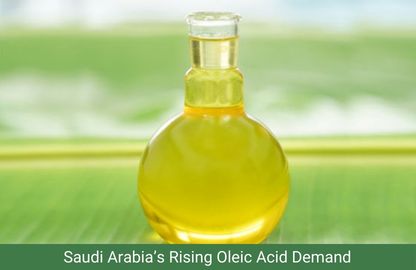
With expanding industrial zones in Jubail and Yanbu, import volumes are projected to increase steadily through 2026. Saudi buyers are also focusing on supply chain efficiency, often negotiating bulk shipments via Jeddah and Dammam ports. For any Oleic Acid Manufacturer aiming to penetrate the Middle East, Saudi Arabia offers scale, stability and long-term procurement contracts.
Oleic Acid Import Trends in the UAE: Regional Re-Export Hub
The UAE stands out as both a major consumer and a redistribution center for Oleic Acid across the Middle East and Africa. Dubai’s Jebel Ali Port serves as a central node for chemical imports, making the UAE a preferred destination for Oleic Acid Exporters.
The local oleic acid market is driven by:
- Cosmetics and personal care manufacturing
- Industrial cleaning products
- Food processing industries
- Specialty lubricants
What makes the UAE unique is its strong re-export model. A significant portion of imported Oleic Acid is redistributed to neighboring countries, including Oman, Bahrain and even East African markets. This amplifies total import volumes beyond domestic consumption figures.
Importers in the UAE demand high-quality documentation, clear technical data sheets and competitive freight rates. Singapore-based suppliers often benefit from strong maritime connectivity and efficient lead times. As 2026 approaches, the UAE is expected to strengthen its role as a trading hub, increasing the importance of strategic partnerships with reliable Oleic Acid Suppliers.
Our Other Products
Soap NoodlesOleic Acid Market in Kuwait: Niche but Stable Growth
Kuwait’s chemical and manufacturing sector is relatively smaller compared to Saudi Arabia or the UAE, yet it demonstrates stable demand for Oleic Acid in detergents, soaps and lubricants. Local manufacturers often depend on imports due to limited oleic acid production capacity.
The country’s petrochemical base provides opportunities for integration into downstream applications, but specialty oleochemicals are typically sourced from global Oleic Acid Exporters. Kuwaiti buyers prioritize product purity, consistent iodine value and competitive pricing.
As infrastructure and housing projects continue to grow, demand for cleaning products and coatings is expected to increase. This indirectly boosts the oleic acid market in Kuwait. Import trends indicate preference for consolidated shipments routed through UAE distribution centers or direct bulk imports via Shuwaikh Port.
Oleic Acid Demand in Oman and Bahrain: Emerging Industrial Users
Oman and Bahrain, though smaller in population, are actively promoting manufacturing diversification. Industrial parks and free zones have attracted soap manufacturers, food processors and small-scale chemical blending facilities.
In Oman, port facilities at Sohar and Salalah have enhanced import efficiency. Buyers often look for long-term supply contracts with established suppliers to mitigate price volatility. Bahrain, benefiting from its connectivity with Saudi Arabia via the King Fahd Causeway, also imports through regional trade networks.
Oleic Acid demand in these countries is driven mainly by:
- Soap noodle manufacturing
- Textile finishing
- Metal treatment fluids
- Food-grade applications
By 2026, both Oman and Bahrain are expected to increase imports moderately, aligning with broader GCC growth patterns.
Oleic Acid Import Landscape in Jordan and Lebanon
Although not GCC members, Jordan and Lebanon are closely tied to GCC trade flows. These markets rely heavily on imports due to minimal oleic acid production capabilities. Their demand is centered around small-to-medium scale soap manufacturers, cosmetics producers and food processing units.
Jordan benefits from relatively stable industrial activity and acts as a transit point for Iraqi trade. Lebanon, despite economic challenges, maintains demand for specialty chemicals in personal care manufacturing.
For Oleic Acid Exporters, these markets may not offer massive volumes but provide consistent niche demand. Flexible shipment sizes and distributor partnerships are often key to market penetration.
Oleic Acid Demand in Egypt and Iraq: Expanding Consumer Markets
Egypt represents one of the largest consumer markets in the Middle East. Its vast population drives strong demand for soaps, detergents and edible oil derivatives. While some oleic acid production exists domestically, imports continue to fill supply gaps, particularly for higher purity grades.
Iraq, rebuilding its industrial base, increasingly imports raw materials for basic manufacturing. Demand for Oleic Acid is rising in soap production and small-scale chemical blending units.
Both countries present growth opportunities for experienced Oleic Acid Suppliers who can manage complex logistics and regulatory requirements. As infrastructure improves, import volumes are expected to climb steadily toward 2026.
Read Our Article
Oleic Acid in Detergents: Breaking Boundaries in CleaningOleic Acid Market in Turkey and Azerbaijan: Strategic Trade Corridors
Turkey serves as a bridge between Europe and the Middle East. It has notable oleic acid capacity, yet it continues to import to meet industrial requirements. Turkish manufacturers in textiles, coatings and personal care sectors contribute significantly to the regional oleic acid market.
Azerbaijan, though smaller, leverages its oil-driven economy to diversify into downstream chemical industries. Imports of Oleic Acid are modest but growing, especially for industrial lubricants and specialty formulations.
Both markets value competitive pricing and consistent supply. Exporters with strong freight networks and adaptable packaging options gain a competitive edge.
Oleic Acid Production and Supply Chain Dynamics in 2026
Global oleic acid production is largely concentrated, particularly in countries with abundant palm and vegetable oil feedstock. As feedstock prices fluctuate, the cost structure of oleic acid manufacturers also shifts. Middle Eastern buyers are highly sensitive to price trends, often timing purchases based on palm oil market movements.
Shipping routes to GCC ports remain efficient, typically range some days depending on the destination. Freight optimization, bulk containerization and transparent pricing are key competitive factors.
By 2026, supply chain strategies will likely emphasize:
- Long-term supply agreements
- Flexible contract pricing models
- Regional warehousing solutions
Oleic Acid Exporters who combine market intelligence with responsive logistics will secure stronger footholds across GCC countries.
Oleic Acid Exporter Perspective: Why the Middle East Matters
For a Singapore-based Oleic Acid Exporter, the Middle East offers:
- Geographic proximity
- Strong maritime connectivity
- Growing industrial diversification
- Stable currency environments in GCC states
The oleic acid market in this region is less saturated compared to Europe or North America, offering room for expansion. Buyers increasingly seek partnerships with exporters who provide more than just product - they want pricing insights, seasonal market updates and reliable forecasting support.
As industries mature, quality certifications, consistent specifications and transparent communication will define successful exporter-buyer relationships.
Why Choose a Trusted Oleic Acid Exporter for GCC Import Supply Chains
We at Olivia Oleo Pte Ltd deliver value with an aspiration to become market leaders in palm oil and its derivatives. Backed by over three decades of industry experience, our knowledgeable management team understands the full product lifecycle and market dynamics. As a trusted Oleic Acid Supplier and Oleic Acid Exporter, we provide premium-quality products supported by competitive freight and streamlined supply chain management. Our portfolio includes non-edible solutions such as fatty acids, soap noodles, refined glycerine, fatty alcohols and palm acid oil, along with edible products like RBD Palm Olein, RBD Coconut Oil and vegetable shortening. With strong market intelligence, seasonal insights and customer-focused service, we support clients across the Middle East and beyond with reliable sourcing and timely delivery.

Conclusion:
As we approach 2026, the trajectory of Oleic Acid imports across GCC countries and their trade-linked neighbors remains firmly upward. Industrial diversification, growing consumer markets and expanding downstream manufacturing are fueling consistent demand. While Saudi Arabia and the UAE dominate in volume, emerging opportunities in Oman, Bahrain, Jordan, Egypt and Iraq add depth to the regional oleic acid market.
For Oleic Acid Manufacturers and Oleic Acid Exporters, success will hinge on competitive pricing, dependable logistics and long-term strategic partnerships. The Middle East is no longer just a consumption market - it is evolving into a distribution and manufacturing powerhouse. Those who align early with regional import trends will be well-positioned to capture growth in the coming years.