

Objective:
This article explores the latest technological advancements in the oleochemical industry, focusing on process optimization, eco-friendly production methods and innovations in the development of bio-based products. It delves into key aspects such as enzymatic hydrolysis, new catalysts for improved yield and the growing role of oleochemicals in biodegradable plastics and bio-based surfactants. Additionally, it addresses operational issues and quality control in modern oleochemical processing.

Recent Technological Advancements in Oleochemical Processing
The oleochemical industry has undergone significant technological advancements in recent years, driven by the increasing demand for eco-friendly products. These innovations focus on improving process efficiency, reducing environmental impact and increasing the yield and purity of oleochemicals. The integration of advanced technologies, such as high-efficiency distillation systems and automated control systems, has enhanced the production capabilities of oleochemical manufacturers.
One of the most significant developments is the use of more sophisticated refining techniques that allow for the selective extraction and purification of oleochemical derivatives, such as fatty acids, glycerine and alcohols. This has allowed oleochemical suppliers and exporters to meet the growing demand for high-quality oleochemicals used in various industries, including personal care, pharmaceuticals and plastics. Additionally, new process technologies are contributing to the development of bio-based oleo chemicals, offering greener alternatives to traditional petrochemical products.
New Catalysts for Improving Oleochemical Yield and Purity
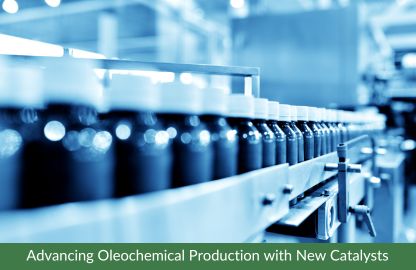
The development of new catalysts has played a crucial role in improving the efficiency and purity of oleochemical production. Catalysts are used to enhance the chemical reactions in the production of various oleochemicals, including fatty acids, esters and alcohols. Recent advancements in catalytic technology have led to more selective catalysts that increase yield and reduce impurities in the final product.
For example, the use of heterogeneous catalysts in the production of biodiesel from oleochemicals has significantly improved the yield and purity of the final product, contributing to the biofuels market. Oleochemical suppliers are increasingly investing in new catalysts to optimize the production of bio-based surfactants, biopolymers and other oleochemical derivatives, ensuring that the products meet industry standards.
Research on Bio-Based Surfactants and Biopolymers from Oleochemical Feedstocks
Oleochemicals are playing an increasingly important role in the development of bio-based surfactants and biopolymers. As the demand for renewable alternatives to petrochemical-based products grows, oleochemicals derived from renewable feedstocks such as vegetable oils and animal fats are being used to create these bio-based products.
Research is ongoing to improve the performance, cost-effectiveness and scalability of bio-based surfactants, which are used in products like detergents, personal care items and industrial cleaners. Similarly, biopolymers derived from oleochemical feedstocks are being explored as eco-friendly alternatives to traditional plastics. Oleochemicals manufacturers are working closely with researchers to scale up these innovations, aiming to meet the growing demand for biodegradable alternatives in various industries.
Oleochemicals in the Development of Biodegradable Plastics
The oleochemical industry is increasingly contributing to the development of biodegradable plastics. Oleochemicals such as fatty acids, glycerol and alcohols are being used to create bio-based polymers that offer an environmentally friendly alternative to conventional petroleum-based plastics.
These biodegradable plastics are derived from renewable sources and are designed to break down more quickly in the environment, reducing plastic waste and pollution. Oleochemical manufacturers are collaborating with bioplastics producers to develop products that meet the performance standards required by industries such as packaging, automotive and consumer. As consumer awareness and demand for eco-friendly products increase, the role of oleochemicals in biodegradable plastics will continue to expand.
Nanotechnology Applications in Oleochemical Product Enhancement
Nanotechnology is being increasingly applied in the oleochemical industry to enhance the properties of oleochemical products. By incorporating nanoparticles or using nano-sized structures, manufacturers can improve the performance, stability and efficiency of oleochemical derivatives in various applications.
For example, nano-sized oleochemical surfactants are being used to create more effective cleaning agents, with enhanced dispersibility and stability in formulations. Nanotechnology is also being used to improve the delivery of active ingredients in personal care products, ensuring better absorption and longer-lasting effects. As research in nanotechnology advances, oleochemicals manufacturers are exploring new ways to incorporate these technologies into their products, offering enhanced benefits to consumers.
Process Automation and PLC Integration in Oleochemical Plants
The integration of process automation and Programmable Logic Controllers (PLC) in oleochemical plants has revolutionized the manufacturing process, improving efficiency and reducing the potential for human error. Automation systems allow for precise control over various stages of oleochemical production, from the initial feedstock processing to the final packaging of oleochemical derivatives.
PLC systems can monitor and adjust key parameters such as temperature, pressure and reaction time, ensuring that production processes remain consistent and meet quality standards. Automation also helps streamline operations, reducing downtime and improving overall production efficiency. As the Oleo Chemical market continues to grow, the adoption of automation technologies will play a critical role in optimizing production and manufacturing processes.
Energy Efficiency Optimization in Fatty Acid Distillation Units
Energy efficiency is a critical concern in oleochemical processing, particularly in the distillation of fatty acids, a key step in oleochemical production. The distillation process is energy-intensive, requiring precise control of temperature and pressure to separate fatty acids and obtain the desired product purity. Recent innovations in energy-efficient distillation technologies aim to reduce energy consumption while maintaining high yields and product quality.
Oleochemical manufacturers are increasingly investing in advanced distillation units that optimize energy usage by using heat integration systems, energy recovery technologies and low-energy distillation columns. These improvements not only reduce the carbon footprint of the oleochemical industry but also lower operational costs, making the production of oleochemicals more cost-effective.
Common Operational Issues in Oleochemical Manufacturing and Their Solutions
The oleochemical industry faces several common operational challenges that can impact efficiency, yield and product quality. One of the most frequent issues is the variability of feedstock quality, which can affect the consistency of oleochemical derivatives. To mitigate this, manufacturers are investing in improved feedstock testing and purification processes to ensure consistent input quality.
Another challenge is the maintenance of equipment, particularly in high-temperature and high-pressure environments like distillation units. Regular maintenance schedules, predictive maintenance technologies and the use of durable, corrosion-resistant materials help minimize downtime and extend the lifespan of production equipment. By addressing these operational issues, oleochemicals suppliers can ensure consistent, high-quality production while minimizing disruptions to the manufacturing process.
Quality Control Procedures for Fatty Acids, Glycerine and Alcohols
Quality control is an essential aspect of oleochemical production, as the purity and consistency of fatty acids, glycerine and alcohols directly impact the performance of the final products. Various analytical techniques, such as gas chromatography, infrared spectroscopy and titration, are used to monitor and verify the quality of oleochemical products during production.
Regular sampling and testing of raw materials, intermediate products and final products ensure that they meet the required specifications for various applications, from food and cosmetics to pharmaceuticals and industrial products. By implementing robust quality control procedures, oleochemical manufacturers can maintain high standards, satisfy customer requirements and adhere to regulatory guidelines.

Industrial Equipment Used in Modern Oleochemical Processing
Modern oleochemical processing relies on a range of specialized equipment to optimize production and ensure product quality. Key equipment includes reactors for saponification, distillation columns for separating fatty acids and centrifuges for purifying glycerine. Other essential equipment includes heat exchangers for energy recovery, filtration systems for removing impurities and drying units for final product preparation.
Technological advancements have led to the development of more efficient and automated equipment, improving the overall efficiency of oleochemical manufacturing. As the oleochemical market continues to expand, the use of cutting-edge equipment will be crucial in meeting the growing demand for high-quality, eco-friendly oleochemicals.
Conclusion
The oleo chemical industry is experiencing rapid advancements in process optimization, with a focus on energy efficiency and product innovation. From enzymatic hydrolysis and new catalysts to the development of biodegradable plastics and bio-based surfactants, the industry is evolving to meet the growing demand for eco-friendly and renewable products. By embracing new technologies, such as nanotechnology and process automation, oleo chemical manufacturers can enhance product quality, improve efficiency and reduce environmental impact, ensuring the continued growth and success of the oleochemical market. As research continues to drive innovation, the future of oleochemicals holds tremendous potential for development in multiple industries.