

RBD Palm Stearin: The Hard Fat That Powers Food Manufacturing, Soap, and Oleochemicals Globally
Palm Stearin is the solid fraction of palm oil and one of the most commercially important hard fats in global food and industrial manufacturing. As the feedstock for shortenings, margarines, soap bars, candles, and Cocoa Butter Equivalent production, RBD Palm Stearin occupies a central position in the supply chains of food manufacturers, oleochemical processors, and industrial buyers across Asia, Africa, and the Middle East. Yet it is frequently confused with Palm Olein, its liquid counterpart from the same fractionation process, and its distinct physical and chemical properties are not always fully understood by buyers new to palm oil derivatives. This article explains exactly what RBD Palm Stearin is, how it differs from Palm Olein, what its key applications are in food and industrial use, and what buyers need to know about its supply chain and logistics when sourcing in bulk.
What Is Palm Stearin and How Is It Produced from Crude Palm Oil?
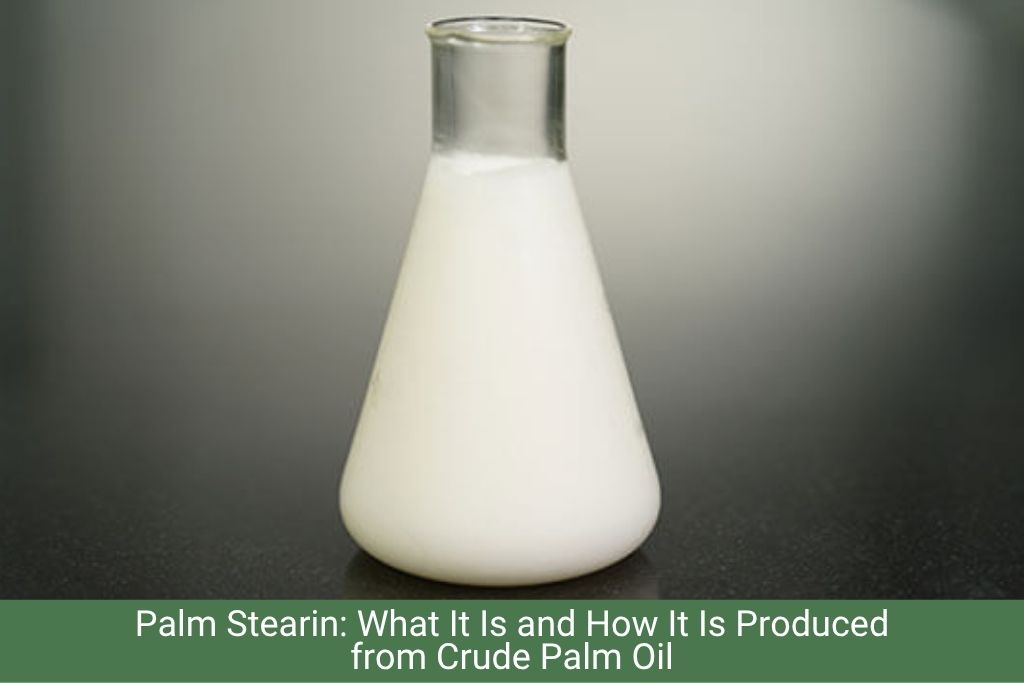
Palm Stearin is the solid fraction obtained when crude or refined palm oil is fractionated through a process of controlled crystallisation and filtration. When palm oil is gradually cooled to temperatures between 18 and 22 degrees Celsius and the resulting crystals are filtered under pressure, the solid portion retained on the filter is Palm Stearin and the liquid portion that passes through is Palm Olein. RBD Palm Stearin - Refined, Bleached, and Deodorised Palm Stearin - is the commercially traded form in bulk export markets. It is a hard, semi-solid fat at ambient temperature in most tropical climates, with a Slip Melting Point typically between 44 and 56 degrees Celsius depending on the degree of fractionation and the iodine value specification. Olivia Oleo exports RBD Palm Stearin to food manufacturers, oleochemical processors, and industrial buyers across Africa, the Middle East, South Asia, and Southeast Asia.
What Are the Key Physical and Chemical Properties of RBD Palm Stearin?
The defining properties of RBD Palm Stearin that make it valuable across food, soap, and industrial applications are its high saturated fatty acid content and its elevated Slip Melting Point compared to the parent palm oil. Palm Stearin contains approximately 55 to 70 percent saturated fatty acids, predominantly palmitic acid (C16:0) at 48 to 74 percent and stearic acid (C18:0) at 4 to 6 percent. This high saturation gives it oxidative stability significantly greater than liquid vegetable oils such as soybean or sunflower, making it suitable for high-temperature frying applications and for margarine and shortening formulations requiring a hard fat component. The Iodine Value of Palm Stearin is typically below 48, compared to 50 to 55 for standard palm oil and 56 or above for Palm Olein, and this lower iodine value directly reflects its higher degree of saturation. Free Fatty Acid content of food-grade RBD Palm Stearin is specified at maximum 0.1 percent as palmitic acid, moisture at maximum 0.1 percent, and peroxide value below 2 milliequivalents per kilogram for fresh product.
Our Other Products
Soap Noodles - SWSN, MSN, LSN
How Does Palm Stearin Differ from Palm Olein?
Palm Stearin and Palm Olein are both fractions of the same parent palm oil but have opposite physical and chemical characteristics that make them suited to entirely different applications. Palm Olein is the liquid fraction after fractionation, with an Iodine Value typically above 56, a high content of oleic acid (C18:1) at around 40 percent, and a cloud point of 10 degrees Celsius or below (CP10, CP8, CP6 grades). Palm Olein is the world's most consumed liquid cooking oil and is used for frying, salad oil, and as a blending component in soft margarines. Stearin palm oil by contrast is the hard fraction, solid at room temperature in most climates, with a high palmitic acid content, a much lower iodine value, and a melt point above 44 degrees Celsius. Palm Olein flows freely and is liquid at room temperature; Palm Stearin requires melting before pumping or processing. This fundamental difference in physical state drives entirely different supply chain, storage, and application requirements for buyers of each fraction.
Read Our Article
RBD Palm Stearin: A Versatile Ingredient with Diverse ApplicationsWhat Are the Major Applications of Palm Stearin in Food Manufacturing?
Palm Stearin is a versatile hard fat that food manufacturers across multiple sectors incorporate into their formulations. In shortening and margarine production, palm stearin uses include providing the solid fat structure that gives these products their plasticity and spreadability. Blended with Palm Olein or other liquid oils at appropriate ratios, RBD Palm Stearin forms the base of most industrial shortenings used in commercial baking across Asia, Africa, and the Middle East. In instant noodles manufacturing, a coating of palm stearin applied to the noodle cake during frying ensures that each block remains solid and non-sticky in its packaging at ambient temperatures up to 35 degrees Celsius, which is critical for distribution in tropical markets. In bakery fat applications, food-grade palm stearin contributes to the lamination and aeration properties of puff pastry fats and croissant margarines. As a cocoa butter substitute feedstock, palm stearin is fractionated further to produce the mid-fraction used in Cocoa Butter Equivalent manufacturing.
What Are the Industrial and Oleochemical Applications of Palm Stearin?
Beyond food manufacturing, Palm Stearin serves as an important raw material in oleochemical and industrial applications. In soap manufacturing, palm stearin contributes hardness to the soap bar when saponified with caustic soda, producing sodium palmate as the dominant salt. In candle manufacturing, palm stearin or its blends with paraffin wax are used to increase the melting point and opacity of candle wax, producing firmer, longer-burning candles. In lubricants and metalworking, Palm Stearin fatty acid esters are used as base oils and extreme-pressure additives. The oleochemical industry uses palm stearin as feedstock for the production of stearic acid through splitting and distillation, and the resulting Triple Pressed Stearic Acid (TPSA) is used in rubber, personal care, and plastics applications. Bulk buyers of RBD Palm Stearin for oleochemical processing require detailed fatty acid profiles alongside standard food quality parameters, and Olivia Oleo provides full technical documentation for all shipments.
Our Other Products
Surfactants - SLES, CAPB/Betaine, Fatty Alcohol Ethoxylates, CDEA, LABSAWhat Are the Shipping and Storage Requirements for Bulk Palm Stearin Exports?
RBD Palm Stearin is shipped in bulk liquid form in heated flexi-tanks or in ISO tank containers with temperature control, typically maintained at 60 to 70 degrees Celsius during loading and transit to ensure the product remains fully liquid for pumping and filling. In some markets, Palm Stearin is also shipped in solid form in 25-kilogram lined cardboard cartons or 200-kilogram drums as a semi-refined flake or block product, which is preferred by smaller manufacturers without bulk liquid receiving infrastructure. Storage temperature requirements at destination depend on the ambient climate: in tropical markets above 35 degrees Celsius, Palm Stearin may soften significantly and careful tank or silo design is needed to prevent product quality degradation. Olivia Oleo manages palm stearin export logistics with the flexibility to accommodate both bulk liquid and packed solid shipment formats depending on buyer requirements.
Palm Stearin Supply and Sourcing: What Bulk Buyers and Manufacturers Need from Their Exporter
RBD Palm Stearin is a hard fat with a uniquely versatile application profile, serving food manufacturers as a shortening and margarine component, soap producers as a bar hardness contributor, oleochemical plants as a stearic acid feedstock, and candle manufacturers as a paraffin replacement. Its high saturated fatty acid content, oxidative stability, and well-defined Slip Melting Point make it a reliable and technically consistent raw material when sourced from a quality-controlled exporter. Olivia Oleo exports RBD Palm Stearin in both bulk liquid and packed solid formats, with full fatty acid profile documentation, Halal certification, and flexible shipment terms to food manufacturers, soap producers, and oleochemical processors across Africa, the Middle East, and South and Southeast Asia. Reach out to our team to discuss specifications, pricing, and delivery schedules.