

Objective:
To analyze the current trends surrounding RBD Palm Oil and RBD Palm Kernel Oil in selected OIC (Organization of Islamic Cooperation) countries, with a focus on their applications in baking, confectionery and margarine production. This article emphasizes regional and city-level demand in the Middle East, North Africa and Sub-Saharan Africa.

Introduction
RBD Palm Oil and RBD Palm Kernel Oil are foundational ingredients in the modern food manufacturing sector of many OIC nations. Their usage in baked goods, confectionery items and margarine continues to grow due to functional versatility, thermal stability and favorable cost-performance. With increasing urbanization and a shift toward industrial-scale food production, the demand for palm-derived oils has seen notable growth across several regions.
In countries spanning the Middle East, North Africa and Sub-Saharan Africa, these oils are preferred for their stability, neutral flavor and adaptability in recipes ranging from traditional sweets to modern margarine spreads. This article examines how these oils are integrated into the food industry, outlines regional consumption patterns and explores market dynamics influencing their adoption.
Market Demand and Functional Usage
Role in Baking and Confectionery
RBD Palm Oil and RBD Palm Kernel Oil are widely used in baked products like pastries, cakes, biscuits and laminated dough. These applications require fats that remain stable under various temperature conditions, especially in regions where ambient heat can be intense. The semi-solid nature of RBD Palm Oil and its extended shelf life make it ideal for maintaining product quality and texture during storage and distribution.
In confectionery production, palm kernel oil provides the desired firmness, smooth melting behavior and gloss, making it suitable for coatings, fillings and compound chocolate. Its consistent crystallization properties are particularly valued in sweets where textural uniformity is critical.
Margarine and Spread Formulation
Margarine production in many OIC countries depends heavily on palm-based oils. RBD Palm Oil provides a stable base fat, while palm kernel derivatives are blended in for firmness and plasticity. These formulations are key in regions where cold chain logistics are inconsistent and products need to perform equally well at room temperature.
Margarine made with palm-based fats is used extensively in both industrial and domestic baking. The blend of RBD Palm Oil and palm kernel oil ensures a creamy texture and spreadability without relying on hydrogenation, making it suitable for mass consumption.
Regional Trends in the Middle East and North Africa
In the Middle East and North Africa (MENA), industrial baking and packaged food production are on the rise. Countries in this region rely heavily on imports of palm oil and its derivatives due to limited domestic production. The food sector, especially baking and confectionery, forms a large portion of the consumption base for these oils.
In Saudi Arabia, major production zones for margarine, baked goods and packaged snacks demand consistent oil quality. Palm oil and kernel oil are integral to maintaining shelf life and performance under high ambient temperatures. Cities like Riyadh and Jeddah are significant users of these oils, hosting large industrial bakeries and food processors.
Egypt’s growing processed food sector also demonstrates strong demand. With a rich tradition in both local pastries and modern baked snacks, manufacturers in cities like Cairo and Alexandria prefer palm oils for their versatility and cost-effectiveness. The widespread use of palm olein for frying and RBD Palm Oil in bakery shortening reflects evolving preferences in food production.
In Morocco and Tunisia, palm kernel oil is frequently utilized in traditional sweets and modern confectionery products. Consistent melting points and resistance to separation are key qualities that support their adoption. Casablanca and Tunis remain focal points for confectionery and margarine manufacturing.
The Gulf states, including the UAE, Kuwait and Qatar, also display steady demand. Due to hot climates and a strong inclination towards packaged and imported foods, these countries rely on refined oils that retain functionality across temperature ranges. Cities like Dubai and Doha act as logistical hubs for both import and regional redistribution.
Emerging RBD Palm Oil Usage Patterns in Sub-Saharan Africa
Across Sub-Saharan Africa, the application of RBD Palm Oil and its derivatives is expanding. Nigeria, one of the largest economies in the region, showcases significant usage in industrial baking, margarine and snack production. Urban centers such as Lagos and Kano house a growing number of food manufacturing units that incorporate these oils for their cost stability and functional properties.
In Senegal, Côte d’Ivoire and Ghana, confectionery and margarine production are rising gradually. These nations import processed palm oils, as refined variants offer predictable performance in tropical climates. Baked snacks, local sweets and bread production increasingly rely on palm olein and palm kernel oil for improved textural consistency.
Countries like Sudan, Mali and Burkina Faso are developing their food processing sectors. With investments in packaged foods and frozen bakery items, demand for RBD Palm Oil derivatives is expected to grow. These countries prefer oils that are less prone to spoilage, particularly where refrigeration infrastructure is limited.
In East African nations like Uganda and Mozambique, margarine and baking sectors are beginning to adopt palm-based oils for their affordability and shelf stability. As local industries scale up, the functional requirements of food-grade fats favor palm oil blends, especially for spread formulations and laminated dough.
Urban and Industrial Hotspots Driving Demand
Urbanization and industrial development in selected cities across OIC member states have led to concentrated demand centers for RBD Palm Oil and related derivatives. Food processing hubs play a critical role in determining oil usage trends.
In the Middle East, Riyadh, Jeddah, Dubai and Abu Dhabi remain primary locations for large-scale baking and margarine production. These cities benefit from proximity to logistics routes and advanced manufacturing facilities.
North Africa’s Cairo, Casablanca and Algiers serve as major food processing zones, incorporating palm oils into a wide array of applications, from household margarine to bakery fats.
Sub-Saharan cities such as Lagos, Dakar, Abidjan and Kampala have rapidly expanding food industries that are increasingly relying on RBD Palm Oil for consistent frying, baking and fat blending capabilities.
These urban centers are shaping the direction of oil formulation trends, with local manufacturers seeking oils that can withstand regional heat, ensure uniformity in taste and texture and align with growing packaged food markets.
Market Influences and Pricing Dynamics
The cost of RBD Palm Oil and RBD Palm Kernel Oil in OIC markets is shaped by a mix of global and regional factors. Feedstock prices, freight costs, import tariffs and currency fluctuations all play significant roles in determining landed oil prices. Many OIC countries import refined oils directly from major producers and the financial burden of transport and storage often affects end-user pricing.
Moreover, climatic challenges and infrastructure limitations in certain Sub-Saharan regions make oil stability and shelf life even more critical. This directly influences the preference for palm oil derivatives over other vegetable oils that may degrade faster or lack the required plasticity for baking and spreads.
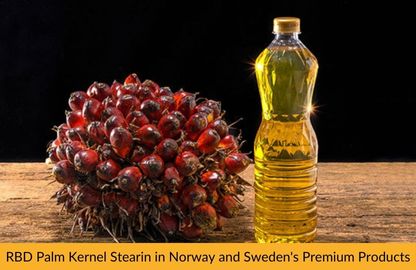
Regional processors are also starting to experiment with palm oil blends to meet specific texture or performance goals. Blending RBD Palm Oil with palm kernel oil or olein allows manufacturers to control the melting point, hardness and application-specific behaviors of the fat product, especially in margarine and laminated pastry doughs.
Future Outlook for RBD Palm Oil in OIC Countries
Looking ahead, the role of RBD Palm Oil and its derivatives in baking, confectionery and margarine production is poised to expand further across OIC countries. Several factors support this projection:
- Food manufacturing is modernizing in both urban and peri-urban zones, demanding ingredients that ensure process consistency and product quality.
- The demand for affordable yet functional edible oils continues to rise in both industrial and household food segments.
- Climate-resilient oils like RBD Palm Oil and palm kernel oil are gaining preference due to their oxidative stability and performance across a broad temperature range.
As consumption patterns shift and more countries invest in local processing infrastructure, the strategic value of palm-derived oils will become even more pronounced. Margins, consistency and operational efficiency will continue to drive their usage, particularly in high-volume sectors such as bakery, confectionery and margarine production.

Conclusion
The growing reliance on RBD Palm Oil and RBD Palm Kernel Oil in OIC member countries underscores their integral role in shaping the food manufacturing landscape. From the industrial zones of the Middle East to the emerging food sectors of Sub-Saharan Africa, these oils offer the functional attributes necessary for modern food production.
Their presence in baking, confectionery and margarine applications continues to expand, supported by economic development, industrial scaling and the quest for consistent ingredient performance. As OIC nations deepen their food production capabilities, RBD Palm Oil derivatives will remain a cornerstone ingredient - essential, adaptable and here to stay.