

Objective:
To provide a technical, structured analysis of how different regional regulations affect the soap noodles export trade and manufacturing processes. This article explores trade compliance challenges, chemical safety rules, import duties, labelling expectations and religious or environmental certification requirements across countries such as India, EU nations, USA, Middle East (e.g., UAE, Saudi Arabia), ASEAN countries (e.g., Malaysia, Indonesia), Africa (e.g., Kenya, Uganda, South Africa) and China - based on the uploaded data.

Introduction
Soap noodles, widely used as the base raw material for producing various soaps, face different regulatory requirements in global trade. From chemical testing norms in the European Union, halal certification in the Middle East, to environmental scrutiny in China, these regional regulations play a pivotal role in shaping both the manufacturing dynamics and international movement of soap noodles.
As soap noodles manufacturers, exporters and suppliers attempt to meet rising global demand, they must constantly adjust to these evolving compliance requirements. These regulations influence everything from soap noodles prices to ingredient transparency, import eligibility, labeling mandates and duty classifications. This article explores how such regional differences directly impact the global soap noodles trade and production systems.
India: BIS Revisions and Soap Noodles Export Challenges
India, being a major producer of soap noodles, faces distinct regulatory complexities domestically that influence its export potential. Manufacturers operating out of key production hubs must comply with periodic revisions to Bureau of Indian Standards (BIS) related to soap product safety, ingredient listing and performance.
India also enforces strict controls on heavy metal content, which can complicate production planning. Export trade is further impacted by duty classifications and HS-code limitations, often leading to delays or reclassification issues during international shipping. As a producing country, India's regulatory environment shapes not only domestic manufacturing standards but also the operational scope of soap noodles exporters.
European Union (EU): High-Standard Import Requirements
The European Union imposes rigorous conditions on chemical imports, including residual testing for ingredients like oils and surfactants used in soap noodles. Exporters targeting EU countries must navigate detailed documentation, traceability records and safety data.
Additionally, there are specific thresholds for heavy metals and allergens, along with mandatory labeling for cosmetic or personal care soap applications. These chemical testing obligations significantly influence soap noodles manufacturing, requiring tighter internal quality control for batches meant for the EU market. The regulatory burden here often translates into higher compliance costs, indirectly influencing soap noodles prices for European buyers.
United States: Soap Noodles Safety and Labeling-Driven Classification
In the United States, the regulatory environment for soap noodles focuses on safety, chemical residue limits and correct customs classification. The Food and Drug Administration (FDA) may treat soap as a cosmetic or a cleansing agent depending on usage, which alters the way soap noodles suppliers must approach ingredient disclosure and labeling.
Incorrect classification can lead to shipment holds or rejections at U.S. ports, while importers may also face scrutiny on surfactant content, additives and formulation disclosure. Labeling accuracy - especially for multipurpose soap noodles intended for both cosmetic and industrial use - becomes critical under U.S. customs and consumer safety laws.
Middle East: Religious Certification and Soap Noodles Safety Norms
Countries like Saudi Arabia and the United Arab Emirates prioritize halal certification and religious compliance for soap and personal care products. Soap noodles manufacturers exporting to this region must ensure their ingredients do not include prohibited animal derivatives or alcohol-based compounds.
Apart from religious oversight, certain Middle Eastern countries also maintain strict import safety regulations. These may include batch testing, quality declarations and additional certification that validate the compliance of exported goods. The regulatory landscape here also influences ingredient sourcing, making the selection of soap noodles ingredients highly specific for this region.
ASEAN Countries: Soap Noodles Sourcing and Environmental Compliance
The ASEAN region, particularly Malaysia and Indonesia, serves both as a source and consumer market for soap noodles. These countries have dual roles in the industry: sourcing raw materials (especially palm oil) and enforcing environmental compliance for industrial soap production.
Regulations in ASEAN countries require manufacturers to align with domestic environmental impact assessments, which directly affect how soap noodles are processed and exported. Any soap noodles exporter operating from this region must meet internal regulations - despite itself being outside the scope of this article - such as discharge permits, chemical handling licenses and waste management compliance for soap manufacturing units.
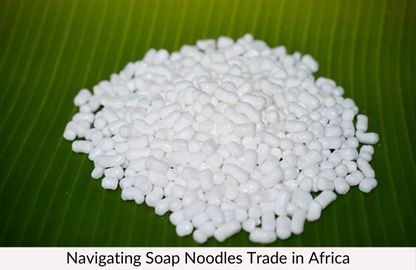
Africa: Soap Noodles Trade Barriers and Regulatory Maturity
In African countries such as Uganda, Kenya and South Africa, the regulatory environment is diverse and still evolving. Different degrees of maturity in trade standards lead to inconsistencies in documentation, labeling norms and import testing.
Soap noodles suppliers targeting African markets must be prepared for sudden regulatory shifts, high variance in customs duties and potential delays due to documentation discrepancies. The lack of standardized import regulations across the continent can result in unpredictability in trade outcomes, impacting manufacturing plans and pricing structures. Additionally, regional harmonization efforts may change the regulatory landscape with little notice, requiring exporters to stay adaptive.
China: Environmental Scrutiny and Supply Chain Influence
Though China is often seen as a manufacturer itself, its import controls and chemical regulations also affect the global soap noodles supply chain. Regulations around chemical usage, environmental emissions and ingredient transparency are strictly enforced, particularly in cities like Guangzhou, Shanghai and Tianjin where many soap formulation units operate.
Even if China is not the primary importer of soap noodles in all cases, its internal chemical management laws - alongside restrictions on non-compliant foreign materials - impact global ingredient sourcing. Soap noodles exporters targeting or sourcing from China must comply with standards related to permissible residue levels, safety data filings and factory inspections, all of which influence cost and operational decisions for manufacturing.

Conclusion
Global trade in soap noodles is tightly interlinked with regional regulatory expectations, each influencing production strategies, compliance workflows and export planning. Countries such as India define the framework from a producer’s perspective, while EU, USA and Middle Eastern markets dictate import conditions tied to chemical safety and religious certification. Meanwhile, ASEAN producers must balance compliance with international export ambitions and Africa presents a complex landscape of regulatory variation.
These variations significantly affect how soap noodles manufacturers, exporters and suppliers manage their supply chains and pricing models. As regulations evolve, staying aligned with country-specific requirements becomes essential for maintaining continuity in global soap noodles trade and production.