

AI Summary
With the Gregorian calendar turning to 2026, the countdown to the Islamic world's most significant consumption season has officially begun. Ramadan 2026 is expected to commence around February 17, 2026.
For wholesale suppliers in the Middle East, the calendar is deceptive. While February may seem weeks away, the logistics window is already closing. Shipping transit times from Southeast Asian refineries to Middle Eastern ports average 25–35 days, followed by 5–10 days for customs clearance and inland distribution. Orders placed after the first week of January 2026 risk arriving mid-Ramadan—too late to capture the peak pre-fasting stocking surge.
Furthermore, 2026 presents a unique "Winter Ramadan" challenge for the Northern Middle East, altering the chemical requirements for palm olein grades. Here is a market-by-market breakdown of why wholesalers in these key nations must secure specific RBD Palm and Coconut derivatives immediately.

The "Winter Ramadan" Markets: Turkey, Jordan, Lebanon, Azerbaijan, Northern Iraq
Key Requirement: RBD Palm Olein CP6 & CP8
In 2026, Ramadan falls squarely in late winter. Temperatures in Istanbul, Amman, Beirut, and Baku will still hover between 5°C and 12°C.
- The Risk: Standard RBD Palm Olein CP10 (Cloud Point 10°C) will turn cloudy or semi-solid in unheated warehouses and retail shelves in these regions. Consumers perceive cloudy oil as "spoiled" or low quality.
- The Solution: Wholesalers must secure RBD Palm Olein CP6 and CP8. These grades have been fractionated to remain liquid at lower temperatures, ensuring visual clarity on supermarket shelves in cold weather.
- Turkey: As a massive industrial food processor, Turkey requires RBD Palm Stearin for its biscuit and confectionery sector (Baklava production), but the retail frying oil market will demand CP6 exclusively to combat the Anatolian winter.
- Azerbaijan: With harsh February winters, Baku importers cannot risk CP10. Secure CP8 stocks now for the frying market, particularly for traditional Qutab and holiday frying needs.
- Jordan & Lebanon: These price-sensitive markets often import CP10 to save money, but the February timing makes this risky. Wholesalers who stock CP8 will have a distinct competitive advantage over those selling cloudy CP10.
Read Our Article
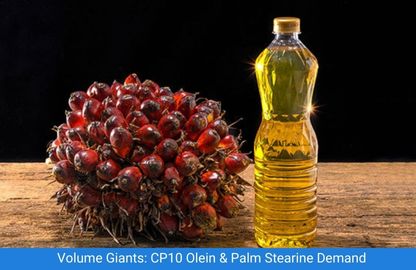
RBD Palm Stearin: A Versatile Ingredient with Diverse ApplicationsThe Volume Giants: Egypt, Saudi Arabia, Iraq (South)
Key Requirement: RBD Palm Olein CP10 & RBD Palm Stearin
For the warmer climates and high-volume frying belts, the focus is on cost-efficiency and caloric density.
- Egypt: With a population exceeding 110 million, the demand for affordable frying oil is insatiable. RBD Palm Olein CP10 is the standard workhorse here. However, wholesalers must lock in prices now, as global vegetable oil markets often rally in Q1 due to pre-Ramadan buying pressure.
- Saudi Arabia: The Kingdom sees a massive spike in commercial catering (hotels, Umrah pilgrims).
- RBD Palm Olein CP10: For high-volume frying (Sambousek, fried chicken).
- RBD Palm Stearin: Essential for the industrial bakery sector producing "Maamoul" and shortbreads. Stearine serves as the cost-effective hard-fat base for vegetable ghee (Vanaspati) production.
- Iraq: As reconstruction boosts local manufacturing, Iraqi importers are seeking bulk RBD Palm Olein CP10 for local bottling. Wholesalers in Basra should also secure RBD Palm Stearin to supply local biscuit factories which ramp up production weeks before Eid al-Fitr.
Our Other Products
Soap NoodlesThe Premium Confectionery Hubs: UAE, Kuwait, Bahrain, Oman
Key Requirement: RBD Palm Kernel Oil (PKO) & RBD Coconut Oil
The Gulf Cooperation Council (GCC) nations have high disposable incomes and a penchant for premium traditional sweets and western-style confectionery during Ramadan.
- UAE & Kuwait: These are the centers of premium dessert production (fine chocolates, enrobed dates, luxury pastries).
- RBD Palm Kernel Oil (PKO): Critical for coating fats and confectionery fillings due to its sharp melting profile (melts at body temperature). Supply of PKO is often tighter than Palm Oil; securing it now is vital for chocolate manufacturers.
- RBD Coconut Oil: Increasingly popular for health-conscious "Keto Ramadan" trends and traditional desserts that require that specific aromatic profile or lauric acid content.
- Bahrain & Oman: Strong demand for vegetable ghee substitutes. Wholesalers supply local bakeries with RBD Palm Stearin and RBD Coconut Oil blends to create high-stability frying fats for Luqaimat (sweet dumplings), ensuring they remain crispy on the outside.
Read Our Article
RBD Coconut Oil: An Essential Ingredient in Natural Home RemediesStrategic Threats to Supply in Q1 2026
Wholesalers waiting until mid-January to order face three compounding threats:
- Indonesia's B40/B50 Mandate: Indonesia is aggressively increasing its domestic biodiesel blend (B40 moving toward B50). This policy diverts millions of tonnes of CPO away from the export market, tightening global supply and keeping prices in the RM 4,300–4,600/tonne range.
- The "Last Mile" Bottleneck: Jebel Ali (UAE), Jeddah (Saudi), and Mersin (Turkey) ports experience severe congestion in the 30 days before Ramadan. Goods arriving in late January often sit in customs clearance for weeks, missing the critical "first week of Ramadan" sales window.
- Price Volatility: CPO prices are forecast to have an "upside bias" in the first half of 2026 due to normalizing production and biodiesel mandates. Buying now (late Dec 2025) hedges against the inevitable February price spike.

Our Other Products
Distilled Fatty AcidsConclusion: The Window is Now
For the wholesale supplier, Ramadan is not just a religious observance; it is the fiscal year's most critical sales quarter. With Ramadan 2026 arriving in the cold of February, the "one-size-fits-all" strategy of importing CP10 will fail in Turkey and the Levant.