

Objective:
This article provides a comprehensive technical insight into Stearic Acid, exploring its grades, chemical composition, manufacturing process and applications across various industries. It covers key factors like purity, iodine value, feedstock quality and the differences between different Stearic Acid grades, including TPSA and standard grades, as well as their impact on performance and selection criteria. The article also compares various Stearic Acid grades and discusses their specific roles in different applications.

Stearic Acid Grades Understanding TPSA and SA Series Specifications
Stearic Acid is available in various grades, primarily differentiated by the refining process and the purity of the product. Two common categories are Triple Pressed Stearic Acid (TPSA) and standard Stearic Acid grades, which include specifications like SA 1850, SA 1870 and others. TPSA grades, such as TPSA 1838, are highly refined and have superior quality, often used in more demanding applications like cosmetics, pharmaceuticals and high-performance industrial products.
The primary difference between these grades lies in the refining process and the number of pressings. TPSA grades undergo a triple pressing process, which enhances the purity and removes more of the residual impurities, making it ideal for applications where high purity is critical. Standard Stearic Acid grades, such as SA 1850 or SA 1870, have slightly lower purity and are commonly used in industrial applications like rubber manufacturing and soap production. Understanding these specifications helps in selecting the right Stearic Acid grade based on application requirements.
Chemical Composition and Manufacturing Process of Industrial-Grade Stearic Acid
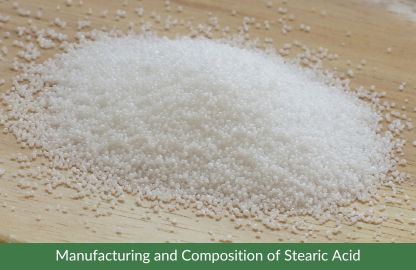
Stearic Acid, also known as Stearic Fatty Acid, is a long-chain saturated fatty acid typically derived from animal fats or vegetable oils such as palm oil stearin or tallow. The chemical composition of Stearic Acid is characterized by a 18-carbon chain with a carboxyl group (-COOH) at one end, making it a stable and versatile fatty acid used in various industries.
The manufacturing process of stearic acid begins with the extraction of Palm Stearin or Tallow-based fats, which are then refined and distilled to isolate the fatty acids. During the refining process, impurities such as free fatty acids, pigments and odors are removed. The Stearic Acid is then further purified through distillation or crystallization methods to achieve the desired grade, with processes like triple pressing used for higher purity (TPSA). Distilled Stearic Acid is typically used in high-grade applications where minimal impurities are required.
How to Select the Right Stearic Acid Grade for Your Application
Selecting the right Stearic Acid grade depends largely on the intended application. For high-performance, cosmetic or pharmaceutical formulations, selecting a high-purity grade like Triple Pressed Stearic Acid (TPSA) is crucial due to its superior refining and minimal impurity content. These grades are suitable for use in creams, lotions and other skin care products where purity and smooth texture are important.
On the other hand, industrial applications such as soap manufacturing, rubber processing and lubricants can utilize standard Stearic Acid grades like SA 1850 or SA 1870. These grades offer sufficient performance for applications that do not require ultra-high purity but still need a reliable and cost-effective fatty acid. For example, Rubber Grade Stearic Acid is often used to enhance the vulcanization process in rubber manufacturing.
Difference Between Triple Pressed Stearic Acid TPSA and Standard Stearic Acid Grades
The key distinction between Triple Pressed Stearic Acid (TPSA) and standard Stearic Acid grades lies in the level of refinement and purity. TPSA is the result of a triple-pressing process, which removes more impurities, resulting in a purer product with higher consistency and performance. This makes TPSA ideal for applications where color, odor and purity are critical, such as cosmetics, food-grade applications and pharmaceuticals.
Standard Stearic Acid grades, such as SA 1850, are generally produced through fewer refining processes and may contain more impurities. These grades are suitable for industrial applications like soap making, rubber processing and lubricants where extreme purity is not always necessary, but cost-efficiency and adequate functionality are key.
Comparative Analysis TPSA 1838 vs. SA 1850 vs. SA 1870
When comparing TPSA 1838, SA 1850 and SA 1870, the primary differences come down to purity, application suitability and price. TPSA 1838 is highly refined and used in high-end applications such as cosmetics and pharmaceuticals. It offers superior performance, stability and consistency, making it ideal for products where skin contact is frequent or where high purity is required.
SA 1850 is a standard grade of Stearic Acid commonly used in industrial applications like soap manufacturing and certain plastic products. It is less refined than TPSA 1838 but still offers a good balance between cost and performance. SA 1870, on the other hand, is often used in industrial settings where a higher melting point and more robust performance are needed, such as in the production of candles, lubricants and waxes. The cost difference between these grades is also notable, with TPSA 1838 being the most expensive due to its higher refining and purity levels.
Understanding Purity, Iodine Value and Acid Value in Stearic Acid Grades
Purity, iodine value and acid value are essential parameters that define the quality and performance of Stearic Acid grades. The high-quality of Stearic Acid is determined by the refining process and the presence of impurities such as free fatty acids or residual oils. Higher purity grades like TPSA generally have fewer impurities, making them ideal for sensitive applications like cosmetics.
The iodine value measures the degree of unsaturation in a fatty acid, which impacts its stability and reactivity. A lower iodine value indicates a more saturated, stable product, which is particularly important in industrial applications like rubber processing, where oxidation stability is essential. Acid value, on the other hand, refers to the amount of free fatty acids in the Stearic Acid, with lower acid values indicating a more refined and less reactive product. These factors are crucial in determining which grade of Stearic Acid to choose for specific applications.
Role of Feedstock Quality Palm vs. Tallow-Based in Stearic Acid Performance
The feedstock used in the production of Stearic Acid plays a significant role in determining its performance and quality. Stearic Acid derived from palm oil stearin typically offers a more consistent and renewable source, as palm oil is one of the most widely cultivated vegetable oils. Palm Stearin tends to produce Stearic Acid with a higher melting point, making it suitable for applications that require a firmer, more stable fatty acid.
On the other hand, tallow-based Stearic Acid is derived from animal fat and typically has a slightly different chemical composition. It may offer different performance characteristics, such as a lower melting point, making it ideal for applications in cosmetics or formulations requiring softening properties. Both sources have their advantages, but the choice of feedstock depends on the desired properties and onsiderations of the final product.
How Molecular Chain Length Affects the Functionality of Different Stearic Acid Grades
The molecular chain length of Stearic Acid, which is typically 18 carbon atoms, plays a critical role in its functionality across various applications. The long-chain nature of Stearic Acid contributes to its high melting point, making it a solid at room temperature and a valuable ingredient in formulations where solidification is needed, such as in candle making, soap and waxes.
For example, Rubber Grade Stearic Acid, which is typically derived from palm oil or tallow, has a molecular structure that influences its role in vulcanization, where it acts as an activator to improve rubber's performance. Additionally, the chain length also affects its compatibility in certain formulations. Shorter chain fatty acids, for instance, would not provide the same firmness or melting properties as Stearic Acid.

Conclusion
Stearic Acid is a versatile and widely used fatty acid with various grades designed to meet specific industry needs. From the high-purity Triple Pressed Stearic Acid (TPSA) used in cosmetics to the more cost-effective standard grades like SA 1850 used in industrial applications, understanding the differences in grades, purity and feedstock quality is crucial for selecting the right Stearic Acid for your application. The molecular structure, iodine value and acid value of Stearic Acid influence its functionality in different formulations, making it an essential ingredient in a wide range of products, from soaps and lubricants to bio-based materials. As industries continue to demand higher performance, Stearic Acid remains a critical component in both traditional and emerging markets.