

TFM in Soap Noodles: The Number That Drives Every Soap Manufacturing Decision
Total Fatty Matter is the single metric that determines the quality, performance, and commercial value of any soap noodle grade. From Snow White toilet soap noodles destined for the premium personal care market to TFM 60 laundry soap noodles supplying high-volume fabric washing applications in Sub-Saharan Africa, every purchasing decision in the soap noodle trade begins and ends with the TFM specification. For soap manufacturers, importers, and bulk buyers, understanding what TFM means, how it is measured, how it affects finished bar performance, and how it drives pricing is not optional knowledge but the foundation of effective procurement. This article provides a complete technical and commercial guide to Total Fatty Matter in soap noodles, covering all TFM grades, their applications, and the economics of soap bar manufacturing that TFM percentage directly determines.
Read Our Article
Soap Noodles Guide - White, Multipurpose, and Laundry Soap NoodlesWhat Does Total Fatty Matter (TFM) Mean in Soap and Soap Noodles?
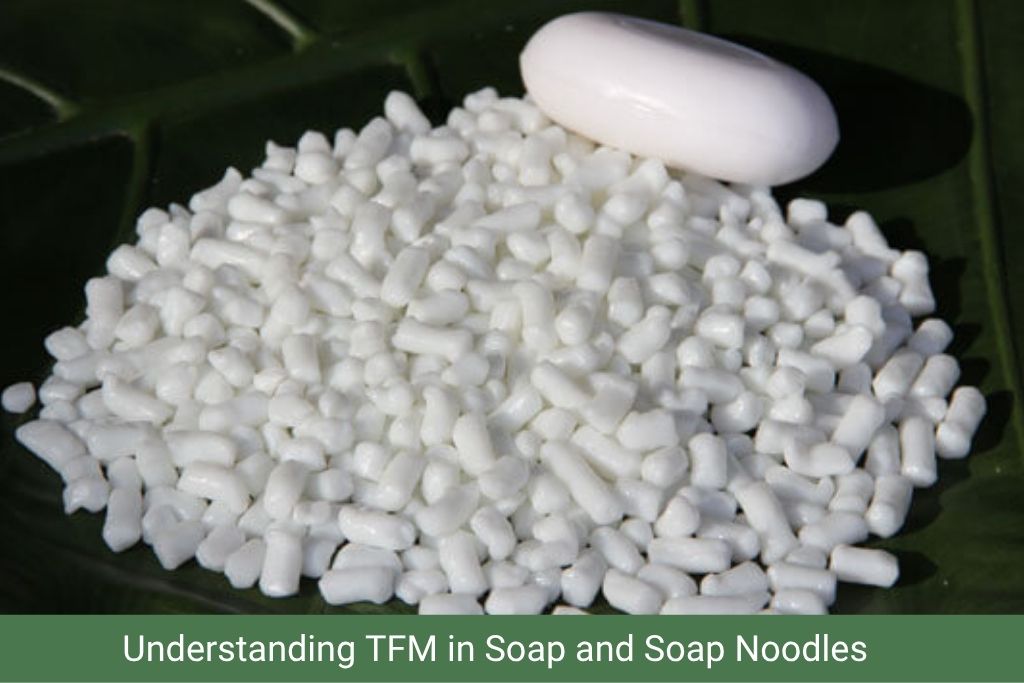
Total Fatty Matter is the single most important quality parameter in bar soap and soap noodles. It represents the percentage of fatty acids and their sodium or potassium salts present in a soap product, expressed as a weight percentage of the total soap mass. In practical terms, TFM in soap determines the soap's ability to clean, lather, and condition the skin - higher TFM indicates a higher concentration of the active cleansing components and a correspondingly lower proportion of inert fillers, water, and other non-soap materials. For bulk buyers, importers, and soap manufacturers evaluating raw material suppliers, TFM on soap is the primary specification that determines whether a grade of soap noodles meets their formulation requirements and the regulatory standards of their target market. The total fatty matter of soap is measured as a percentage and typically ranges from 60 percent in the lowest-grade laundry soap noodles up to 80 percent or above in premium toilet soap grades.
Our Other Products
Distilled Fatty AcidsHow Is Total Fatty Matter Measured and What Method Is Used?
The standard test method for determining total fatty matter in soap is based on ISO 685, which involves acidifying the soap to split the fatty acid salts back to their free fatty acid form, extracting the fatty acids with a petroleum ether solvent, evaporating the solvent, and weighing the residue. The weight of the fatty acid residue expressed as a percentage of the original soap sample weight gives the TFM percentage. In India, the equivalent standard is IS 7487. For soap noodle buyers operating in markets where regulatory compliance requires documented test methods, it is important to request that the supplier's Certificate of Analysis specifies whether the TFM result was obtained by ISO 685, IS 7487, or an equivalent recognised method. Third-party testing at an accredited laboratory provides additional assurance when onboarding a new soap noodles supplier, particularly when purchasing from a new source where quality track record has not yet been established.

What Are the Different TFM Grades of Soap Noodles and What Are They Used For?
| TFM Grade | Soap Noodle Type | Primary Application | Key Markets |
|---|---|---|---|
| TFM 80%+ | Snow White Soap Noodles | Premium toilet/bath soap, milled soap, luxury bars | Middle East, Europe, North America, Southeast Asia |
| TFM 78% | Standard Toilet Soap Noodles | Standard toilet soap, personal care bars | Asia Pacific, Middle East, Africa |
| TFM 72% | Mid-Grade / Swing Noodles | Economy toilet soap, combination bar soap | Africa, South Asia, Latin America |
| TFM 65% | Laundry Soap Noodles | Laundry bar soap for fabric washing | North and East Africa, Middle East |
| TFM 60% | Economy Laundry Soap Noodles | Value-segment laundry bars, emerging markets | Sub-Saharan Africa, South Asia |
Why Does TFM Percentage Directly Affect the Performance of a Finished Soap Bar?
The relationship between total fatty matter percentage and soap bar performance is direct and significant. A soap bar made from soap noodles with TFM 80% will produce more lather with less soap used, will last longer before it dissolves because it has a higher density of active fatty acid salts relative to total bar weight, and will leave less residue on skin because it contains less filler material. Conversely, a soap bar with TFM 60% requires more product per wash to achieve the same cleaning effect, dissolves faster in water because the higher moisture and filler content reduces structural integrity, and may leave a slimy or sticky residue if moisture content is too high. For soap manufacturers supplying the retail market, bar weight declarations on packaging must be met, and a lower TFM grade requires more bar weight to deliver equivalent performance, which directly affects the cost-per-wash economics that consumers and institutional buyers in markets like Africa, Pakistan, and the Middle East use to evaluate value.
Read Our Article
Innovations in Laundry Soap Noodles Grade: What's New in the Market?What Is the Difference Between TFM and Anhydrous Soap Content?
Total Fatty Matter and anhydrous soap content are related but distinct measurements. Anhydrous soap content refers to the total weight of sodium fatty acid salts (sodium palmate, sodium palm kernelate, and other sodium salts of fatty acids) present in the soap after all moisture and volatile matter is removed. TFM is measured by splitting the salts back to their free fatty acid form and measuring the fatty acid weight. Because the fatty acid portion of a sodium soap salt is approximately 75 to 85 percent of the total salt weight, TFM will always be somewhat lower than anhydrous soap content. Both measurements are used in the industry but TFM is the more commonly specified parameter in commercial soap noodle contracts because it is more directly related to the cleansing and lathering performance of the finished bar. When comparing supplier quotations, buyers should confirm that TFM figures are expressed on a consistent basis and that the test method is identical.
Our Other Products
RBD Palm Oil & Palm Kernel OleinHow Does TFM Affect the Price of Soap Noodles and the Economics of Soap Manufacturing?
Total Fatty Matter is the primary price driver for soap noodles in bulk trade. Snow White soap noodles at TFM 80% command a premium over Laundry grade at TFM 60% for two reasons: first, higher TFM requires more palm oil and palm kernel oil feedstock per tonne of soap noodle produced; second, the refining, saponification, and drying processes must be more tightly controlled to achieve consistently high TFM with low free alkali and low moisture. For soap manufacturers calculating their cost of goods, the relevant comparison is not the per-tonne price of the soap noodle but the per-bar cost after accounting for the volume of soap noodle required to achieve a given bar weight at a given performance standard. A TFM 80% soap noodle that costs 15 percent more per tonne than a TFM 65% grade may still produce a lower cost-per-bar when bar weight is held constant and performance is the deciding variable. Olivia Oleo supplies soap noodles across all TFM grades from its bulk export operation, allowing manufacturers to specify exactly the grade that optimises their formulation economics for each target market.

TFM and Soap Noodles: Choosing the Right Grade for Your Market and Your Margin
Total Fatty Matter is the defining quality parameter in soap noodle procurement, and selecting the right TFM grade for your production target and market requirements is the single most important decision in soap noodle purchasing. Whether you are sourcing Snow White TFM 80 soap noodles for premium toilet bar production in the Middle East, TFM 72 mid-grade noodles for economy personal care bars in Asia, or TFM 60 laundry grades for high-volume detergent bar manufacturing in Africa, Olivia Oleo supplies all TFM grades and consistent quality across every shipment. Contact Olivia Oleo to discuss your TFM specification, target market, and volume requirement.