Sodium Palmitate: An Overview of Its Chemical Nature
Sodium palmitate is the sodium salt of palmitic acid, formed when palmitic acid reacts with sodium hydroxide through a process called saponification. It is a white, waxy solid that belongs to the class of fatty acid salts, commonly referred to as soaps. Its chemical structure consists of a long 16-carbon saturated fatty acid chain bonded to a sodium ion, giving it both hydrophilic and lipophilic properties. This dual character is what makes it functionally valuable across a wide range of industries. It is one of the most commonly occurring naturally derived surfactants and its physical stability at room temperature makes it distinct from many other fatty acid derivatives.
Palmitic Acid: The Core Compound behind Sodium Palmitate
Palmitic acid is the parent compound from which sodium palmitate is derived. It is a saturated long-chain fatty acid naturally present in palm oil, palm kernel oil and animal fats. Among vegetable-derived fatty acids, it holds a dominant position in global trade due to its wide availability and relatively stable pricing. The sodium palmitic acid market has seen consistent demand growth, driven by its role as a key raw material in soap manufacturing, personal care products, food-grade emulsifiers and various industrial applications. As feedstock for producing sodium palmitate, it is primarily extracted through fractional distillation of palm oil, yielding high-purity grades suitable for both technical and cosmetic-grade end uses.
Read Our Article
Palmitic Acid Scientific & Health ResearchProduction Process: How Sodium Palmitate Is Made?
The production of sodium palmitate begins with the extraction and purification of palmitic acid from palm oil, which is predominantly sourced from plantations in Malaysia, Indonesia and Thailand - the world's leading palm oil-producing regions. Once purified, palmitic acid undergoes saponification with sodium hydroxide under controlled temperature and pressure conditions. This reaction yields sodium palmitate along with water as a by-product. The final product is then dried, milled or processed into flakes, powder or noodle form depending on the intended application. Modern Palmitic Acid Manufacturers use continuous saponification systems to improve energy efficiency and ensure consistent product quality. The purity levels achieved in industrial production typically range from 90% to 99%, with cosmetic and pharmaceutical grades requiring the higher end of that spectrum.

Industrial Uses of Sodium Palmitate across Key Sectors
Soap and Detergent Manufacturing
One of the primary palmitic acid uses is in the soap and detergent industry, where sodium palmitate serves as the base ingredient for bar soaps and solid cleansers. When combined with other fatty acid salts such as sodium stearate or sodium cocoate, it creates a well-balanced soap matrix with good lathering, hardness and skin compatibility. Most commercial toilet soaps and laundry bars rely on sodium palmitate as a core component due to its structural integrity and mild cleansing action. The compound also contributes to the opacity and firmness that consumers associate with premium bar soap products.
Our Other Products
Palm Kernel Fatty Acid DistillateCosmetic and Personal Care Formulations
Sodium palmitate is widely used in cosmetics as an emulsifier, thickener and cleansing agent. It is found in face washes, body bars, shaving creams and cosmetic sticks. Formulators value it for its ability to stabilise oil-in-water emulsions and its compatibility with skin-friendly pH ranges. Its fatty acid chain length falls in the ideal range for skin-conditioning without causing excessive greasiness. Cosmetic-grade sodium palmitate sourced from palm oil is increasingly in demand as brands align with clean-label and environmentally responsible sourcing standards.
Food Industry Applications
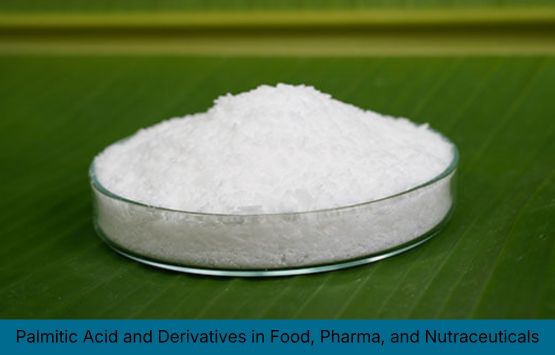
In the food sector, palmitic acid and its derivatives serve as emulsifiers and release agents in baked goods, chocolates and confectionery. Food-grade sodium palmitate is used in certain processed food applications where surface coating or lubrication is required. It functions as a direct food additive and is approved under various food safety regulations globally. The food industry's demand for palm-derived fatty acids continues to grow in line with expanding processed food markets across Asia, the Middle East and Africa.
Pharmaceutical and Nutraceutical Sector
The pharmaceutical industry uses sodium palmitate as an excipient in tablet formulations, ointments and suppositories. Its waxy consistency and inertness make it a reliable binding and lubricating agent in solid dosage forms. It also appears in topical preparations where controlled release of active ingredients is desired. Nutraceutical applications include its use as a coating agent for capsules and functional food ingredients, where it serves as a protective carrier without altering the bioactivity of the enclosed compound.
Palmitic Acid Market: Global Supply Chain and Trade Dynamics
The palmitic acid market operates within the broader framework of the global oleochemical industry, with Malaysia, Indonesia and Thailand acting as the primary production hubs. The oleochemical supply chain moves palmitic acid from palm oil refineries through fatty acid distillation units and into finished product manufacturing facilities located worldwide. Market demand is shaped by growth in personal care, food processing and bio-based chemical sectors. Palmitic Acid Exporters and Palmitic Acid Suppliers operating in these sourcing regions benefit from proximity to raw material supply, lower production costs and well-established logistics infrastructure.

Role of Olivia Oleo Pte Ltd in the Global Oleo Chemical Supply Chain
Olivia Oleo Pte Ltd operates as a reliable Sodium Palmitate Supplier and Exporter within the global oleochemical market. As a trading and distribution entity focused on oleochemical intermediates, Olivia Oleo Pte Ltd serves customers across industries including soap manufacturing, personal care, food processing and pharmaceuticals. The company's sourcing strategy is built on working closely with certified Palmitic Acid Manufacturers and Palmitic Acid Suppliers across Southeast Asia, allowing it to offer both standard and specialty grades of sodium palmitate to international buyers. Its position as a Palmitic Acid Exporter is supported by reliable logistics networks and a clear understanding of the quality expectations of different end-use industries.
Our Other Products
RBD Palm Oil & Palm Kernel OleinConclusion
Sodium palmitate remains one of the most industrially significant oleochemical derivatives, underpinned by its versatile chemistry, wide-ranging application profile and stable supply from palm oil-producing regions in Southeast Asia. Its parent compound, palmitic acid, continues to anchor global oleochemical trade, with manufacturers, exporters and suppliers across Malaysia, Thailand and Indonesia forming the backbone of this supply chain. Companies like Olivia Oleo Pte Ltd play an important intermediary role in connecting quality-assured Southeast Asian production with global industrial demand, ensuring that buyers across soap, cosmetics, food and pharmaceutical sectors have reliable access to this essential fatty acid derivative.