Global Trade Resilience: The 2025 Tariff Landscape in the Oleochemical Industry
As we cross the threshold into 2026, the global manufacturing sector is reflecting on one of the most transformative years in recent economic history. The "Trade Shift of 2025" - marked by the implementation of universal 10% baseline tariffs in the United States, alongside reciprocal hikes reaching as high as 45% for specific chemical precursors - has fundamentally altered the flow of global commerce. For the Personal Care & Cosmetics, Food & Beverage and Chemical Manufacturing sectors, the challenge was not merely to survive but to reinvent the concept of a "secure supply chain."
Part I: The Impact of the 2025 USA Tariff Hikes
The 2025 tariffs were designed to encourage domestic US manufacturing, but for industries reliant on palm-based and coconut-based oleochemicals - which are geographically tethered to Southeast Asia and the Indian subcontinent - the result was a sharp increase in "landed costs."
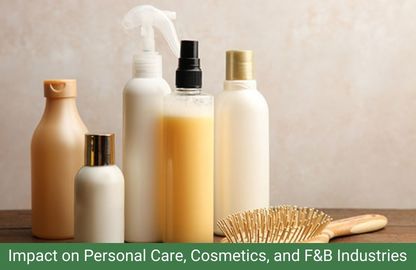
Personal Care & Cosmetics: The Purity Crisis
The cosmetics industry is one of the most sensitive to raw material fluctuations. High-purity ingredients like Refined Glycerine 99.7% USP Grade and SLES 70% (Sodium Lauryl Ether Sulfate) are essential for everything from luxury skincare to everyday shampoos. The 2025 tariffs meant that US-based formulators saw a 15–20% increase in the cost of these surfactants and humectants almost overnight.
Food & Beverage: The Stability Challenge
In the F&B sector, the cost of Vegetable Shortening & Margarine and RBD (Refined, Bleached and Deodorized) Palm & Coconut Oil rose significantly. These are not just ingredients; they are functional components that dictate the texture, shelf-life and "mouthfeel" of baked goods and processed foods globally.
Chemical Manufacturing: Feedstock Volatility
For industrial chemical manufacturers, Palm Fatty Acid Distillate (PFAD) and Cetyl-Stearyl Alcohol serve as vital feedstocks. The US tariff hikes created a "bottleneck" where domestic supply could not meet demand, leading to a scramble for alternative sources that did not carry the heavy duty-burden of direct-from-origin shipments.
Part II: Deep Dive into Essential Oleochemicals
To understand how Oliva Oleo survived and thrived, one must look at the specific products that remained in high demand despite the trade wars.
Snow White Soap Noodles (78% TFM)
As the primary base for toilet soaps, Snow White Soap Noodles are the gold standard for purity and lather. Even with tariffs, the global hygiene market grew by 4.5% in 2025.
Refined Glycerine 99.7% USP Grade
Glycerine is a byproduct of biodiesel and soap production, but the Refined USP Grade is a specialty product. With the 2025 shift, demand for plant-based glycerine surged in Europe and Asia as a preferred alternative to petroleum-based synthetics. Oliva Oleo’s ability to guarantee 99.7% purity allowed it to capture the high-end pharmaceutical and food-grade markets in the Middle East and EU.
SLES 70% and Surfactants
SLES 70% is the workhorse of the detergent industry. When the US market became restricted, Oliva Oleo pivoted its distribution to the African and Latin American markets, where urbanization and a rising middle class created a massive vacuum for affordable, high-performance cleaning agents.
Fatty Acids: PFAD and Cetyl-Stearyl Alcohol
PFAD is often viewed as a "secondary" product, but its role in bio-energy and animal feed makes it a recession-proof commodity. Similarly, Cetyl-Stearyl Alcohol is an indispensable emulsifier.
Part III: Strategic Pivot – Exploring Other International Markets
Survival in the post-2025 era required a "Decoupling Strategy." Oliva Oleo realized that while the US market was significant, the real growth was happening elsewhere.
The Middle East & Africa (MEA) Expansion
The MEA region has seen a 6% annual growth in the demand for personal care products. Oliva Oleo established strategic partnerships in the UAE and Saudi Arabia to distribute Vegetable Shortening and Soap Noodles to local manufacturers. These markets are less sensitive to US trade policy and more focused on the reliability and quality of the supply chain.
The European Compliance Bridge
By positioning itself as a "compliant and transparent" supplier, it became the preferred choice for European multinational corporations looking to diversify away from unstable trade corridors.
Part IV: The Oliva Oleo Business Model - A Masterclass in Resilience
Why did Oliva Oleo succeed where others failed? The answer lies in its unique business structure and operational philosophy.
Dual-Hub Logistics (Singapore & India)
Singapore: Acts as the financial and logistical nerve center. The city-state’s status as a premier global port allowed Oliva Oleo to re-route shipments and manage "Trans-shipment" strategies effectively, minimizing the impact of regional tariffs.Supply Chain Intelligence and Buffer Stocks
During the height of the 2025 tariff announcements, many companies faced "Stock-outs." Oliva Oleo utilized advanced predictive analytics to forecast price hikes and built strategic buffer stocks of Refined Glycerine and SLES 70%. This allowed them to offer stable pricing to their long-term partners while the rest of the market was in a state of flux.
Relationship-Driven Trading
At its core, Oliva Oleo is built on 50 years of collective experience. The company’s "transparency and credibility" (as noted by its founders) meant that suppliers in Malaysia and Indonesia prioritized Oliva Oleo during periods of raw material scarcity. This "upstream" loyalty is what guaranteed the "downstream" success.
Part V: Looking Forward – 2026 and Beyond
The era of "Easy Globalization" is over. We have entered the era of "Smart Globalization." For manufacturers in the Personal Care, F&B and Chemical sectors, the lessons of the 2025 tariff hike are clear:
- Diversify Sourcing: Never rely on a single country for critical inputs like RBD Coconut Oil or Palm Derivatives.
- Focus on Value-Added Products: Moving from bulk commodities to specialized grades (like 99.7% USP Glycerine) provides a "margin buffer" against tariff costs.
- Partner with Agility: Choose suppliers like Oliva Oleo that have a physical presence in multiple trade blocs.
Conclusion: Promoting Global Excellence
By mastering the complexities of the 2025 tariff landscape, the company has not only protected its business but has empowered its international clients to thrive. Whether you are a soap manufacturer in Africa, a bakery chain in the Middle East or a cosmetic brand in Europe, Oliva Oleo provides the raw materials - and the strategic expertise - to ensure your production never stops.