

Lauric Acid: Growing Demand in the Personal Care Industry in Southeast Asia
The personal care industry across Southeast Asia is growing at a remarkable pace and at the heart of this growth lies a key ingredient - lauric acid. Sourced primarily from coconut and palm kernel oil, this medium-chain saturated fatty acid has become a foundational raw material for formulators, manufacturers and brands operating across the region. From skincare emulsions to cleansing bars, its functional versatility is driving sustained procurement interest across markets like Vietnam, Indonesia, Thailand, the Philippines and Malaysia.
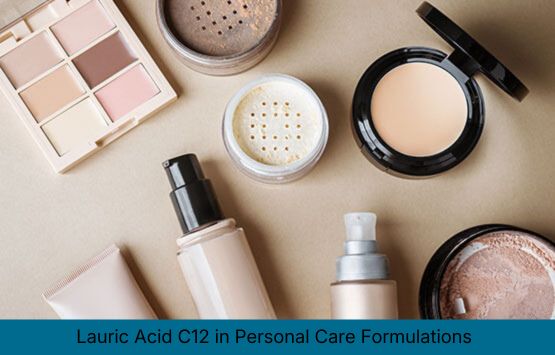
Lauric Acid C12 and Its Role in Personal Care Formulations
Lauric acid C12, named for its 12-carbon chain structure, is one of the most widely used fatty acids in cosmetic and personal care chemistry. Its moderate hydrophobicity and surface-active behaviour make it highly compatible with emulsification systems, foam-generating agents and conditioning bases. In Southeast Asia, where tropical climates drive high demand for lightweight cleansers, rinse-off products and oil-control formulations, lauric acid C12 fits naturally into product development pipelines. Formulators in the region rely on it to build stable surfactant systems in body washes, facial cleansers, shampoos and conditioning treatments.
Lauric Fatty Acid Sourcing Trends across Southeast Asia
The sourcing of lauric fatty acid across Southeast Asia reflects broader regional supply chain dynamics. As one of the world's largest producers of coconut and palm kernel oil, Southeast Asia generates a significant share of global lauric acid output. Countries such as Malaysia and Indonesia play a central role in upstream fatty acid processing, while Thailand also contributes meaningfully to regional supply. Personal care manufacturers in the region prefer locally proximate sourcing for cost efficiency, reduced lead times and supply chain resilience - factors that have grown more important in the post-pandemic procurement landscape. Olivia Oleo Pte Ltd, a Singapore-based oleochemical supplier, has positioned itself as a reliable link in this regional supply chain, offering consistent access to high-quality fatty acid grades suited to personal care applications.
Read Our Article
The Role of Lauric Acid in Soap Making: A Comprehensive GuideLauric Acid Uses Driving Formulation Demand
Lauric acid uses in personal care span across product categories that are seeing strong retail growth in Southeast Asia. It serves as a key precursor in the synthesis of sodium laurate - a soap-forming compound - and in the production of monolaurin-based ingredients used in skin-conditioning systems. Beyond bar soap, it contributes to the performance of liquid hand washes, foam cleansers, baby care products and hair care formulations. The growing middle-income consumer base across Southeast Asian cities is pushing demand for premium personal care products, which in turn increases the procurement volume of high-purity fatty acid inputs. For formulators seeking mildness, lather stability and skin compatibility, lauric acid remains a go-to building block.
Lauric Acid Market Dynamics in the SEA Region
The lauric acid market in Southeast Asia is shaped by several demand-side and supply-side factors. On the demand side, rapid urbanisation, increasing disposable income and a strong culture of personal grooming - particularly in markets like Indonesia, the Philippines and Vietnam - are accelerating consumption of personal care products. This directly translates to higher procurement requirements for oleochemical raw materials. On the supply side, proximity to palm kernel and coconut oil processing hubs ensures relatively stable input availability, though price volatility linked to commodity crop cycles remains a variable that buyers must manage. Formulators and procurement teams are increasingly entering into long-term supply agreements with established fatty acid exporters to hedge against this uncertainty.
Our Other Products
DFA (Palm & Palm Kernel Oil based)Lauric Acid Benefits Relevant to Tropical Skin and Hair Care
The lauric acid benefits most relevant to Southeast Asian personal care product development relate closely to the region's consumer skin and hair profile. High humidity, pollution exposure and hard water conditions across many Southeast Asian cities create specific formulation challenges. Benefits of Lauric acid contributes to cleansing efficacy under these conditions, supporting the removal of excess sebum, environmental particulates and residual product buildup. In hair care, it aids in the development of conditioning and cleansing systems that balance scalp hygiene with moisture retention - a key concern in humid climates. These performance attributes are not theoretical; they are actively factored into product briefs by regional R&D teams as they develop SKUs for both mass-market and premium segments.
Read Our Article
African Market Demand and Supply of Lauric AcidLauric Acid Manufacturers and Supplier Selection in the Market
For personal care companies operating in Southeast Asia, selecting from the right pool of lauric acid manufacturers involves evaluating purity specifications, batch consistency, and documentation standards and logistics reliability. Buyers typically require fatty acid grades that meet cosmetic-use quality benchmarks, including defined iodine value, saponification value and moisture content parameters. Olivia Oleo Pte Ltd functions as both a lauric acid supplier serving the personal care sector across Southeast Asia, providing technical grade documentation and supply continuity that procurement teams require. Its sourcing network draws from established oleochemical processing facilities in Malaysia, Indonesia and Thailand, allowing it to offer supply options that align with buyers' quality and origin preferences.
Lauric Acid Exporter Networks Supporting Regional Trade
The role of a structured lauric acid exporter network is central to how Southeast Asian personal care companies access this ingredient, particularly when operating across multiple national markets. Cross-border trade in fatty acids within ASEAN is facilitated by relatively open trade frameworks, but efficient logistics, compliant documentation and quality assurance at the export stage remain differentiating factors for buyers. Olivia Oleo Pte Ltd's export-oriented operating model is built to support exactly this kind of multi-market procurement requirement.
Our Other Products
Snow White Soap Noodles (SWSN)Lauric Acid (C12) Procurement Outlook for Personal Care
Looking ahead, the procurement outlook for lauric acid (C12) in Southeast Asian personal care remains positive. Industry analysts tracking the oleochemical and personal care ingredients sectors expect continued volume growth driven by both domestic consumption expansion and the rising export of finished personal care goods from Southeast Asia to global markets. As the region cements its identity as a personal care manufacturing hub - not just a consumer market - the upstream demand for high-quality fatty acid inputs will grow proportionally. Buyers are increasingly prioritising suppliers who combine product quality with supply chain transparency, traceability and responsive commercial terms.

Conclusion
The demand for lauric acid in Southeast Asia's personal care industry reflects the region's broader transformation into a global oleochemical and cosmetics manufacturing centre. As consumer markets deepen and formulation standards rise, the procurement of consistent, high-purity fatty acid inputs becomes a competitive necessity. Olivia Oleo Pte Ltd continues to serve this demand as a dependable regional supplier and exporter, connecting personal care manufacturers across Southeast Asia with reliable access to lauric acid and related oleochemical products sourced from Malaysia, Indonesia and Thailand.