

Refined Glycerine 99.7%: Choosing Between USP Grade, Food Grade, and Technical Grade for Your Industry
Refined Glycerine 99.7% is one of the most widely used industrial compounds in the world, serving as a humectant in food and pharmaceutical applications, a solvent and excipient in drug formulations, a moisturiser in personal care products, and a chemical feedstock in coatings, plastics, and tobacco processing. Yet the distinction between USP Grade, Food Grade E422, and Technical Grade glycerine is not always clearly understood by procurement teams, and specifying the wrong grade can create regulatory compliance problems, documentation shortfalls, or unnecessary cost in regulated industries. This article clarifies exactly what Refined Glycerine 99.7% is, how it is produced, how the three main commercial grades differ in specification and documentation requirements, and which industries consume the largest volumes in global trade.
Read Our Article
Refined Glycerine & Crude Glycerin in European MarketsWhat Is Refined Glycerine and How Is It Produced?
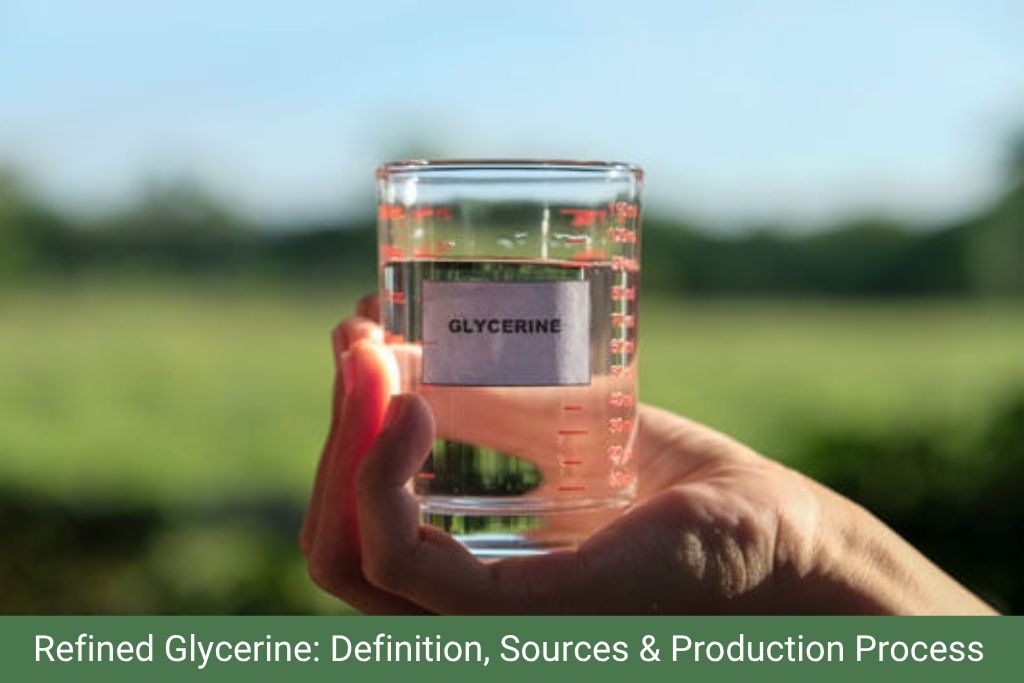
Refined Glycerine is a high-purity form of glycerol (chemical name: propane-1,2,3-triol) produced as a co-product of the saponification of vegetable oils in soap manufacturing and as a co-product of biodiesel production through transesterification of vegetable oils with methanol. The crude glycerine produced in these processes contains water, soap residues, methanol, salt, and coloured impurities that must be removed through a sequence of refining steps - acidification, vacuum distillation or thin-film evaporation, bleaching, and ion exchange polishing - to produce Refined Glycerine 99.7% of pharmaceutical or food grade purity. The standard commercial specification for Refined Glycerine in bulk export markets is 99.7 percent minimum glycerol content, which is the purity level that qualifies for USP, BP, and E422 food grade designations. Olivia Oleo exports Refined Glycerine 99.7% in bulk flexi-tanks and intermediate bulk containers (IBCs) to pharmaceutical, food, personal care, and industrial buyers worldwide.
What Is the Difference Between USP Grade and Food Grade Glycerine?
The distinction between Refined Glycerine USP Grade and food grade is primarily a regulatory and documentation difference rather than a chemical composition difference. Both are specified at 99.7 percent minimum glycerol purity. Refined Glycerine 99.7% USP Grade meets the specifications set out in the United States Pharmacopeia for use as a pharmaceutical excipient - a substance used as a vehicle, solvent, humectant, or preservative in drug formulations. USP Grade glycerine must pass specific pharmacopoeial tests including heavy metal limits, residue on ignition, acrolein and glucose test, and colour assessment. It must be manufactured under conditions that comply with pharmaceutical Good Manufacturing Practice (GMP). Refined Glycerine 99.7% E422 Food Grade - where E422 is the European food additive designation for glycerol as a humectant 422 - must meet the specifications set out in Commission Regulation (EU) No 231/2012 for food additives. Both USP and food grade glycerine can frequently be supplied from the same production batch, with the difference being in the documentation package and the GMP status of the manufacturing facility.
Our Other Products
Soap Noodles - SWSN, MSN, LSN
What Are the USP, Food Grade, and Technical Grade Glycerine Specifications Compared?
| Parameter | Refined Glycerine 99.7% USP | Refined Glycerine E422 Food Grade | Technical Grade Glycerine |
|---|---|---|---|
| Glycerol content (min) | 99.7% | 99.7% | 96–99% |
| Colour (Hazen/APHA) | Max 20 | Max 20 | Max 60 |
| Water content | Max 0.3% | Max 0.3% | Max 1.0% |
| Chlorinated compounds | Passes test | Passes test | Not tested |
| Heavy metals (as Pb) | Max 5 ppm | Max 5 ppm | Not specified |
| Residue on ignition | Max 10 ppm | Max 50 ppm | Not specified |
| Acrolein / Glucose test | Passes | Passes | Not required |
| GMP manufacturing | Required | Recommended | Not required |
| Primary applications | Pharmaceuticals, nutraceuticals | Food, beverages, personal care | Industrial, oleochemical |
| Documentation required | USP CoA, GMP certificate | E422 Food Additive CoA, Halal/Kosher | Standard CoA only |
What Are the Applications of Refined Glycerine 99.7% in the Food and Pharmaceutical Industries?
Refined Glycerine 99.7% serves as a humectant e422 in food applications - a substance that retains moisture in the product, preventing drying and maintaining texture over the shelf life. In bakery products, glycerine e422 keeps cakes, muffins, and bread soft for longer by binding free water that would otherwise evaporate. In confectionery, it is used in fondant, chewing gum, and marshmallow formulations to control texture and prevent crystallisation. In beverages, glycerol e422 functions as a carrier for fat-soluble flavours and colours and contributes mouthfeel to reduced-sugar formulations. In pharmaceutical applications, Refined Glycerine USP Grade is used as a solvent and vehicle in oral syrups and liquid medicines, as a lubricant in tablet formulations, as a suppository base, and in topical skin preparations where its humectant properties help maintain skin hydration. For buyers in the food and pharma industries, glycerin e422 certification and glycerin usp compliance documentation are both available from Olivia Oleo with each shipment.
What Is Crude Glycerine and How Does It Differ from Refined Glycerine?
Crude Glycerine 80% is the unrefined co-product stream from biodiesel production or soap manufacturing, containing approximately 75 to 85 percent glycerol along with water, methanol, soap, salt, and coloured impurities. It is brown to dark in colour, has a characteristic strong odour, and is unsuitable for direct food, pharmaceutical, or personal care use. Crude Glycerine is used as a feedstock for refining to produce Refined Glycerine 99.7%, as an animal feed supplement in some markets (after removal of methanol), and as a boiler fuel in biomass energy applications. The price of Crude Glycerine is substantially lower than refined glycerine but requires significant processing investment to convert to usable refined grades. Buyers considering crude glycerine suppliers for downstream refining operations should verify the methanol content, glycerol percentage, and salt content of the crude glycerine specification carefully, as these vary significantly depending on whether the crude is derived from biodiesel or soap production. Olivia Oleo supplies both Refined Glycerine 99.7% in USP and E422 grades and Crude Glycerine 80% for buyers operating their own refining capacity.
Which Industry Sectors Import Refined Glycerine in the Largest Volumes?
The largest importing sectors for Refined Glycerine globally are pharmaceuticals and personal care (combined approximately 40 percent of refined glycerine demand), food and beverages (approximately 25 percent), alkyd resin and polyol production for the coatings and plastics industries (approximately 20 percent), and tobacco treatment (humectant for cigarette tobacco in specific markets). In Southeast Asia and South Asia, glycerine suppliers serve a large domestic soap manufacturing industry that consumes refined glycerine as a moisturising additive in toilet soap formulations. In the Middle East and Africa, pharmaceutical and personal care applications drive the majority of Refined Glycerine import demand. As a refined glycerine distributor and bulk exporter from Singapore, Olivia Oleo serves customers across all these sectors with documented purity, Halal certification, and consistent supply terms that procurement teams in regulated industries require.

Refined Glycerine Procurement: Matching USP, Food Grade, or Technical Specifications to Your Supply Chain
Refined Glycerine 99.7% is a high-value, multi-sector commodity whose specification grade must be precisely matched to the regulatory and application requirements of the end use. USP Grade glycerine demands GMP manufacturing documentation and pharmacopoeial compliance for pharmaceutical excipient use. E422 Food Grade requires food additive certification for humectant applications in food and beverage manufacturing. Technical Grade serves industrial and oleochemical applications where regulatory documentation standards are lower. Olivia Oleo exports Refined Glycerine 99.7% in both USP and E422 food grade specifications alongside Crude Glycerine 80% for buyers with their own refining capacity, with Halal certification and consistent documentation for all regulated destination markets. Contact our team to confirm the appropriate grade specification and arrange samples or a formal quotation.