Sodium Lauryl Ether Sulfate 70%
The global surfactant trade has been witnessing notable price movements across emerging and developing economies. Sodium Lauryl Ether Sulfate, widely known as SLES, remains one of the most traded anionic surfactants in the world, with its 70% active concentration commanding the highest commercial volume. Across Asia, the Middle East and Africa, price trends for SLES 70% are shaped by a complex interplay of feedstock costs, freight dynamics, currency fluctuations and end-use demand from personal care and household cleaning sectors. This article examines how these forces are currently driving procurement decisions in these three high-growth regions.
SLES Feedstock Costs and Their Direct Impact on Regional Pricing
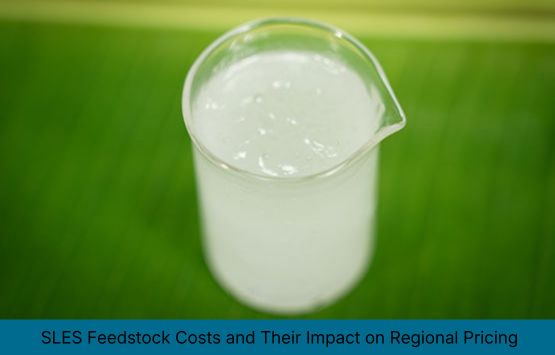
SLES pricing is tightly linked to the cost of ethylene oxide and lauryl alcohol, both derived from palm kernel oil and petrochemical intermediates. Since a significant portion of global SLES supply originates from Malaysia, Thailand and Indonesia, any volatility in palm oil derivatives or crude oil-based inputs directly flows into ex-works pricing. In 2024–2025, ethylene oxide prices saw moderate corrections after a sharp post-pandemic spike, offering some cost relief to SLES manufacturers operating in Southeast Asia. However, this relief has not translated uniformly across all export corridors, as rising freight surcharges and episodic port congestion have kept landed costs elevated for buyers in the Middle East and Sub-Saharan Africa. Overall, feedstock-driven price pressure has remained a defining feature of SLES 70% procurement planning across all three regions.
SLES 70% Supplier Dynamics and Price Competitiveness in Asia
Asia remains both the largest production base and the most price-sensitive consumer market for SLES 70%. Within the region, procurement teams in South and Southeast Asian countries are actively benchmarking offers from multiple SLES 70% suppliers to optimise total landed cost. Countries like Bangladesh, Vietnam and Pakistan have seen increased import volumes driven by a rapidly growing personal care manufacturing base, pushing regional demand upward and keeping prices firm. Chinese domestic consumption of SLES remains robust and while Chinese producers have historically offered competitive pricing, tightening environmental compliance standards and rising operational costs have gradually narrowed their pricing advantage versus Southeast Asian producers. As a result, buyers sourcing from a trusted SLES 70% exporter with origins in Malaysia or Indonesia have increasingly found better value through consistent active matter quality and relatively stable contract pricing.

SLES 70% Exporter Activity and Price Trends in the Middle East
The Middle East has emerged as a fast-growing import market for SLES 70%, driven by expanding home care and personal care production in countries such as Saudi Arabia, UAE, Egypt and Turkey. Local formulation industries in GCC countries increasingly rely on imported SLES rather than producing in-house, given the capital-intensive nature of surfactant manufacturing. In this context, the role of a reliable SLES 70% exporter with established documentation, Halal certification compliance and competitive CIF pricing has become central to procurement strategy. Through 2024 and into 2025, SLES 70% prices into the Middle East trended upward on the back of higher inbound freight costs linked to Red Sea shipping disruptions, before showing a gradual softening as alternative routing stabilised logistics timelines. Egypt and Turkey, serving as major re-export hubs and domestic producers of household cleaning formulations, maintained steady import demand even as their currencies experienced depreciation, reflecting the inelastic nature of SLES demand in essential consumer goods production.
Our Other Products
Soap Noodles - SWSN, MSN, LSNSLES Manufacturers and Supply Chain Shifts Affecting African Market Pricing
Africa represents one of the most dynamic growth frontiers for SLES demand, particularly across Nigeria, Kenya, South Africa, Ghana and Ethiopia. The personal care and detergent manufacturing sector across these countries is expanding rapidly, fuelled by rising urbanisation, a growing middle class and increasing hygiene awareness at the consumer level. However, SLES 70% pricing in African markets has consistently trended higher than Asian benchmarks, driven by longer ocean transit times, smaller per-shipment order quantities and limited local warehousing infrastructure. SLES manufacturers serving African buyers price in consideration of these logistical realities and in recent periods, price levels have edged further upward as dollar-denominated import costs have been compounded by local currency weakening in several Sub-Saharan markets. For buyers in this region, working directly with an established SLES exporter offering flexible shipment sizes and stable contract terms has become a key strategy for managing cost escalation.
Olivia Oleo Pte Ltd: Sourcing SLES 70% from Southeast Asia for Emerging Markets
Olivia Oleo Pte Ltd, a Singapore-based trading and distribution company, has built a strong presence as an SLES supplier and exporter serving buyers across the Middle East and Africa. The company sources SLES 70% from established production facilities in Malaysia, Thailand and Indonesia, regions that are globally recognised for their scale, quality and cost efficiency in surfactant manufacturing. Olivia Oleo's supply model focuses on offering buyers transparent pricing benchmarked to feedstock indices, flexible shipment sizes ranging from ISO tanks to flexi-bags and documentation support for markets requiring region-specific compliance. As procurement teams across emerging markets look to consolidate supplier relationships and reduce sourcing risk, Olivia Oleo's position as an SLES 70% exporter with Southeast Asian origins provides a competitively priced and logistically reliable option for consistent supply.
Read Our Article
Oils & Fats: Palm Oil, Palm Kernel Oil, Coconut Oil, and Soft Oils
Price Outlook: Key Trends Buyers Should Monitor in 2025–2026
Looking ahead, buyers and procurement professionals in Asia, the Middle East and Africa should closely track several price-influencing variables. Palm oil derivative prices remain the primary cost driver for SLES 70% manufacturers in Southeast Asia and any weather-related or geopolitical supply disruptions in Indonesia or Malaysia are likely to push prices upward. Meanwhile, freight costs, which spiked significantly through 2023–2024 due to Red Sea route diversions, are showing signs of gradual normalisation, which may ease landed costs for Middle Eastern and East African buyers in the near term. On the demand side, personal care production across Southeast Asia, the Gulf and emerging African markets continues to grow steadily, maintaining an upward pressure on overall SLES pricing. For buyers seeking price certainty amid these fluctuations, long-term offtake agreements with a verified SLES exporter or SLES 70% manufacturer in Southeast Asia offer the most effective hedge against spot market volatility.
Our Other Products
Vegetable ShorteningConclusion
SLES 70% pricing across Asia, the Middle East and Africa continues to be shaped by feedstock cost movements, freight dynamics, currency pressures and sustained demand growth from consumer goods manufacturing. Buyers across these regions benefit most from aligning with established SLES 70% suppliers and exporters who offer pricing transparency, consistent product quality and dependable logistics. Olivia Oleo Pte Ltd are well-positioned to serve growing demand from emerging markets through its sourcing network from Malaysia, Thailand and Indonesia, enabling stable and cost-effective procurement for detergent and personal care manufacturers across high-growth geographies.