
CFAD and DCFA
When sourcing oleochemical raw materials, industrial buyers often encounter two closely related yet distinctly different products - CFAD and DCFA. While both are derived from coconut oil, they represent different stages of processing, carry different specifications and serve different end-use applications. For procurement teams, formulators and supply chain managers, understanding this distinction is not just helpful - it is commercially essential.
CFAD: What It Is and Where It Comes From
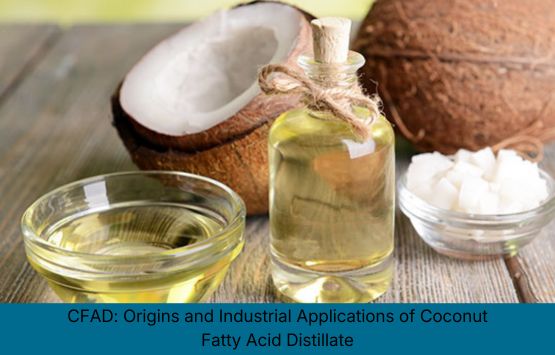
Coconut Fatty Acid Distillate, commonly referred to as CFAD, is a by-product generated during the physical refining of coconut oil. When crude coconut oil undergoes deodorisation and steam stripping, the volatile components removed in this process are captured as CFAD. The result is a mixture of free fatty acids, minor lipids and trace unsaponifiable matter - making it a cost-effective feedstock with a broad industrial utility.
CFAD suppliers primarily source this material from Southeast Asian refining operations, particularly in Malaysia, Thailand and Indonesia, where large-scale coconut oil processing is deeply embedded in the regional oleo chemical industry. As a raw, unrefined stream, CFAD is not subjected to further purification before it leaves the refinery, which is why its composition can vary slightly depending on the origin and quality of the incoming coconut oil.
CFAD exporters typically supply this material in bulk liquid form to industries that require a fatty acid mixture rather than a high-purity single-cut product. End uses span soap manufacturing, animal feed supplements, lubricant production and industrial processing, where precise fatty acid composition is secondary to overall performance and cost efficiency. For buyers working within tighter budgets or processing systems that can tolerate broader input ranges, CFAD remains a highly practical choice.
Read Our Article
DCFA Demand in Latin American Industrial MarketsDCFA: A Refined, Higher-Purity Alternative
Distilled Coconut Fatty Acid - widely abbreviated as DCFA - is produced through a controlled fractional distillation of crude coconut fatty acids or CFAD itself. This additional processing step removes impurities, narrows the fatty acid profile and significantly improves colour, odour and acid value consistency. The outcome is a cleaner, more specification-ready material that meets the stricter quality requirements of downstream manufacturers.
DCFA suppliers are positioned to serve industries where raw material consistency directly impacts finished product quality. Personal care and cosmetic manufacturers, pharmaceutical-grade surfactant producers, textile auxiliaries formulators and food-grade processing units all rely on distilled coconut fatty acid due to its tighter specification bands and better processing behaviour.
Distilled coconut fatty acid exporters operating from Malaysia, Thailand and Indonesia supply both standard and custom-cut DCFA grades to global buyers. Distilled fatty acids from these origins benefit from the high lauric content of regional coconut varieties, which makes them particularly suited for surfactant synthesis, emulsifier production and fatty acid salt manufacturing. DCFA manufacturers invest in column distillation infrastructure and quality control systems to ensure lot-to-lot consistency, which is a decisive factor for buyers who run continuous production processes.

Key Technical Differences Industrial Buyers Must Know
The fundamental difference between CFAD and DCFA lies in purity and processing depth. CFAD is a direct distillate fraction from the refining process - it is essentially a raw capture stream. DCFA is a deliberately processed and purified product that has undergone secondary distillation to achieve defined acid value, colour, moisture content and iodine value parameters.
From a procurement standpoint, CFAD typically offers a lower unit price but comes with wider specification tolerances. DCFA commands a premium due to its refined nature and narrower quality bands. Buyers who are formulating products with defined performance targets, regulatory submissions or consumer-facing quality claims will almost always opt for distilled coconut fatty acid over raw CFAD.
Another distinction lies in handling and shelf life. Distilled fatty acids tend to have better oxidative stability profiles compared to raw CFAD fractions, which can contain trace phospholipids and oxidation-prone minor components. For long-haul shipments from Southeast Asian origins, this can translate into meaningful differences in product condition upon arrival.
Our Other Products
Soap Noodles - SWSN, MSN, LSNCoconut Oil as the Common Origin
Both CFAD and DCFA trace their origin to coconut oil - specifically to the fatty acid fractions liberated when coconut oil is processed. Distilled coconut oil and its derived fatty acid streams share the same underlying fatty acid profile dominated by medium-chain saturated fatty acids. This profile, rich in lauric and myristic acid content, is precisely what makes Coconut Fatty Acids Distillate valuable across multiple industries.
The quality and refining practices at the coconut oil processing stage directly influence the composition and purity potential of both downstream products.
Sourcing Considerations: Choosing Between CFAD and DCFA
Industrial buyers must evaluate their sourcing decision based on application requirements, quality compliance obligations and total cost of ownership - not just landed unit price. For bulk industrial applications with broad input tolerances, CFAD sourced from established CFAD manufacturers remains a competitive and practical option. For specialty chemical synthesis, personal care formulation or pharma-adjacent applications, DCFA sourced from certified distilled coconut fatty acid manufacturers is the appropriate specification grade.
The company's sourcing approach is built around ensuring specification compliance, traceability and supply continuity - addressing three of the most common pain points for international buyers navigating the Southeast Asian oleochemical market.
When evaluating DCFA or CFAD suppliers, buyers should request certificate of analysis data across multiple lots, clarify packaging and bulk handling options and confirm export documentation standards relevant to their destination market. Whether sourcing a cost-optimised feedstock or a specification-grade distilled fatty acid, supply chain due diligence remains the deciding factor in long-term procurement success.

Our Other Products
SurfactantsConclusion
CFAD and DCFA are not interchangeable terms - they describe two distinct products with different processing histories, quality profiles and industrial applications. Industrial buyers who understand this difference are better positioned to source the right material at the right cost, avoid quality mismatches in production and build reliable supply relationships with qualified exporters and manufacturers across Southeast Asia.