

Coconut oil is one of the most traded vegetable oils in the world — and yet one of the most misunderstood from a procurement perspective. Walk into any conversation between an RBD coconut oil supplier and an industrial buyer, and one question almost always surfaces early: what exactly is the difference between crude coconut oil and RBD coconut oil, and which one does my application actually need?
The answer matters more than most buyers initially realise. The two forms of coconut oil are not simply different quality tiers of the same product — they are functionally distinct materials with different processing histories, different physical and chemical properties, different regulatory standing, and different optimal use cases. Getting this decision right has direct implications for product quality, formulation performance, regulatory compliance, and total procurement cost.
This guide covers everything you need to know — from how each material is produced, to how to evaluate a coconut oil manufacturer, to what to look for when you buy coconut oil bulk for industrial or commercial use.

What Is Crude Coconut Oil?
Crude coconut oil — also referred to as crude coconut oil or copra oil in trade contexts — is the raw, unrefined oil extracted directly from dried coconut meat (copra) through mechanical pressing or solvent extraction. It is the first output of the coconut oil production process and has undergone no further refining, bleaching, or deodorising treatment.
The result is an oil that retains its natural colour (typically yellow to brownish), carries a strong characteristic coconut odour, and contains a range of impurities including free fatty acids, phospholipids, pigments, moisture, and oxidation products from the drying and extraction process. Crude coconut oil has a relatively high free fatty acid (FFA) content — often ranging from 3–5% or higher depending on the quality of the copra feedstock and processing conditions — which limits its direct suitability for food, cosmetic, and pharmaceutical applications without further treatment.
Crude coconut oil price is typically lower than refined grades, reflecting both its lower processing cost and the additional refining investment required before it can be used in most end-use applications. It is traded in large volumes as a feedstock material — the raw input that coconut oil manufacturers and refiners process into higher-value finished products.
What Is RBD Coconut Oil?
RBD coconut oil — Refined, Bleached, and Deodorised coconut oil — is produced by subjecting crude coconut oil to a multi-stage industrial refining process that removes impurities, neutralises free fatty acids, eliminates colour compounds, and strips out odour-producing volatile compounds. The result is a clean, white to pale yellow oil with a neutral odour, low FFA content (typically below 0.1%), and a standardised fatty acid profile dominated by lauric acid (approximately 47–50%), myristic acid, caprylic acid, capric acid, and other medium-chain fatty acids.
RBD coconut oil is the commercially dominant form of coconut oil in global industrial trade — the standard product referenced when buyers speak to an RBD coconut oil supplier about food manufacturing, personal care formulation, pharmaceutical applications, or oleochemical processing. Its neutral sensory profile, consistent quality, long shelf life, and regulatory acceptability across major markets make it the default choice for virtually all value-added applications.
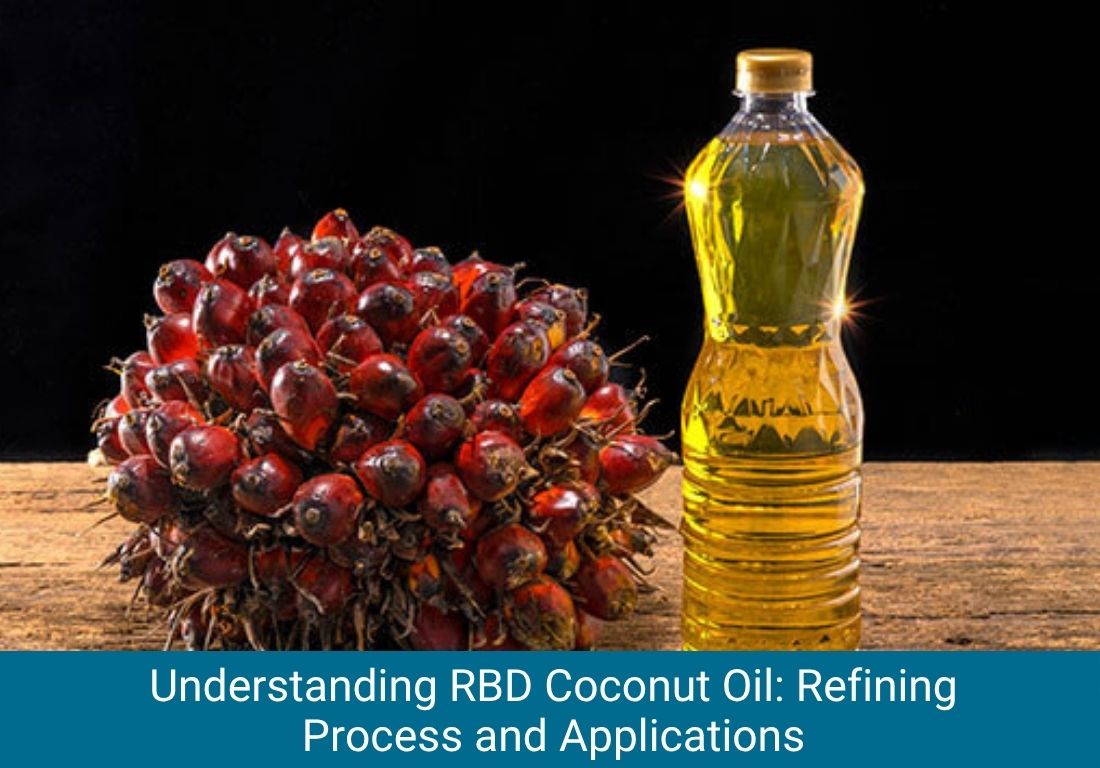
RBD coconut oil price commands a premium over crude coconut oil that reflects the cost of the refining process and the significantly broader range of applications it enables.
The Refining Process: How Crude Becomes RBD
Understanding the three stages of RBD processing helps buyers appreciate both the value added and the cost implications of choosing refined over crude coconut oil.
Stage 1: Refining (Neutralisation)
The first stage targets free fatty acids — one of the primary quality concerns in crude coconut oil. In chemical refining, sodium hydroxide (caustic soda) is added to the crude oil, reacting with free fatty acids to form soap stocks that are then separated and removed. In physical refining — increasingly preferred by coconut oil manufacturers for its lower chemical input requirements — free fatty acids are removed through steam distillation at high temperatures. Physical refining is considered more suitable for palm and lauric oils like coconut oil and is the dominant method among major RBD coconut oil supplier facilities in the Philippines, Indonesia, and India.
Stage 2: Bleaching
Following neutralisation, the oil is treated with bleaching earth (activated clay) under vacuum conditions to adsorb pigments, residual soap, oxidation products, and trace metal contaminants. This step transforms the yellow-brown crude oil into a lighter, cleaner product. The bleaching earth is subsequently filtered out, carrying the adsorbed impurities with it. Coconut oil bleaching is a critical quality control step — the effectiveness of this stage directly influences the colour specification of the finished RBD product.
Stage 3: Deodorising
The final stage is steam deodorisation — a high-temperature, high-vacuum distillation process that removes the volatile compounds responsible for the characteristic strong odour of crude coconut oil. After deodorisation, the oil emerges odourless and tasteless — or carrying only a very mild, neutral coconut character. This neutral sensory profile is essential for food applications where the oil must not impart any flavour to the finished product, and for cosmetic formulations where fragrance is carefully controlled.
The co-product of the deodorisation step — the distillate stripped from the oil — is itself a commercially valuable material containing fatty acids, tocopherols, and sterols, contributing to the overall economics of the refining process.
Our Other Products
Distilled Fatty AcidsKey Differences: Crude Coconut Oil vs. RBD Coconut Oil
| Parameter | Crude Coconut Oil | RBD Coconut Oil |
|---|---|---|
| Colour | Yellow to brownish | White to pale yellow |
| Odour | Strong, characteristic | Neutral / odourless |
| FFA Content | 3–5%+ | Below 0.1% |
| Impurities | Present | Removed |
| Shelf Life | Shorter | Longer |
| Regulatory Status | Not food/pharma grade | Food, cosmetic, pharma grade |
| Price | Lower | Higher |
| Primary Use | Refining feedstock | End-use applications |
Industrial Use Cases: Which Grade for Which Application?
Food Manufacturing
RBD coconut oil in food applications is the universal standard. Its neutral flavour, low FFA, and regulatory compliance make it suitable for use in baked goods, confectionery, frying oils, margarine, dairy analogues, and instant noodles — among many other applications. Crude coconut oil is not used directly in food manufacturing; it is a feedstock that must be refined before entering the food supply chain.
For food industry buyers, working with a certified RBD coconut oil supplier who can provide food-grade documentation — including FFA content, moisture levels, peroxide value, and iodine value certificates — is non-negotiable from both quality and regulatory standpoints.
Personal Care and Cosmetics
Coconut oil in cosmetics is one of the fastest-growing application categories globally, driven by consumer demand for natural, plant-derived ingredients in skincare, haircare, and body care formulations. RBD coconut oil is the standard input — its neutral odour and clean profile allow formulators to control the sensory characteristics of their finished products precisely.
Coconut oil benefits for skin are well established and widely marketed: deep moisturisation, antimicrobial activity from lauric acid, emollient properties, and compatibility with a wide range of cosmetic actives. These benefits are present in both crude and RBD forms, but only RBD coconut oil meets the purity and sensory standards required for cosmetic formulation.
Virgin coconut oil — produced from fresh coconut meat without chemical refining — occupies a premium niche within the cosmetics market, valued for its retained natural antioxidants and distinctive mild coconut fragrance. However, for large-scale industrial cosmetic manufacturing, RBD coconut oil bulk procurement remains the cost-effective standard.
Read Our Article
How to Choose the Right Grade of Coconut Oil for African MarketOleochemical Processing
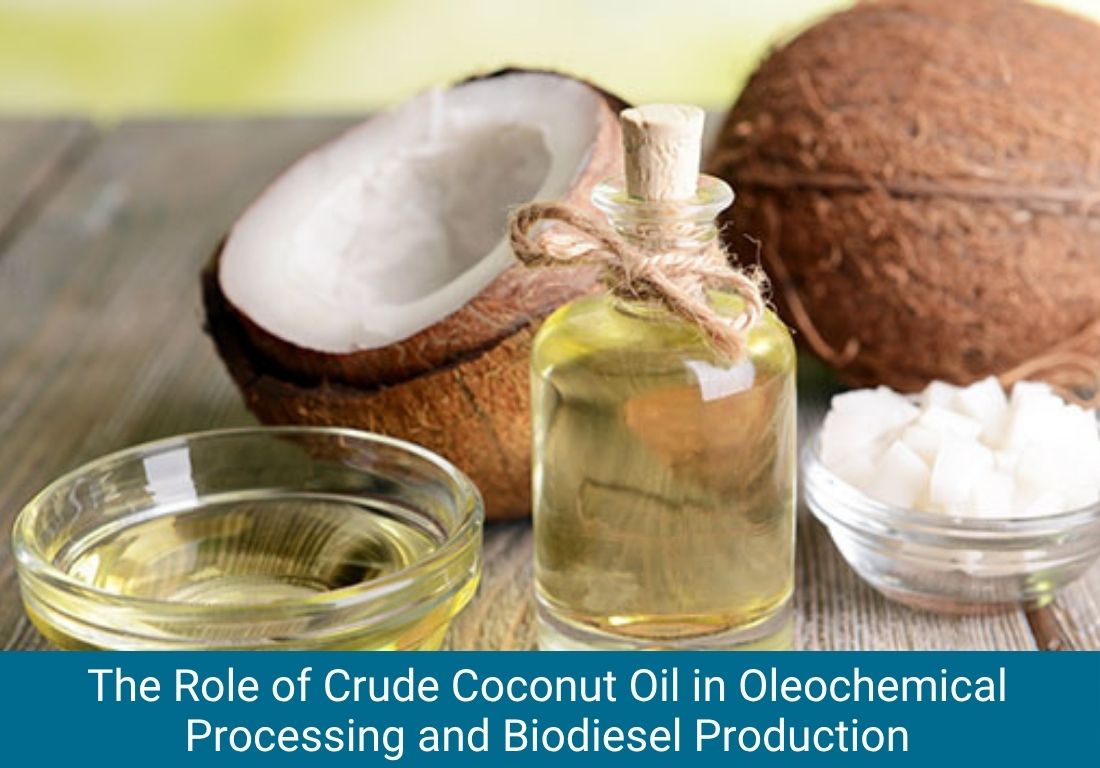
For coconut oil manufacturers and oleochemical processors producing lauric acid, coconut fatty acid distillate (CFAD), coconut-derived surfactants, or fatty alcohols, crude coconut oil can serve as a cost-effective upstream feedstock where the processor's own refining capability allows them to manage quality in-house. However, many mid-sized oleochemical buyers prefer to source RBD coconut oil as their feedstock to ensure consistent input quality and simplify their own processing operations.
Biodiesel and Industrial Applications
Crude coconut oil finds its most direct end-use application in biodiesel production, where its FFA content is less problematic than in food or cosmetic applications, and its cost advantage over refined grades improves the economics of biofuel conversion. Industrial soap manufacturing and certain lubricant applications similarly accept crude or semi-refined grades where sensory characteristics are not a purchasing criterion.
Buyer Guide: What to Evaluate When Sourcing Coconut Oil
Whether you are looking to buy coconut oil bulk for food manufacturing, cosmetics, pharmaceuticals, or oleochemical processing, the following evaluation criteria should guide your supplier selection process.
Grade and Specification Clarity
Define your required grade precisely before approaching any coconut oil supplier. Key specifications to establish include FFA content, moisture and impurities (M&I), colour (Lovibond scale), peroxide value, iodine value, and saponification value. For food and pharmaceutical applications, additionally confirm compliance with relevant food safety standards — FSSAI in India, BPOM in Indonesia, FDA in the United States, or EFSA in Europe depending on your market.
Origin and Traceability
The Philippines and Indonesia are the world's largest coconut oil producers, followed by India and Sri Lanka. Each origin has distinct quality characteristics influenced by local copra quality, processing standards, and refining infrastructure. When evaluating an RBD coconut oil supplier, request full origin traceability documentation and confirm that the supplier's processing facilities meet internationally recognised standards.
Certification Requirements
Depending on your end market and application, you may require one or more of the following certifications from your coconut oil manufacturer: USDA Organic (for organic-certified coconut oil), Kosher, Halal, ISO 22000 (food safety management), or GMP certification for pharmaceutical applications. Confirming certification availability upfront avoids costly surprises during supplier qualification.
Packaging and Logistics for Bulk Orders
Coconut oil bulk supply is typically available in flexi-tanks (for liquid shipment of large volumes), ISO tank containers, drums (200-litre), or intermediate bulk containers (IBCs). The appropriate packaging format depends on your order volume, storage infrastructure, and downstream processing requirements. Confirm that your coconut oil supplier can provide your preferred format with adequate lead time and appropriate temperature controls — particularly important for RBD coconut oil, which is solid below approximately 24°C and requires heated storage or transportation in cooler climates.
Price Benchmarking
Coconut oil price — both crude and RBD — is influenced by global coconut oil futures, Philippine and Indonesian export volumes, competing demand from food and oleochemical sectors, and freight market conditions. Tracking the Philippine Coconut Authority (PCA) monthly price reports and major commodity exchanges provides reliable market intelligence for benchmarking RBD coconut oil price quotations from suppliers and identifying favourable procurement windows.
Indonesia: The world's largest coconut producer by volume, with rapidly expanding refining capacity. Indonesian coconut oil manufacturers offer competitive coconut oil bulk pricing with strong logistics connectivity to Asian and Middle Eastern markets.
Our Other Products
Surfactants
Conclusion
The choice between crude coconut oil and RBD coconut oil is not a matter of preference — it is a matter of application requirements, regulatory compliance, and procurement strategy. Crude coconut oil is a valuable industrial feedstock with a clearly defined role in refining and certain industrial end-uses. RBD coconut oil is the versatile, high-performance refined product that powers food manufacturing, personal care formulation, pharmaceutical production, and oleochemical processing across the globe.
For buyers, the key takeaways are straightforward: know your grade requirement before approaching any RBD coconut oil supplier, verify certifications and traceability documentation thoroughly, benchmark coconut oil price against reliable market indices, and build supply relationships with coconut oil manufacturers who demonstrate consistent quality, responsive communication, and reliable logistics capability.
The global coconut oil market offers abundant supply and a well-developed network of experienced coconut oil suppliers — the buyers who approach it with clarity and preparation will always secure the best outcomes.