

Soap Noodle Ingredients Decoded: How Sodium Palmitate, Palm Kernelate, TiO2 and Moisture Determine Bar Soap Quality
The quality of a finished bar soap is determined not by the soap bar manufacturer alone but by the chemical composition of the soap noodles that enter the production process. Sodium Palmitate, Sodium Palm Kernelate, Titanium Dioxide, moisture content, free caustic alkali, and free fatty acid levels are not merely technical specifications on a Certificate of Analysis but the actual building blocks of bar hardness, lather performance, skin feel, shelf life, and processing behaviour on the plodder and stamping line. Understanding how each soap noodle ingredient contributes to the finished bar allows soap manufacturers to specify their raw material precisely, troubleshoot production issues intelligently, and make informed comparisons between supplier grades and pricing. This article explains every key component in soap noodles, the role each plays in bar performance, and the specification parameters that quality buyers should always verify.

What Are Soap Noodles Made Of? The Primary Chemical Components Explained
Soap noodles ingredients are the result of the saponification reaction between vegetable fatty oils and caustic soda (sodium hydroxide, NaOH). The primary chemical components of all soap noodles are sodium fatty acid salts - specifically Sodium Palmitate (the sodium salt of palmitic acid, C16:0), sodium palm kernelate (the sodium salt of lauric acid, C12:0), and in smaller proportions sodium oleate (C18:1), sodium stearate (C18:0), sodium myristate (C14:0), and sodium linoleate (C18:2). The specific balance of these sodium salts in the finished soap noodle is determined by the fatty acid profile of the feedstock oils used - typically a blend of RBD Palm Oil and RBD Palm Kernel Oil in ratios ranging from 60:40 to 80:20 depending on the desired performance characteristics of the finished soap bar. The remaining weight of the soap noodle consists of water (moisture), glycerine (retained or added), free fatty acids (small residual amount), free caustic alkali (trace alkalinity), sodium chloride (salt from the salting-out step), and in Snow White grades, titanium dioxide (TiO2) as a whitening agent.
Read Our Article
Soap Noodles Market & Business StrategyWhat Is the Role of Sodium Palmitate in Soap Noodles?
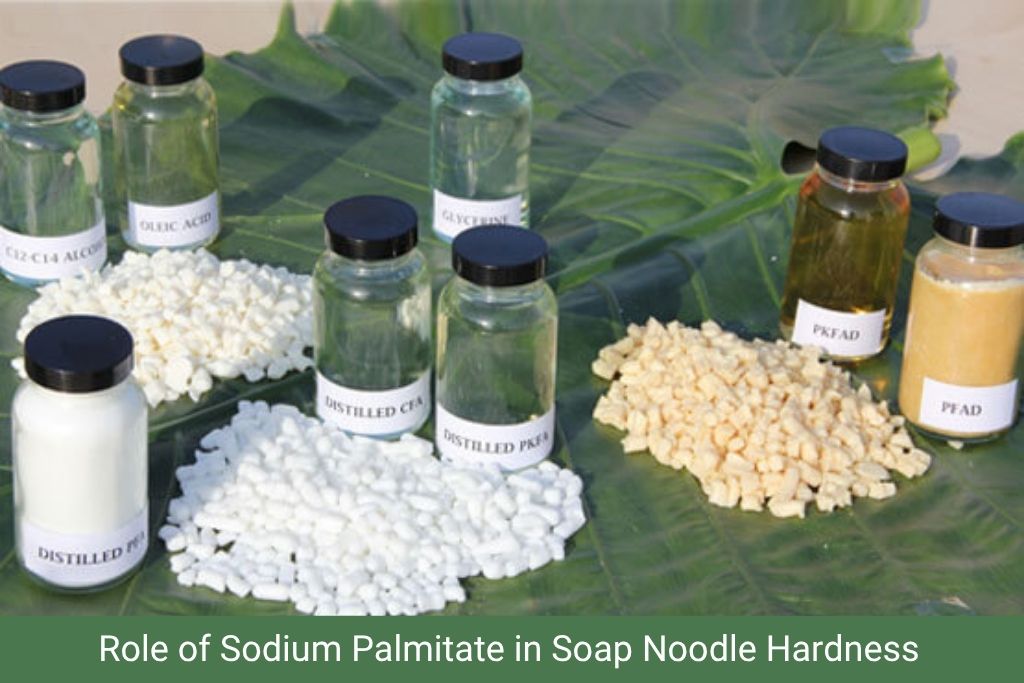
Sodium Palmitate is the single most important fatty acid salt in palm oil-based soap noodles, typically comprising 40 to 55 percent of the total soap salt content. It is produced by the saponification of palmitic acid (C16:0) - the dominant fatty acid in RBD Palm Oil - with sodium hydroxide. The primary functional contribution of Sodium Palmitate to the finished soap bar is bar hardness: C16 saturated chains pack tightly in the soap crystal lattice, producing a firm, long-lasting bar that does not soften rapidly in water. Sodium Palmitate contributes moderate lather that is stable and persistent, but its foam volume and rate of lather generation are lower than those of shorter-chain sodium salts like sodium laurate from coconut or palm kernel sources. As a Sodium Palmitate Supplier and exporter, Olivia Oleo supplies this component both as a pure soap noodle ingredient for specialist formulators and as a naturally occurring dominant component in all palm oil-based soap noodles in its product range.
Our Other Products
Distilled Fatty AcidsWhat Is the Role of Sodium Palm Kernelate in Soap Noodle Performance?
Sodium palm kernelate - derived from the saponification of RBD Palm Kernel Oil - contributes the soap noodle ingredients cluster dominated by lauric acid (C12:0) and myristic acid (C14:0) sodium salts. These shorter-chain saturated fatty acid sodium salts contribute the fast-foaming, abundant lather that consumers and institutional buyers associate with premium soap bar performance. Sodium laurate (C12) in particular is the fastest-foaming soap salt, producing large-volume foam quickly in both soft and hard water. Without a palm kernel or coconut oil contribution in the soap noodle formula, a 100 percent palm oil soap noodle would produce a hard, long-lasting bar but with significantly reduced immediate lather generation. The optimal ratio of palm to palm kernel in soap noodle production balances these two performance characteristics: C16 palmitate for hardness and durability from palm oil, and C12-C14 laurate-myristate for foam and lather from palm kernel oil.

How Do Moisture Content and Free Caustic Alkali in Soap Noodles Affect Processing?
Two of the most operationally critical soap noodle ingredients parameters for a soap manufacturer are moisture content and free caustic alkali (free NaOH). Moisture content in commercial soap noodles is typically specified at a maximum of 1.0 percent for most grades. Higher moisture reduces the effective TFM per tonne of noodle purchased, causes increased stickiness and clumping during storage and transport, and makes the plodding and extrusion process more difficult because the softer, wetter soap mass sticks to metal surfaces, slows extrusion, and produces bars with rough surfaces and poor gloss. Free caustic alkali - unreacted NaOH remaining from the saponification process - is specified at a maximum of 0.1 percent as NaOH. Excess free alkali in the finished bar makes the soap too alkaline, which can cause skin irritation in consumers and may cause rancidity in bars containing unsaturated fatty acid components by accelerating oxidative degradation. Soap noodle raw material specifications from quality suppliers like Olivia Oleo consistently target moisture below 0.8 percent and free caustic below 0.05 percent to provide bar soap manufacturers with processing headroom above the minimum specification requirements.
Read Our Article
Soap Noodles Branding and Marketing in the B2B LandscapeWhat Are the Soap Noodle Ingredients That Determine Shelf Life and Storage Stability?
The shelf life of soap noodles in storage is primarily determined by the free fatty acid content, moisture, and the degree of unsaturation in the fatty acid profile. A low free fatty acid content (below 0.5 percent) indicates that the saponification reaction was complete and that there is minimal unreacted fatty acid available for oxidation. A low moisture content (below 1 percent) minimises the risk of bacterial or mould growth in the product during storage in tropical climates. The saturated fatty acid dominance in palm and palm kernel-based soap noodle raw material gives the product inherent resistance to oxidative rancidity, unlike soap noodles produced from tallow or unsaturated oils where rancidity can develop within months of production. Olivia Oleo's soap noodles are packed in multi-wall paper bags with polyethylene inner liners to provide a moisture barrier during ocean transit, and the product should be stored in covered, ventilated warehouses below 35 degrees Celsius and away from direct sunlight to maintain quality throughout the shelf life of 12 months from production.
Our Other Products
Surfactants - SLES, CAPB/Betaine, Fatty Alcohol Ethoxylates, CDEA, LABSASoap Noodle Raw Material Quality: Why Every Ingredient Parameter Matters for Your Bar Soap Production
The performance of a bar soap on the retail shelf or in institutional use is a direct reflection of the soap noodle raw material quality that entered the production process. Sodium Palmitate drives bar hardness and longevity. Sodium Palm Kernelate drives foam speed and lather volume. Moisture below 0.8 percent ensures clean extrusion and hard bar formation. Free caustic alkali below 0.05 percent protects skin and prevents rancidity. Contact Olivia Oleo to discuss your soap noodle specification, required TFM grade, and supply volume from our Singapore export operation.